
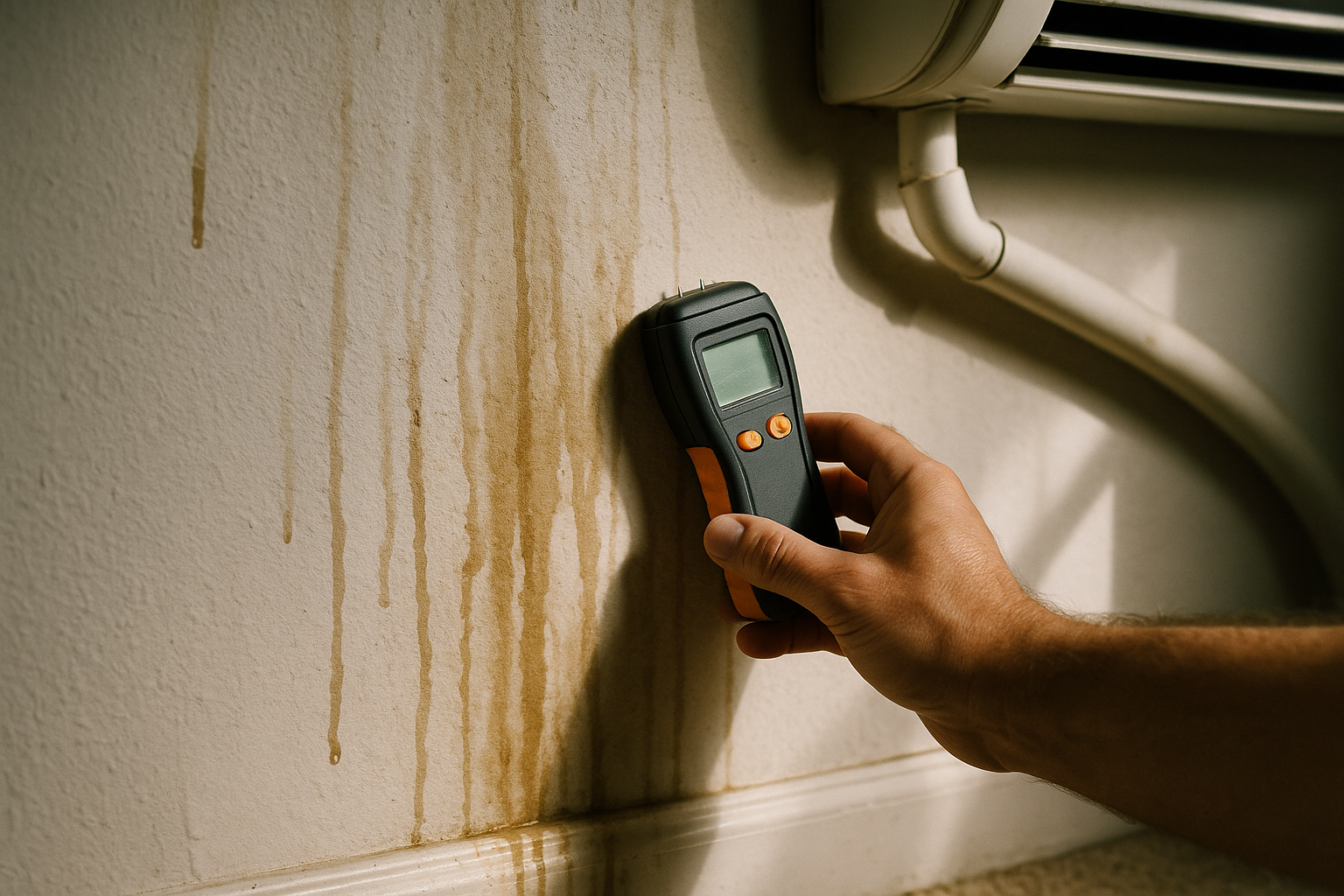
If your air conditioner has been running nearly nonstop this week, you’re not imagining it. With the heat index climbing to 109° across Aubrey and the rest of North Texas this weekend, AC systems are working harder — and longer — than they’re built to handle for days on end. That extra strain doesn’t just show up on your electric bill. It shows up as water, often in places you won’t notice until the damage is already done.
Why extreme heat causes condensation backups
Your AC doesn’t just cool air — it pulls moisture out of it. That moisture collects on the evaporator coil and drips into a condensate drain line, which carries it safely outside. When your system runs around the clock in brutal heat, it produces far more condensation than usual, and that drain line has to keep up hour after hour.
Add in the algae, dust, and debris that build up in most drain lines over a season, and you’ve got a bottleneck waiting to happen. When the line clogs, that water has nowhere to go but back into your system — and often, right down through your ceiling or into your walls.
What to check right now
A few minutes of checking today can save you a much harder week later:
- Look at the drain pan under your indoor unit (usually in the attic or a closet). Standing water or rust stains mean trouble is already brewing.
- Check the drain line’s outside termination — it’s usually a white PVC pipe near your outdoor unit. Water should be dripping out. If it’s bone dry during a heavy-run day, that can actually be a sign of a clog upstream.
- Watch your ceilings, especially under attic-mounted units — a small brown stain today can mean saturated insulation and drywall tomorrow.
- Listen for a shutoff switch tripping — many systems have a float switch that turns the AC off if the pan fills. If your air stops cooling and the outdoor unit isn’t running, this could be why — and it’s actually doing its job protecting your home.
Why “it’s just a little water” is worth taking seriously
Condensation leaks are quiet. There’s no dramatic pipe burst — just a slow drip, day after day, into insulation, drywall, or subfloor that stays damp far longer than it looks. That’s exactly the kind of moisture that leads to hidden structural damage and mold growth, because the surface can look dry while the material underneath stays wet for days.
It looking dry is not the same thing as it being dry. That’s the piece that catches people off guard every summer.
When to call a professional
If you’ve found active water, a stained ceiling, or musty smell near a vent or attic unit, it’s worth having it looked at before it spreads. A clogged drain line itself is often a straightforward HVAC fix — but the water damage it’s already caused is a different question, and that’s where we come in.
I can’t promise a leak won’t be an inconvenience — but I can promise to give you a clear, honest picture of what’s actually going on in your home, and a straightforward plan to dry it out right.
A local offer, while this heat wave runs its course
Through July 29th, Merlene Mitigation is offering free water damage inspections for homeowners in Aubrey and the surrounding area. No pressure, no upsell — just a real look with a moisture meter and thermal camera so you know whether that condensation leak has caused damage that needs attention, or whether you’re in the clear.
Merlene Mitigation is a small, local, owner-operated business based just down the road in Pilot Point. When you call, you get me — Josh — not a call center, not a rotating crew. That’s how you get honest answers and fair prices, heat wave or not.
If you’re dealing with a suspected AC leak in Aubrey or nearby, give us a call. We’d rather catch it small than let it become a bigger job for everyone.
-Ally
Leave a Reply