Tag: water damage

  • AC Condensation Leaks in Aubrey, TX: Act Now on Heat Advisory

    AC Condensation Leaks in Aubrey, TX: Act Now on Heat Advisory

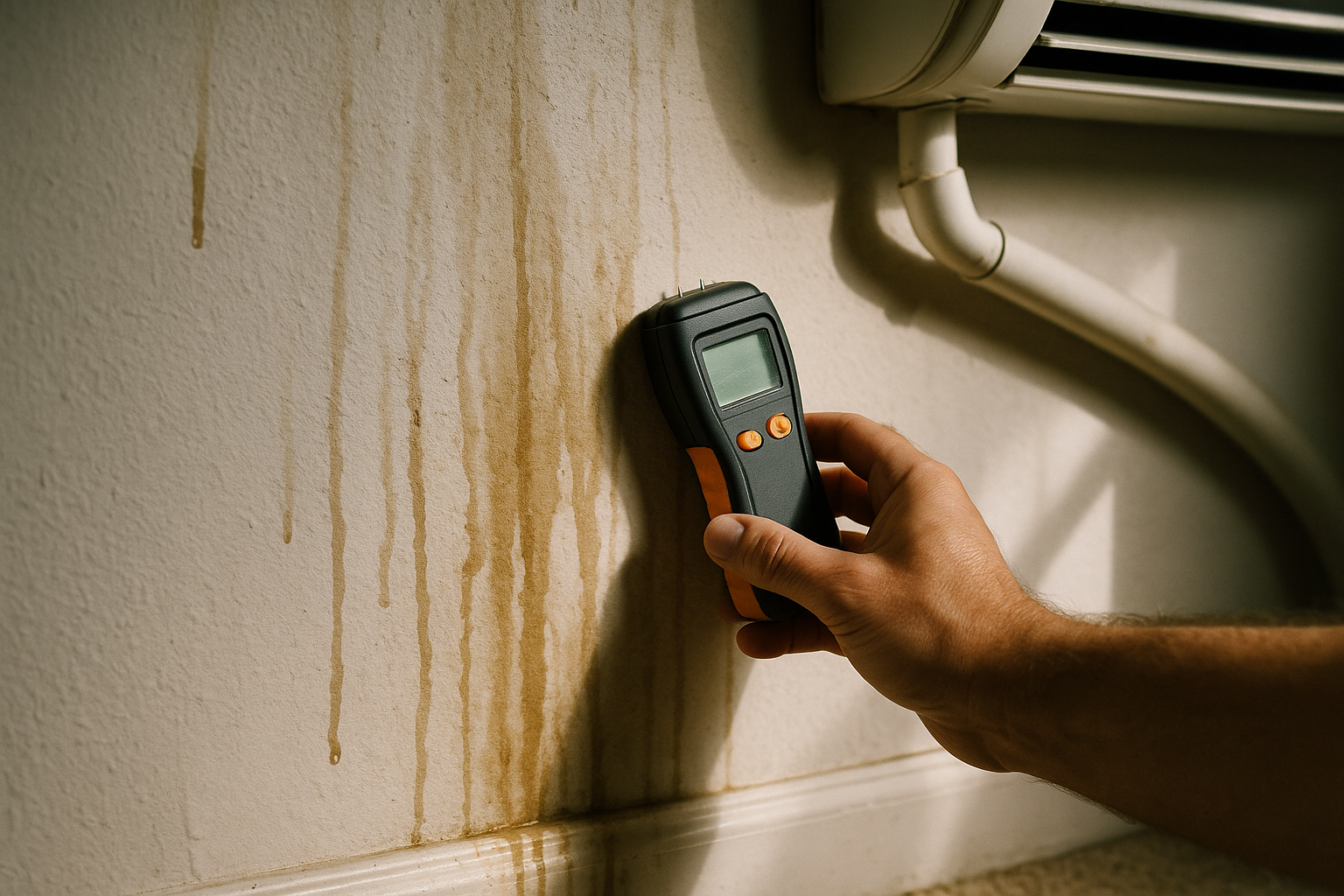
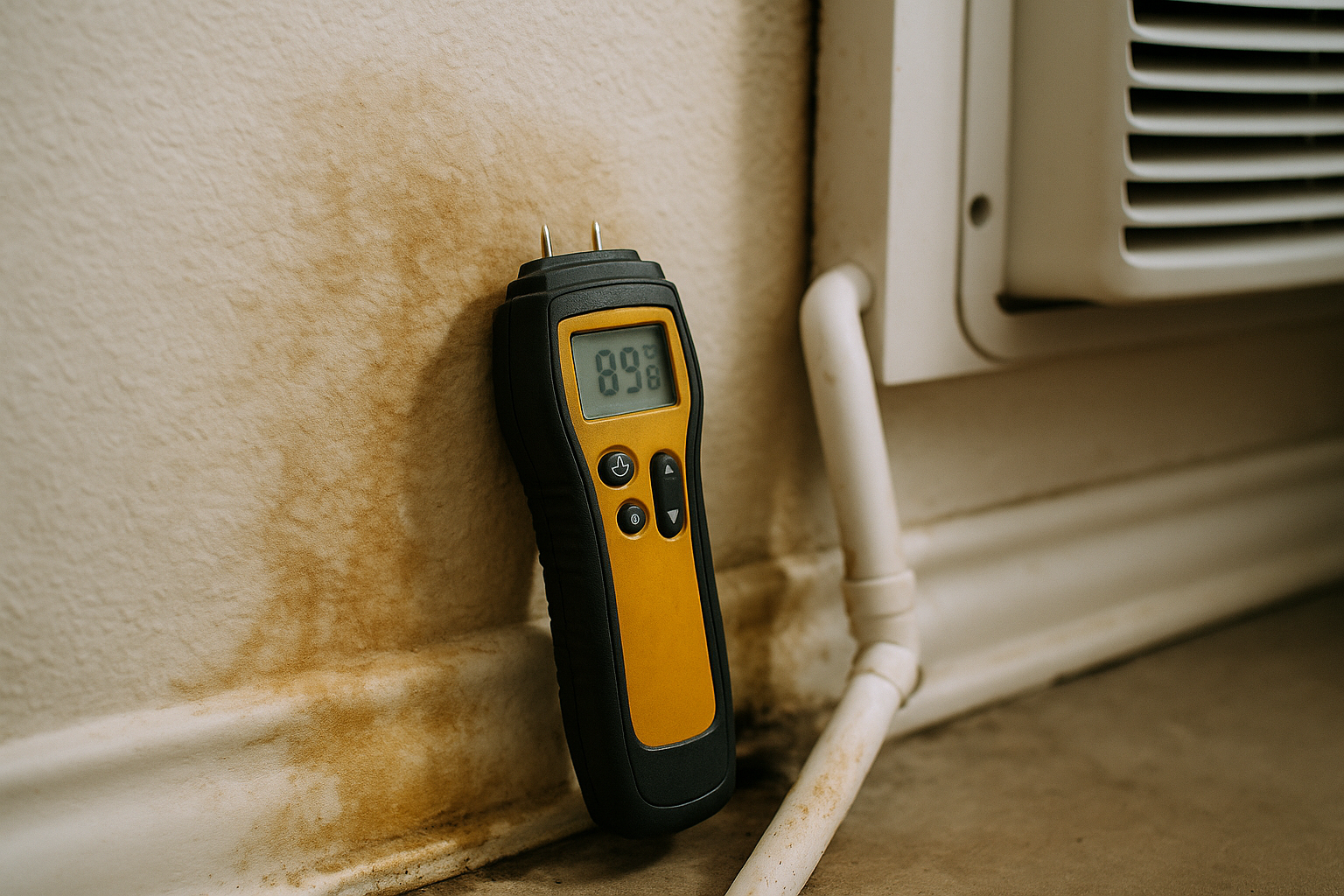
    If you’ve stepped outside in Aubrey today, you already know: the heat index is sitting at 107°, there’s an active Heat Advisory, and every AC unit in town is running like it’s got somewhere to be. That’s exactly the kind of stretch when we start getting calls about water where there shouldn’t be water — a wet spot on the ceiling, a puddle by the closet where the air handler lives, a musty smell that wasn’t there last week.

    Here’s the thing worth knowing before it becomes an emergency: your AC isn’t just cooling your house right now. It’s also working overtime to pull moisture out of the air, and all that condensation has to go somewhere. When it can’t get where it’s supposed to go, it goes where it’s not supposed to — into your ceiling, your walls, your floors.

    Why heat waves like this cause condensation drain backups

    Your AC’s condensate drain line carries away the water your system pulls out of the air as it cools. On a mild day, that’s a manageable trickle. On a day like today, with the unit running nearly nonstop to keep up, it’s a lot more water moving through that same small line — and it doesn’t take much to back it up.

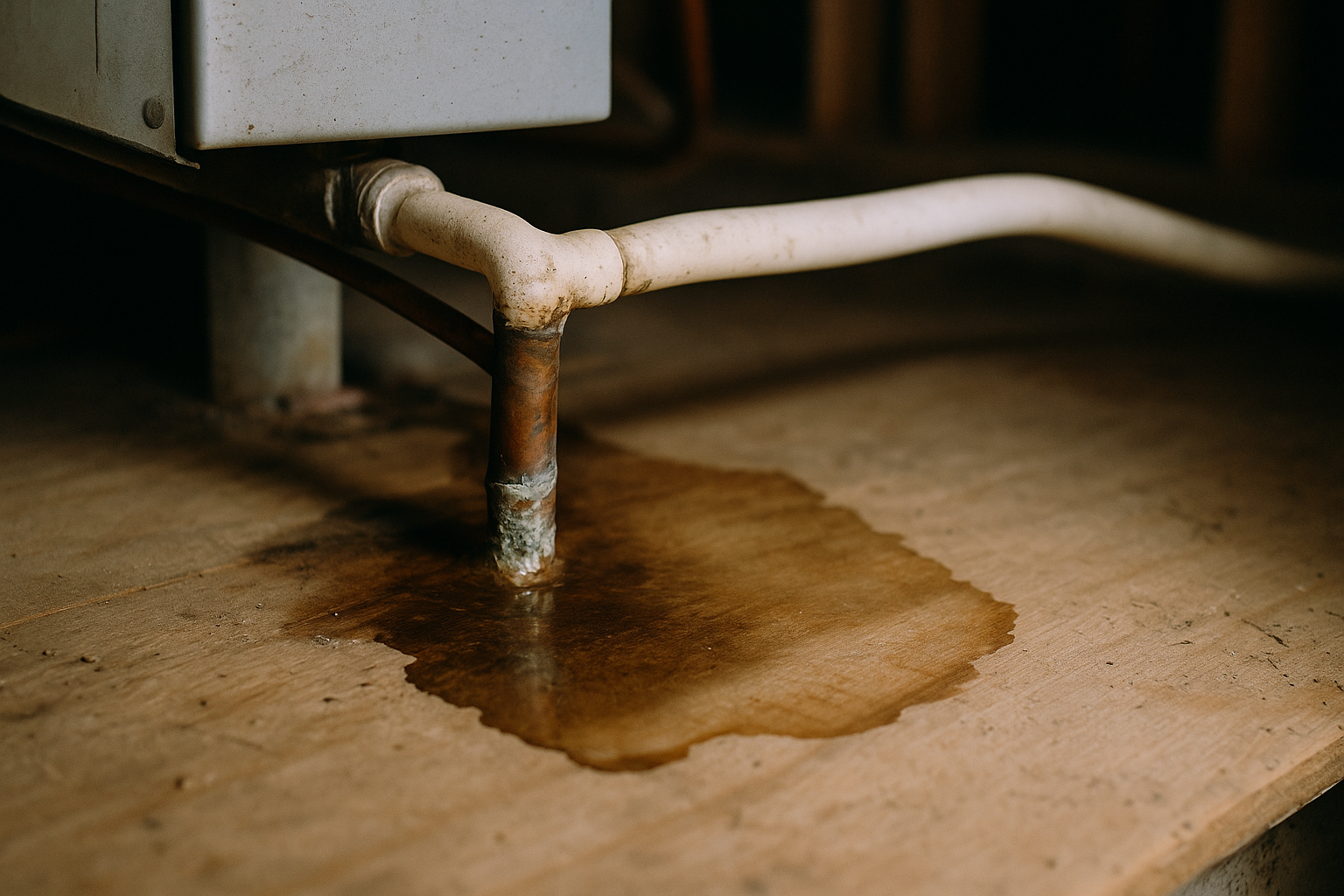
    A little algae, a bit of dust, a kinked line, or a clogged drain pan can all cause the same result: water backing up instead of draining out. On a normal day, you might not even notice. On a 107° heat index day, with the system running around the clock, that backup can fill a drain pan or soak a ceiling in a matter of hours.

    What to check right now

    This takes five minutes and it’s worth doing today, especially with the advisory in effect:

    • Look at the ceiling below or near your indoor AC unit for any staining, sagging, or bubbling paint.
    • Check the drain pan under your air handler (usually in the attic, a closet, or the garage) for standing water.
    • Feel around the base of the unit and nearby walls for dampness or a musty smell.
    • Look at the drain line outside — it should be dripping steadily, not dry and not backed up.

    If any of that turns up wet, damp, or musty, don’t wait it out. Condensation leaks are quiet by nature — they don’t flood a room, they seep, which means the real damage is often happening inside your walls and ceiling long before it shows up where you can see it. That’s the hidden water damage that turns a $200 drain-line clog into a much bigger repair.

    Why speed actually matters here

    I’ll be honest with you: not every AC leak needs an emergency call. If you catch it early, drying it out and clearing the line can be a simple fix. But once moisture sits in drywall, insulation, or subfloor for more than a day or two — especially in heat and humidity like we’ve got right now — mold risk climbs fast, and “small leak” turns into “replace the ceiling.”

    That’s really the whole judgment call: how long has it been wet, and how humid is it in there. Those two things decide whether you’re looking at a quick dry-out or something more involved.

    Merlene Mitigation is running free inspections through July 29th

    Because this kind of heat tends to expose problems all at once across North Texas, we’re offering free water damage inspections through July 29th. If you’ve found something damp, or you just want a second set of eyes before it becomes a problem, there’s no cost and no pressure to walk through it with you.

    When you call, you’re talking to Josh — the person who actually shows up, assesses the moisture, and tells you straight whether it’s a simple fix or something that needs real drying equipment. No call center, no subcontracted stranger, no upsell. Low overhead means fair prices, and one accountable person means nothing gets lost between “who do I call” and “who actually fixes it.”

    If you’re in Aubrey, Pilot Point, or anywhere in North Texas and something feels off with your AC or you’ve spotted water where it shouldn’t be, reach out. We’d rather look at it today and tell you it’s nothing than have you find out in three weeks that it wasn’t.

    And if nothing’s wrong today but you’d rather be ready than caught off guard next time, our free guide, The First 24 Hours After Water Damage, walks through exactly what to do in the first hours after you find water — before you ever need it.

    -Ally
  • AC Condensation Leaks in Pilot Point: Act Now During Heat Advisory

    AC Condensation Leaks in Pilot Point: Act Now During Heat Advisory

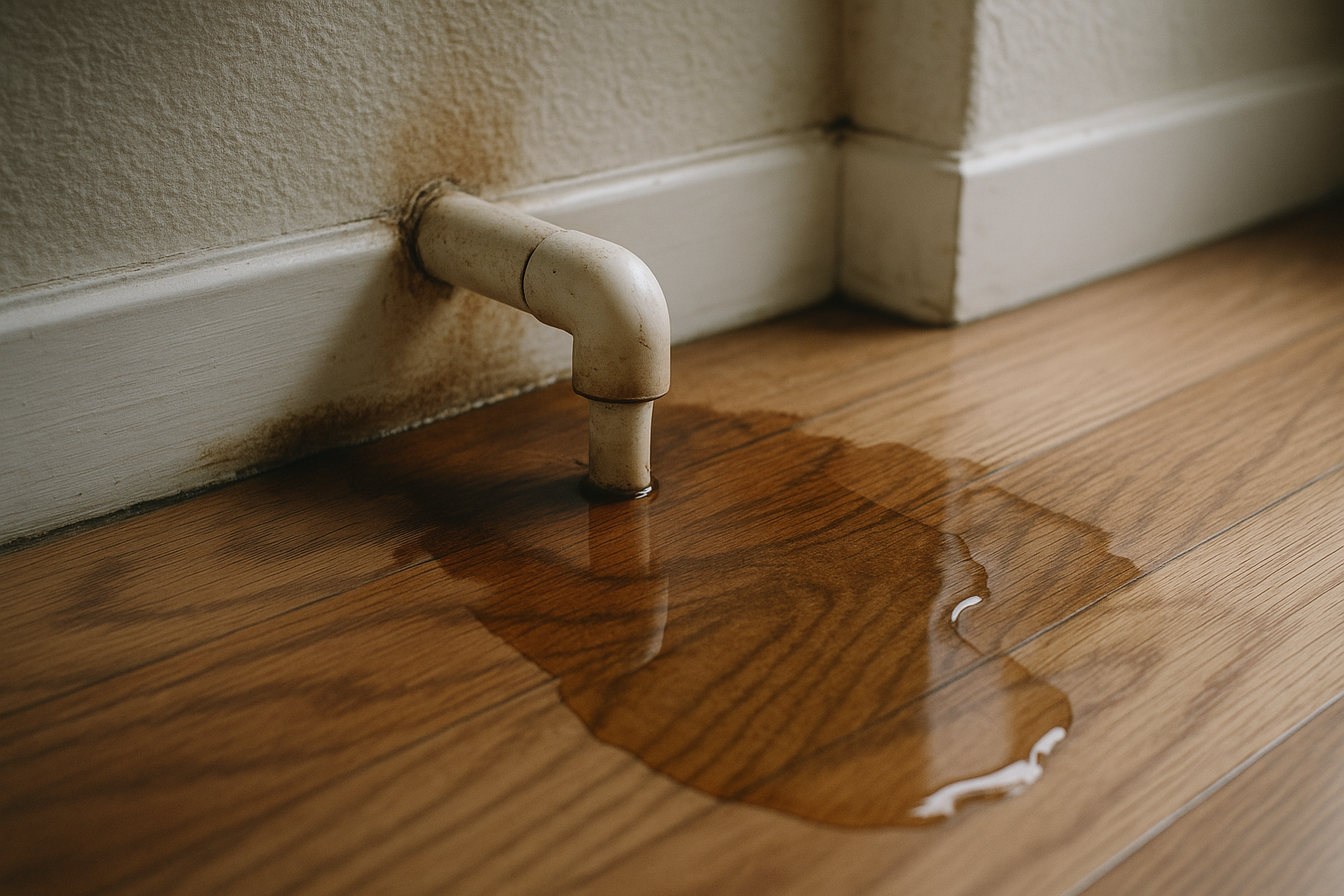
    If your ceiling has a damp spot near the AC vent, or there’s a musty smell you can’t quite place, don’t wait until tomorrow to check it out. With the heat index sitting at 108° and a Heat Advisory in effect through tomorrow evening, AC systems across Pilot Point are running almost nonstop — and that’s exactly the condition that causes condensation drain backups.

    Here’s why this matters right now, not next week.

    Why Extreme Heat Causes AC Leaks

    Your air conditioner doesn’t just cool your house — it pulls a lot of moisture out of the air while it does it. That moisture collects on the evaporator coil and drips into a condensate drain line, which carries it safely outside.

    When it’s this hot, your system runs longer and harder to keep up, which means it’s pulling more moisture than usual, more often. That drain line was probably fine on a normal Tuesday. Under a Heat Advisory, with the unit running almost continuously, algae and gunk that’s been sitting in that line for months can finally clog it completely.

    Once that line clogs, the water has nowhere to go but back up — into the drain pan, over the edge, and into your ceiling, walls, or attic insulation. Often quietly, often for hours before anyone notices.

    What to Check Today

    This takes five minutes and could save you a much worse week:

    • Look at your ceiling near AC vents or around any interior unit — especially in attics or closets. Any new stain, sag, or damp spot is a signal, not something to watch and wait on.
    • Check the drain pan under your indoor unit, if you can access it. Standing water there means the line is already backing up.
    • Find the drain line’s exit point outside (usually a PVC pipe near the outdoor unit) and make sure water is actually dripping from it while the AC runs. No drip during a 108° day is a red flag.
    • Smell for must or mildew near vents or closets. Moisture that’s been sitting a while starts to smell before it starts to show.

    Why This Isn’t a “Wait and See” Problem

    I know it’s tempting to think a little water stain can wait until the heat breaks. Here’s the honest truth: the surface might look dry within a day, but the wood, insulation, and drywall underneath can hold moisture for a long time — and that’s exactly the environment mold needs to get started. Heat and humidity together speed that process up considerably.

    This is one of those situations where what you can’t see matters more than what you can. A stain the size of a dinner plate today can mean saturated insulation and a hidden problem well beyond that visible spot.

    If You Find Active Water Right Now

    If you’re finding actual dripping or standing water today, the first move is simple: get the AC system shut off at the thermostat (not the drying equipment, if you already have any running — just the AC itself) so it stops adding more moisture, then get eyes on it as soon as possible. The sooner water gets extracted and the area starts drying, the smaller this stays.

    We’re Local, and We’re Genuinely Glad to Help

    Merlene Mitigation is based right here in Pilot Point. When you call, you’re not getting routed to a call center or a rotating crew — you’re getting Josh, one accountable person who will look at your specific situation honestly and tell you exactly what’s going on, no upsell, no runaround.

    Right now, through July 29th, we’re offering free water damage inspections for Pilot Point and North Texas homeowners. If you’re not sure whether that ceiling stain is nothing or something, this is a low-pressure way to find out for certain.

    If everything checks out fine today but you’d like to be ready just in case, we put together a free guide called “The First 24 Hours After Water Damage” — worth a read before you need it, not after.

    And if you’re dealing with active water right now, don’t wait on us to get things moving — give us a call. We’ll walk you through it.

    And if this whole post has you thinking “I’d just like to have a plan ready before this ever happens to me” — that’s exactly what our free guide, The First 24 Hours After Water Damage, is for. No pressure, just something worth having on hand.

    -Ally

  • AC Condensation Leaks in Denton, TX: Why Extreme Heat Floods Homes

    AC Condensation Leaks in Denton, TX: Why Extreme Heat Floods Homes

    If you stepped outside today, you already know: Denton County is under a heat advisory, and that 106° heat index isn’t just miserable, it’s dangerous for your home too. Your AC unit has been running nonstop since sunrise, and somewhere in your attic or a closet, a small plastic pipe is working overtime to keep up. When that pipe backs up, it doesn’t leak a little. It floods.

    I want to walk you through exactly why this happens on days like today, and what you can check right now, before you come home to a soggy ceiling or a puddle spreading across the closet floor.

    Why Extreme Heat Causes AC Condensation Leaks

    Your air conditioner doesn’t just cool air, it pulls moisture out of it. That moisture drips off the evaporator coil and runs out through a small condensate drain line, usually PVC pipe, into a drain or outside your home.

    On a normal summer day, that system handles the job fine. But on a day like today, with a heat index over 100°, your AC is running longer and harder than usual, which means it’s pulling more moisture out of the air, more often. More condensation means more water trying to move through that same narrow drain line.

    If there’s already a partial clog in there, algae, dust, a little sludge buildup, and there almost always is some, a normal day might never push enough water through to cause a problem. A day like today can be the tipping point.

    The Overflow Pan Is Your Last Line of Defense

    Most systems have a secondary drain pan under the unit specifically to catch overflow if the primary line clogs. It’s a good safety net. But it’s not designed to hold water indefinitely, and if it has its own crack, rust spot, or a clogged secondary drain, that water goes straight onto your ceiling drywall, your attic insulation, or your closet flooring.

    This is exactly the kind of water damage Denton homeowners see spike during heat advisories like this one. It’s quiet, it’s usually hidden above a ceiling or behind a wall, and by the time you notice a stain or a drip, there’s often already more moisture back there than you’d think.

    What to Check Right Now

    • The drain line termination point — usually a PVC pipe near your outdoor unit or exterior wall. Is it actively dripping? A slow, steady drip is normal on a hot day. No drip at all could mean a clog upstream.
    • Any ceiling near an attic-mounted air handler — look for new discoloration, soft spots, or a musty smell.
    • Closets or utility rooms with an indoor unit — check the floor and the base of the unit for standing water or dampness.
    • The condensate pan itself, if you can safely access it — is it full or overflowing?

    If you find water where it shouldn’t be, turn off the AC system at the thermostat (not just lower the temperature) until it can be inspected. That stops new water from being added while you sort out next steps.

    Why a Small Leak Turns Into a Big Problem, Fast

    Here’s the honest truth: it’s not the water itself that’s most expensive. It’s what happens in the days after, when moisture sits inside drywall, insulation, or subfloor without anyone catching it. That’s when you start looking at mold growth and structural damage instead of a simple repair.

    This is why, on a day like today, I’d rather you catch it early than “wait and see.” A stain the size of a dinner plate today can mean a whole section of ceiling tomorrow.

    If You Find Standing Water

    Get the AC off, and get the water addressed quickly. Structural drying isn’t about a shop vac and a box fan overnight, it’s about getting the moisture out of the materials themselves before it turns into something worse. Every hour matters more on a 106° day than it would on a mild one, simply because the AC will keep working just as hard tomorrow.

    Not every leak is an emergency, and I’d never tell you otherwise just to get a phone call. But if you’re seeing active water, a sagging ceiling, or a smell that wasn’t there yesterday, that’s worth a same-day look.

    If you’re in Pilot Point or anywhere around the North Texas area and you’re dealing with a leak today, give Merlene Mitigation a call. It’s just Josh, no call center, no subcontractor roulette, one person who’ll come look at it, tell you honestly what you’re dealing with, and walk you through what happens next.

    And if today isn’t your emergency but you want to be ready before the next heat wave hits, grab our free guide, The First 24 Hours After Water Damage. It’s the same advice I’d give a neighbor, free, no strings.

    -Ally

  • AC Condensation Leaks in Tioga, TX: Hidden Water Damage Risk

    AC Condensation Leaks in Tioga, TX: Hidden Water Damage Risk

    If your AC has been running nearly nonstop this week, you’re not imagining it. With the heat index hitting 110° across North Texas, every system in Tioga is working harder than it was built to handle for weeks at a time. That’s tough on your unit, and it’s tough on something people rarely think about: the condensation drain line quietly carrying water away from your indoor coil, every single hour, all day long.

    Here’s the part that catches folks off guard. When that line clogs or backs up, you often don’t see it happening. No dramatic leak, no puddle in the middle of the floor. Just water finding its way into a wall cavity, a ceiling void, or a crawl space, day after day, while your house looks completely normal from the inside.

    Why This Happens So Much More in Extreme Heat

    Your AC’s job is to pull humidity out of the air, and that moisture has to go somewhere. Normally it drips into a pan and drains outside through a small condensate line. But when a system runs longer and harder, like it has to in a 110° heat index, it pulls more moisture than usual, and the drain works overtime right along with it.

    Algae, dust, and debris build up inside that line over time no matter what, but heavy runtime speeds the whole process up. A line that’s been fine for months can back up in a matter of days when the system barely gets a break.

    Where the Water Actually Goes

    This is the part that turns an AC hiccup into real water damage. Depending on how your ductwork and lines are routed, a backed-up drain can send water into:

    • The wall cavity behind or below your indoor air handler
    • Ceiling drywall, if your unit is in an attic
    • Crawl space framing and insulation
    • Subfloor around a closet or utility space

    None of those places are somewhere you look every day. That’s exactly why this kind of water damage in Tioga homes tends to get discovered late, usually when a stain finally shows up on a ceiling or a musty smell starts creeping into a room.

    Early Signs Worth Checking This Week

    You don’t need any special equipment to catch this early. A few minutes of looking is usually enough:

    • A musty smell near a closet, utility room, or hallway that wasn’t there before
    • Soft or discolored drywall near your indoor unit
    • Visible water or standing moisture in the drain pan itself
    • Your AC’s overflow safety switch shutting the system off (that switch is doing its job, so don’t just reset it and ignore it)
    • A ceiling stain that seems to appear out of nowhere

    If you catch any of these now, while the heat index is still up, you’ve got a real chance to deal with it before it turns into something bigger. Wet wood and wet drywall don’t dry on their own in a Texas summer with the humidity we’ve got, and the longer that moisture sits inside a wall or under a house, the more it invites the kind of hidden damage that’s expensive to fix and even harder to catch after the fact.

    Why “It Looks Dry” Isn’t the Same as “It Is Dry”

    This is something I say a lot, and it’s worth repeating here. Surfaces dry fast. The structure underneath, the framing, the subfloor, the insulation, holds onto moisture a lot longer than you’d guess just by touching drywall or looking at a stain. That’s where real damage and mold risk actually live, and it’s why a quick visual check is a good first step, not a final answer.

    If You Find Something

    If you spot any of this, the honest first move is to shut off your AC’s power at the breaker or thermostat and get eyes on it, rather than let it keep draining into the same spot. Beyond that, this is exactly the kind of thing worth having a second set of eyes on, especially with how much moisture North Texas air holds onto right now.

    Right now, through July 29th, we’re offering free water damage inspections for homeowners in Tioga and the surrounding area. No pressure, no sales pitch, just an honest look at what’s actually going on so you know where you stand.

    And if nothing’s going on today but you’d rather be ready than caught off guard, I put together a free guide called The First 24 Hours After Water Damage. It walks through exactly what to do first if you ever do find water where it shouldn’t be.

    Merlene Mitigation is based right here in Pilot Point, and Josh personally handles every inspection and every job, no crew of strangers, no big franchise overhead. That keeps things honest and keeps prices fair. If you’re in Tioga or anywhere nearby and want a second opinion on what you’re seeing, give us a call. We’re glad to help, heat wave or not.

    -Ally

  • AC Condensation Leaks in Providence Village, TX: 108° Heat

    AC Condensation Leaks in Providence Village, TX: 108° Heat

    If you live in Providence Village and your AC has been running nonstop this week, here’s something worth checking today: that little drain line quietly carrying condensation away from your unit. With the heat index sitting at 108° across North Texas today and tomorrow, your system is working harder than it has all year, and that means more condensation, more strain on the drain line, and a real uptick in the kind of AC leaks that start small and end up costing a lot more than a service call.

    I want to walk you through why this happens, what to look for, and what to do about it, before it turns into a wall full of wet insulation.

    Why 108° heat makes AC leaks more likely

    Your air conditioner doesn’t just cool the air, it pulls moisture out of it. That moisture collects on the evaporator coil and drips down into a drain pan, then out through a small PVC drain line, usually to the outside of your house.

    When the heat index climbs into the 100s, your AC runs longer and harder to keep up, which means it’s pulling significantly more moisture out of the air than on a mild day. More condensation means more water trying to move through that same small drain line. If there’s already a little algae buildup, a bit of dust, or a slow clog in there, this is exactly the kind of stretch where it finally backs up.

    And here’s the part that catches people off guard: a condensation backup doesn’t announce itself. It doesn’t sound an alarm. It just quietly overflows the drain pan, or backs up into the ductwork, and starts finding its way into places you can’t see, like the wall cavity behind a closet, or the insulation above a hallway ceiling.

    Early signs worth checking right now

    You don’t need special equipment to catch this early. A few minutes of looking is usually enough:

    • A musty smell near a vent, closet, or the room where your indoor AC unit or air handler is located.
    • A ceiling stain that’s new, even faint, especially if your air handler is in the attic.
    • Water or a damp spot around the base of the indoor unit or near the drain line outside.
    • Your AC running longer than usual without cooling like it should, which can point to a bigger issue alongside the drain.
    • A visibly slow or dripping drain line outside your home, where it’s supposed to drain freely.

    If you catch any of these today, don’t wait it out. Water that’s found its way into drywall or insulation doesn’t dry on its own just because the AC gets fixed. It sits there, and that’s when hidden water damage and mold risk really start.

    What you can do right now

    A few simple things go a long way during a stretch like this:

    • Have your AC technician check and flush the condensate drain line as part of routine maintenance, especially if it’s been a while.
    • Keep an eye on the drain pan and line every few days during peak heat, not just once a season.
    • If you notice standing water in the pan or a damp ceiling, treat it as worth a look right away, not something to check on “this weekend.”

    I’ll be honest with you: most of the time, a slow drain line is a simple fix. But if water has already gotten into your walls, ceiling, or insulation, that’s a different situation, and it’s worth having someone assess the actual moisture, not just guess based on what you can see. Surfaces dry fast. What’s underneath doesn’t always follow.

    If you’re in Providence Village, Pilot Point, or nearby

    This is exactly the kind of week where a fast, honest inspection saves people money down the road. I’m not going to tell you every AC drip means a disaster, because it usually doesn’t. But when it’s 108° outside and your system hasn’t had a break in days, it’s worth knowing for sure instead of hoping it’s fine.

    If you’re dealing with a leak, a musty smell, or just want a second set of eyes on it, give Merlene Mitigation a call. Josh is local to Pilot Point, handles these inspections personally, and will tell you straight whether it’s something small or something that needs real attention. No inflated diagnosis, no unnecessary work, just an honest answer.

    And if nothing’s happening at your place right now but you want to be ready just in case, we put together a free guide called The First 24 Hours After Water Damage. It walks through exactly what to do in those first critical hours, so you’re not scrambling if the day ever comes.

    Stay cool out there, and keep an eye on that drain line.

    -Ally

  • AC Condensation Leaks in Cross Roads, TX: Act Now

    AC Condensation Leaks in Cross Roads, TX: Act Now

    Right now, somewhere in Cross Roads, an AC unit is running nearly nonstop trying to keep up with a 110° heat index — and its condensation drain line is quietly clogging with the algae and gunk that builds up all summer. Nobody notices until water is dripping through a ceiling or pooling around a closet air handler. If your AC has been working overtime this week, this is the moment to pay attention.

    Why this heat wave is different for your AC

    Every air conditioner pulls moisture out of the air as it cools your home. That moisture has to go somewhere — usually down a small condensate drain line to the outside or a floor drain. On a normal day, that’s a manageable trickle.

    But during a multi-day heat advisory like this one, your system runs far longer and far harder than usual. More run time means more condensation produced, hour after hour, with barely a break. A drain line that was “just barely” keeping up in June can back up fast when it’s asked to handle this much water this many hours in a row.

    That’s the real risk with extreme heat: it’s not just uncomfortable, it’s the exact condition that turns a slow, hidden clog into a real water intrusion event.

    What an AC condensation leak actually looks like

    These leaks are sneaky because they usually start small and out of sight — inside a closet, above a ceiling, or behind a wall where the air handler or ductwork lives. Here’s what to check today, especially if your system has been running nonstop:

    • A musty or damp smell near a closet, hallway, or attic access
    • A ceiling stain or soft spot, especially below an attic-mounted air handler
    • Water or a puddle around a floor-mounted indoor unit
    • The drain pan overflow switch tripping and shutting your AC off (a good safety feature doing its job)
    • Visibly slow or standing water in the clear PVC condensate line, if yours is visible

    If you catch any of these today, don’t wait it out. Hidden moisture behind drywall or under flooring doesn’t dry on its own, and it doesn’t wait for a convenient time to become mold.

    A quick, honest note on prevention

    You can often flush a condensate line yourself with a wet/dry vac at the outside termination point, and a lot of homeowners do this as basic seasonal maintenance. I’d never tell you to pay someone for something you can safely do yourself. But if you’ve already got standing water, a stained ceiling, or you’re not sure how far the moisture has traveled, that’s a different situation — one where guessing wrong costs a lot more than calling to check.

    If water has already gotten in

    The first hours matter more than people realize. The goal on day one is simple: get the water out, get airflow and dehumidification on the wet materials, and stabilize the area so it stops spreading. A full plan for repairs comes after a 24–48 hour reassessment, once we can see how the structure is actually drying — not before.

    I know the equipment is loud and the fans are annoying to live with for a few days. I get it. But I won’t ever tell you it’s fine to shut them off early — that’s exactly how a contained leak turns into hidden mold weeks later. What I can promise is that I’ll make the process as least disruptive as possible while it’s running.

    You’re not overreacting

    With a heat advisory stacking days of extreme AC use back to back, this is exactly the window when quiet drain issues turn into real water damage across North Texas. Checking your closet or attic access today isn’t paranoid — it’s the smart, five-minute habit that saves a homeowner thousands.

    If you’re in Cross Roads, Pilot Point, or anywhere nearby and you’re seeing signs of a leak, or you just want a second set of eyes before it becomes a bigger problem, give me a call. I’m running free water damage inspections through the end of the month, no pressure, no obligation — just an honest look and a straight answer about what you’re dealing with.

    -Ally

  • AC Condensation Leaks in Krugerville, TX: Prevent Water Damage

    AC Condensation Leaks in Krugerville, TX: Prevent Water Damage

    If your AC has been running nonstop the last couple of days, go check your drain line right now — I’ll wait. With the heat index hitting 110° today and tomorrow across North Texas, this is exactly the kind of stretch that turns a small, invisible drip into a soaked ceiling or a warped wall in Krugerville homes.

    I know that sounds dramatic for something as unglamorous as air conditioner condensation. But this is one of those quiet water damage causes that catches people off guard every single summer, and this week’s heat is setting up the perfect conditions for it.

    Why extreme heat causes AC condensation backup

    Your air conditioner isn’t just cooling air — it’s pulling moisture out of it, especially on days like today when the outdoor heat index is brutal and your unit is working overtime. All that moisture collects as condensation and is supposed to drain out through a small PVC pipe, usually running from the indoor air handler out to the side of your house.

    When your AC runs harder and longer (which it will, at 110°), it produces more condensation than usual. If that drain line has even a partial clog — algae, dirt, a bit of sludge — the extra volume can be enough to back the water up and overflow the drain pan instead of draining outside.

    From there, that water doesn’t stay put. It runs into your attic insulation, down through your ceiling drywall, or behind the walls near your air handler — often for hours or days before anyone notices a stain or a soft spot in the ceiling.

    A quick check that takes two minutes

    Here’s what I’d do in my own house today:

    • Find your indoor air handler (often in a closet, attic, or garage) and look at the drain pan underneath it — is there standing water?
    • Go outside and find where the condensate drain line exits the house (usually a small white PVC pipe near the unit). Is it actively dripping? A slow, steady drip during peak heat is normal. No drip at all, when your AC has clearly been running, can be a sign of a clog.
    • Check the ceiling below or near your air handler for any new discoloration, sagging, or a musty smell.
    • If your system has a secondary drain pan with a float switch, make sure nothing’s tripped it — some units are built to shut the AC off before it overflows, which is a good problem to have.

    If you see standing water, active dripping indoors, or any ceiling staining — that’s not a “wait and see” situation. Water sitting in a ceiling cavity in 110° heat and humidity is exactly the environment mold loves, and the longer it sits, the more it spreads into places you can’t see from the room.

    What happens if it’s already gotten past “just noticed it”

    If you’re past the two-minute check and you’ve already got wet drywall, a stained ceiling, or water damage spreading, the first priority isn’t guessing — it’s stopping the water, drying the structure properly, and figuring out how far it traveled. That’s where a moisture meter and thermal camera earn their keep, because AC leaks love to hide behind walls and above ceilings where you’d never think to look.

    I won’t tell you it’s no big deal, and I won’t tell you it’s the end of the world either. Most AC condensation damage, caught early, is very manageable. Caught late, it gets expensive fast — that’s just the honest truth of it.

    We’re right here in North Texas

    Merlene Mitigation is based in Pilot Point, and Josh personally handles every water damage call and inspection across our North Texas service area, Krugerville included. No call center, no subcontracted stranger showing up at your door — just one accountable person who’ll tell you straight what you’re dealing with.

    Right now, through July 29th, we’re offering free water damage inspections — so if you found something during your two-minute check today, or you’re just not sure, there’s no cost to finding out.

    Give us a call. We’d rather look at it today and tell you it’s nothing than have you find out the hard way in a month.

    -Ally

  • AC Condensation Leaks in Aubrey, TX: Heat Index 109°

    AC Condensation Leaks in Aubrey, TX: Heat Index 109°

    If your air conditioner has been running nearly nonstop this week, you’re not imagining it. With the heat index climbing to 109° across Aubrey and the rest of North Texas this weekend, AC systems are working harder — and longer — than they’re built to handle for days on end. That extra strain doesn’t just show up on your electric bill. It shows up as water, often in places you won’t notice until the damage is already done.

    Why extreme heat causes condensation backups

    Your AC doesn’t just cool air — it pulls moisture out of it. That moisture collects on the evaporator coil and drips into a condensate drain line, which carries it safely outside. When your system runs around the clock in brutal heat, it produces far more condensation than usual, and that drain line has to keep up hour after hour.

    Add in the algae, dust, and debris that build up in most drain lines over a season, and you’ve got a bottleneck waiting to happen. When the line clogs, that water has nowhere to go but back into your system — and often, right down through your ceiling or into your walls.

    What to check right now

    A few minutes of checking today can save you a much harder week later:

    • Look at the drain pan under your indoor unit (usually in the attic or a closet). Standing water or rust stains mean trouble is already brewing.
    • Check the drain line’s outside termination — it’s usually a white PVC pipe near your outdoor unit. Water should be dripping out. If it’s bone dry during a heavy-run day, that can actually be a sign of a clog upstream.
    • Watch your ceilings, especially under attic-mounted units — a small brown stain today can mean saturated insulation and drywall tomorrow.
    • Listen for a shutoff switch tripping — many systems have a float switch that turns the AC off if the pan fills. If your air stops cooling and the outdoor unit isn’t running, this could be why — and it’s actually doing its job protecting your home.

    Why “it’s just a little water” is worth taking seriously

    Condensation leaks are quiet. There’s no dramatic pipe burst — just a slow drip, day after day, into insulation, drywall, or subfloor that stays damp far longer than it looks. That’s exactly the kind of moisture that leads to hidden structural damage and mold growth, because the surface can look dry while the material underneath stays wet for days.

    It looking dry is not the same thing as it being dry. That’s the piece that catches people off guard every summer.

    When to call a professional

    If you’ve found active water, a stained ceiling, or musty smell near a vent or attic unit, it’s worth having it looked at before it spreads. A clogged drain line itself is often a straightforward HVAC fix — but the water damage it’s already caused is a different question, and that’s where we come in.

    I can’t promise a leak won’t be an inconvenience — but I can promise to give you a clear, honest picture of what’s actually going on in your home, and a straightforward plan to dry it out right.

    A local offer, while this heat wave runs its course

    Through July 29th, Merlene Mitigation is offering free water damage inspections for homeowners in Aubrey and the surrounding area. No pressure, no upsell — just a real look with a moisture meter and thermal camera so you know whether that condensation leak has caused damage that needs attention, or whether you’re in the clear.

    Merlene Mitigation is a small, local, owner-operated business based just down the road in Pilot Point. When you call, you get me — Josh — not a call center, not a rotating crew. That’s how you get honest answers and fair prices, heat wave or not.

    If you’re dealing with a suspected AC leak in Aubrey or nearby, give us a call. We’d rather catch it small than let it become a bigger job for everyone.

    -Ally

  • AC Condensation Leaks in Gunter, TX: 107° Heat Causes Hidden Water Damage

    AC Condensation Leaks in Gunter, TX: 107° Heat Causes Hidden Water Damage

    If your AC has been running nonstop since sunrise and you noticed a musty smell near a vent, or a faint water stain creeping across a ceiling tile — please don’t wait until Monday to look into it. With the heat index sitting at 107° today and staying there through the weekend, this is exactly the kind of stretch that causes AC condensation leaks in Gunter, TX and across North Texas. And a lot of that damage happens quietly, inside a wall or attic, long before anyone notices a drip.

    Why extreme heat causes AC drain backups

    Your air conditioner isn’t just cooling air — it’s pulling moisture out of it, especially on brutal, humid days like this one. That water is supposed to travel down a small condensate drain line and exit safely outside. But when your unit is working overtime for days straight, a few things happen:

    • More condensation is produced than usual, faster than the line is used to handling
    • Algae, dust, and gunk that’s been sitting in the drain line finally gets pushed into a clog
    • The drain pan fills faster than a slow leak or crack can keep up with

    The result is an AC drain backup — water finds the path of least resistance, and that’s often down into a ceiling, along an attic floor, or behind a wall near your air handler.

    Why this kind of leak is so sneaky

    A burst pipe announces itself. A condensation leak doesn’t. It’s usually slow, small, and hidden in a space you don’t check every day — an attic, a closet with the air handler, above a garage. That’s what makes hidden water damage during extreme heat so much more dangerous long-term than it looks in the moment. By the time you see a stain or smell something musty, there’s a good chance moisture has been sitting in insulation or drywall for a while already.

    Surfaces dry fast. What’s underneath doesn’t. That gap is where mold risk and real structural damage live.

    What to check right now, today

    This takes ten minutes and it’s genuinely worth doing during a heat advisory like this one:

    • Look at your indoor unit or air handler closet. Any water on the floor, staining, or a musty smell?
    • Find your condensate drain line (usually a white PVC pipe near your outdoor unit). Is water actively dripping from it? A little drip is normal on a hot day like today — no drip at all when the AC is running hard can actually be a sign of a clog.
    • Check the emergency shut-off float switch if your system has one — it should stop the AC before an overflow, but it’s not foolproof, especially on an older system.
    • Look at ceilings below the attic and around vents for any new discoloration, sagging, or soft spots.

    If you find standing water, a backed-up pan, or a stain that’s spreading — turn the AC off at the thermostat, call an HVAC tech to clear the line, and don’t run the system again until it’s confirmed clear. That part’s on the HVAC side, not us — but it’s the right first move to stop the source.

    If water’s already gotten into the structure

    Once water has actually reached drywall, insulation, or subfloor, this becomes our part. The reason we push people to check now, during a stretch like this weekend’s, is that catching it early is the difference between a small, contained dry-out and something that spreads into a bigger, more expensive repair.

    I can’t promise it won’t be disruptive to have drying equipment running for a few days — but I can promise we’ll make it as least disruptive as possible, and we’ll walk you through exactly what’s happening and why, every step.

    Josh handles every inspection and every job personally — there’s no call center, no rotating crew of strangers, just one accountable local guy who lives in Pilot Point and answers his own phone. That keeps overhead low, which means fair prices, and it means the person who inspects your home is the same person who’s still checking in on it three days later.

    A quick, free step this week

    Through July 29th, we’re offering free water damage inspections for anyone in Gunter and the surrounding area who wants a second set of eyes on a stain, a smell, or just peace of mind after a run of heat like this. No pressure, no pushy sales pitch — just an honest look and a straight answer about whether it’s something to watch or something to act on.

    If you’re in Gunter, Pilot Point, or anywhere in North Texas and this weekend’s heat has you wondering about your AC or a spot on the ceiling, give us a call. I’d rather you check and it be nothing, than skip it and find out the hard way in August.

    -Ally