Tag: water damage

  • AC Condensation Leaks in Cross Roads, TX: Act Now

    AC Condensation Leaks in Cross Roads, TX: Act Now

    Right now, somewhere in Cross Roads, an AC unit is running nearly nonstop trying to keep up with a 110° heat index — and its condensation drain line is quietly clogging with the algae and gunk that builds up all summer. Nobody notices until water is dripping through a ceiling or pooling around a closet air handler. If your AC has been working overtime this week, this is the moment to pay attention.

    Why this heat wave is different for your AC

    Every air conditioner pulls moisture out of the air as it cools your home. That moisture has to go somewhere — usually down a small condensate drain line to the outside or a floor drain. On a normal day, that’s a manageable trickle.

    But during a multi-day heat advisory like this one, your system runs far longer and far harder than usual. More run time means more condensation produced, hour after hour, with barely a break. A drain line that was “just barely” keeping up in June can back up fast when it’s asked to handle this much water this many hours in a row.

    That’s the real risk with extreme heat: it’s not just uncomfortable, it’s the exact condition that turns a slow, hidden clog into a real water intrusion event.

    What an AC condensation leak actually looks like

    These leaks are sneaky because they usually start small and out of sight — inside a closet, above a ceiling, or behind a wall where the air handler or ductwork lives. Here’s what to check today, especially if your system has been running nonstop:

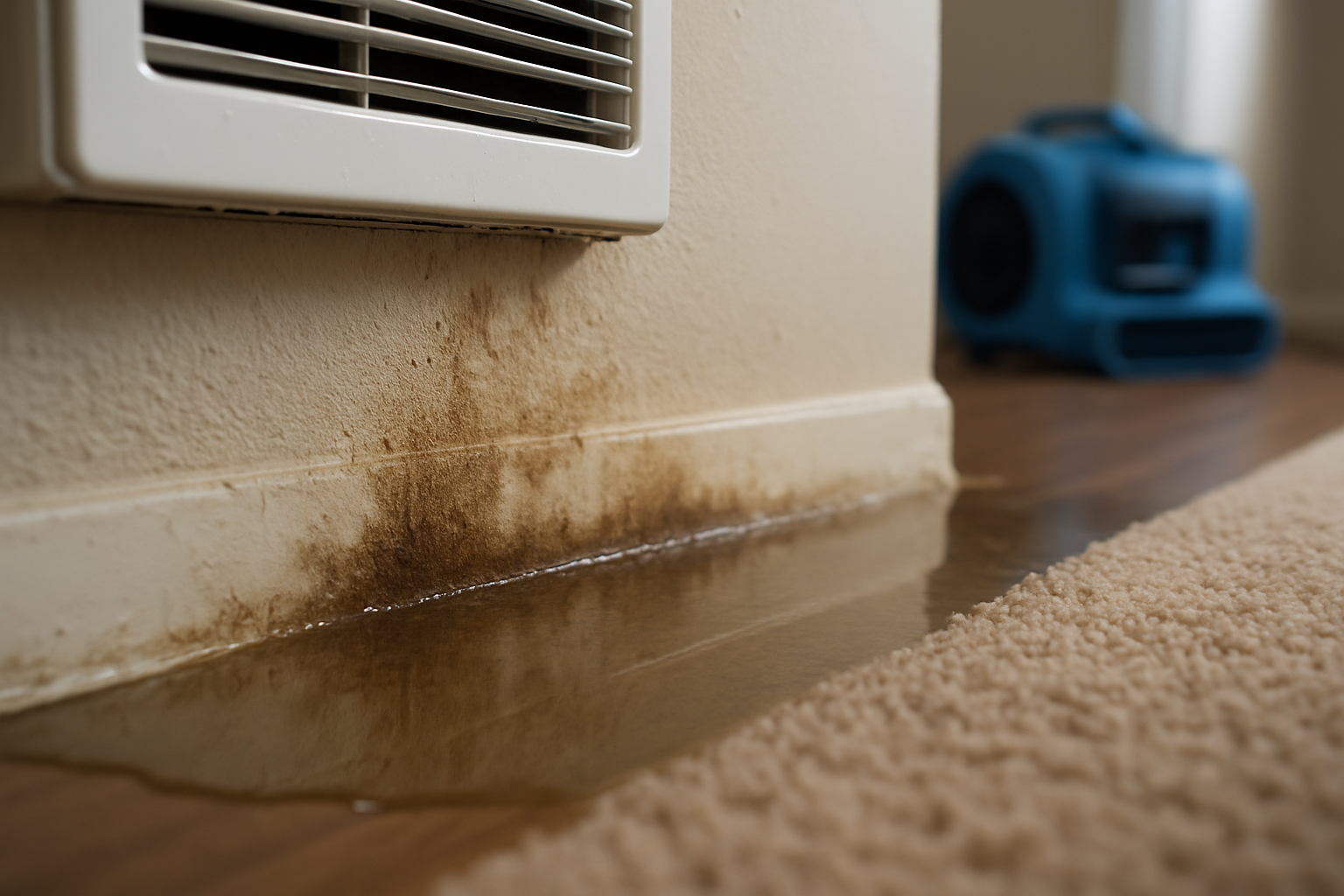
    • A musty or damp smell near a closet, hallway, or attic access
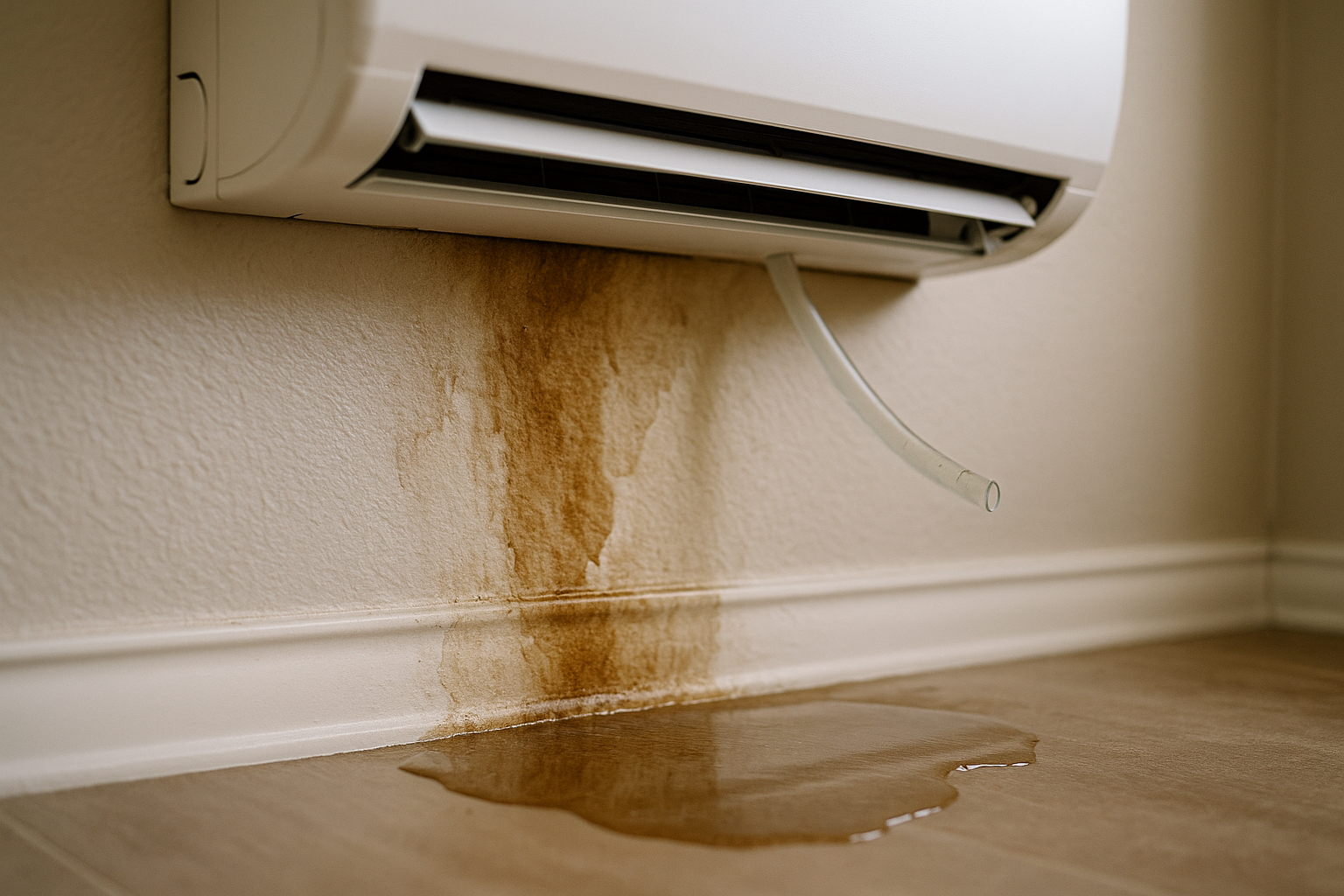
    • A ceiling stain or soft spot, especially below an attic-mounted air handler
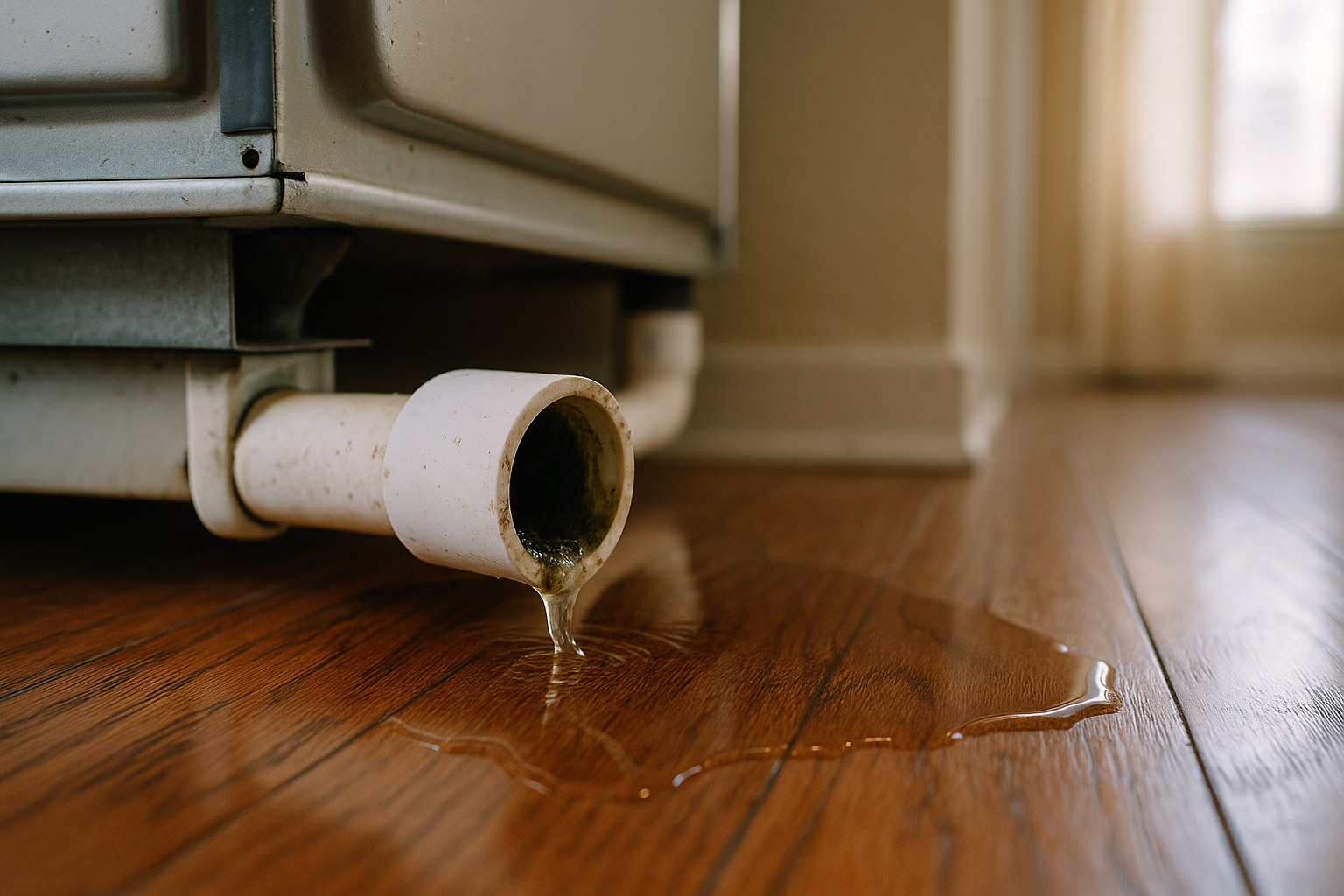
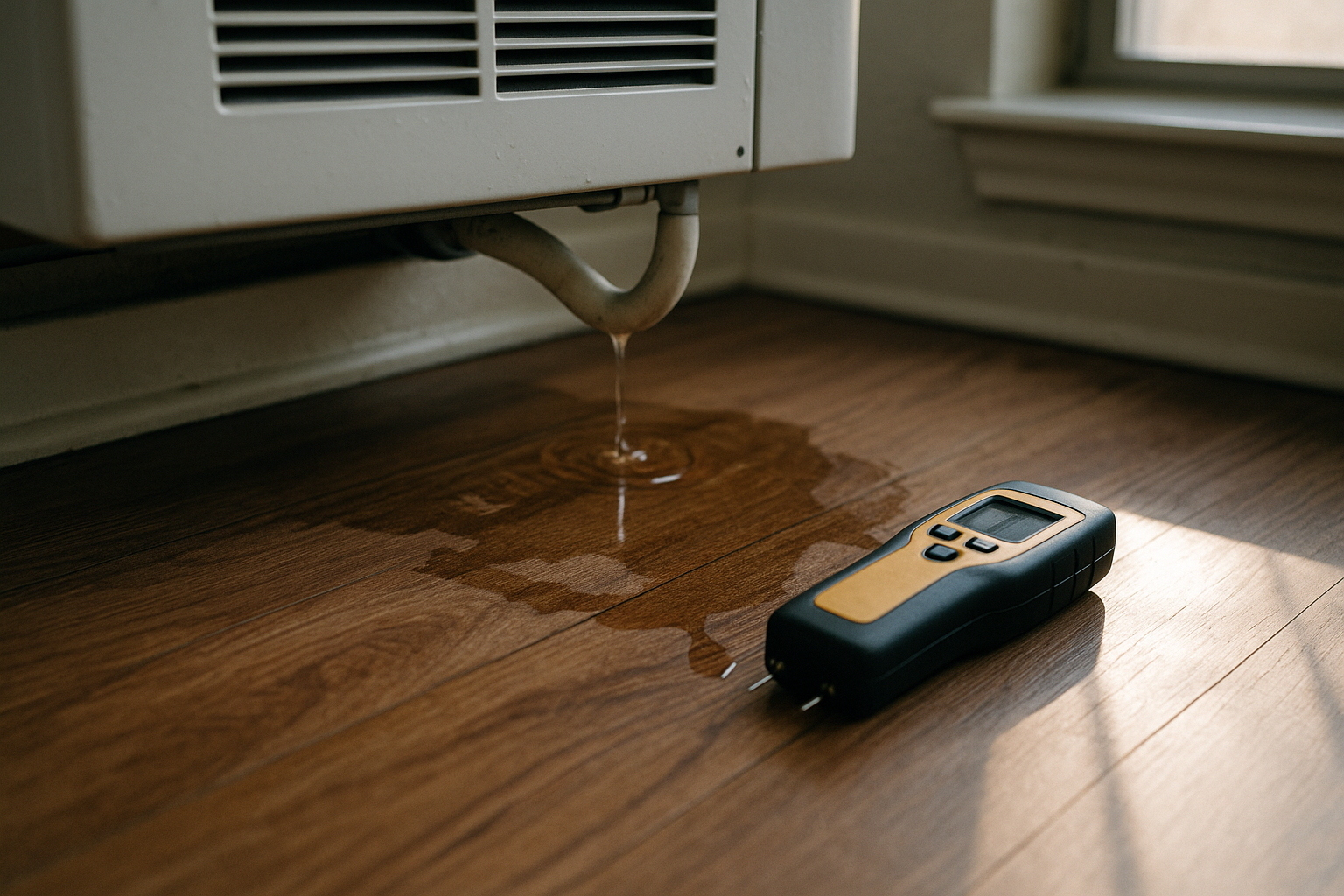
    • Water or a puddle around a floor-mounted indoor unit
    • The drain pan overflow switch tripping and shutting your AC off (a good safety feature doing its job)
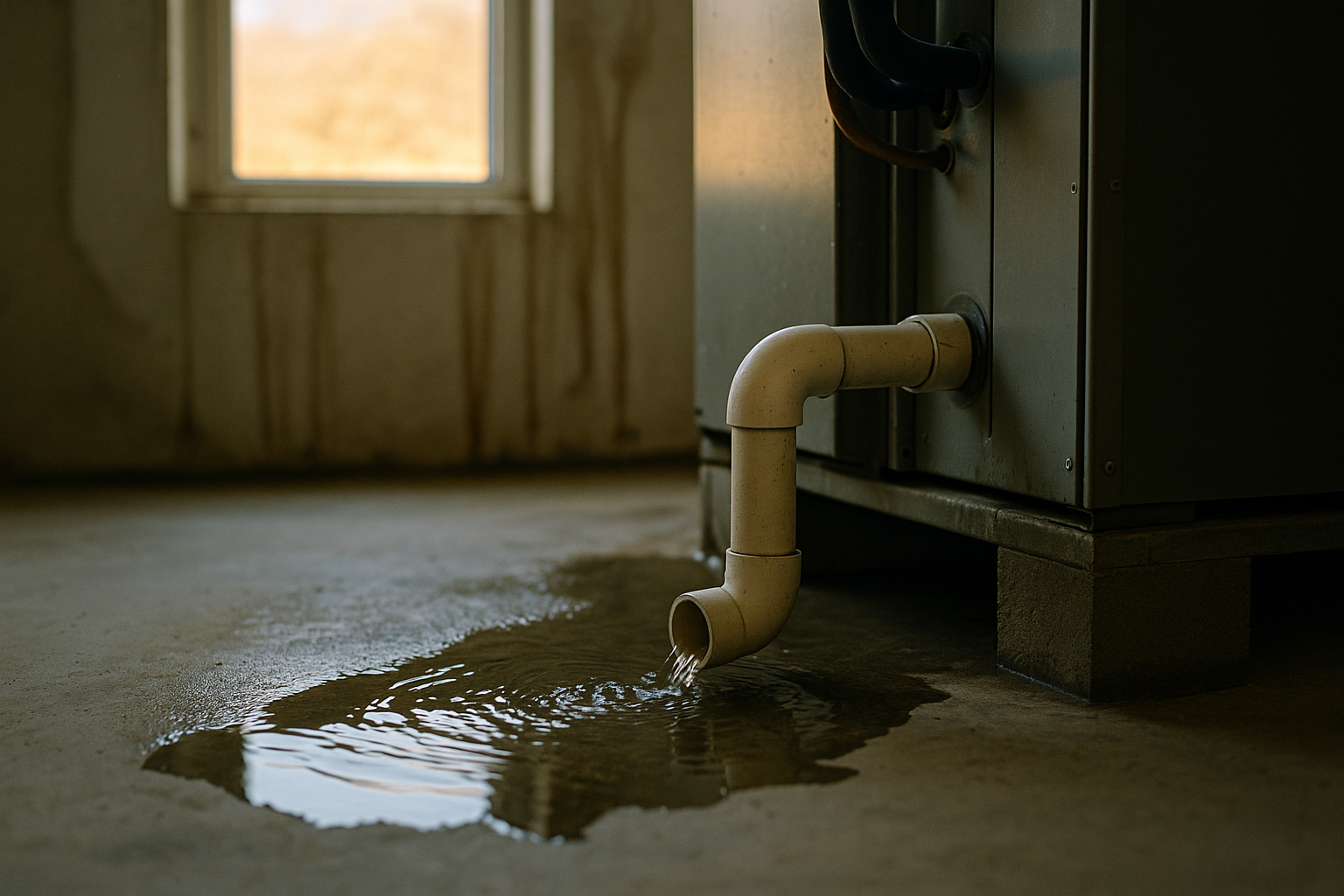
    • Visibly slow or standing water in the clear PVC condensate line, if yours is visible

    If you catch any of these today, don’t wait it out. Hidden moisture behind drywall or under flooring doesn’t dry on its own, and it doesn’t wait for a convenient time to become mold.

    A quick, honest note on prevention

    You can often flush a condensate line yourself with a wet/dry vac at the outside termination point, and a lot of homeowners do this as basic seasonal maintenance. I’d never tell you to pay someone for something you can safely do yourself. But if you’ve already got standing water, a stained ceiling, or you’re not sure how far the moisture has traveled, that’s a different situation — one where guessing wrong costs a lot more than calling to check.

    If water has already gotten in

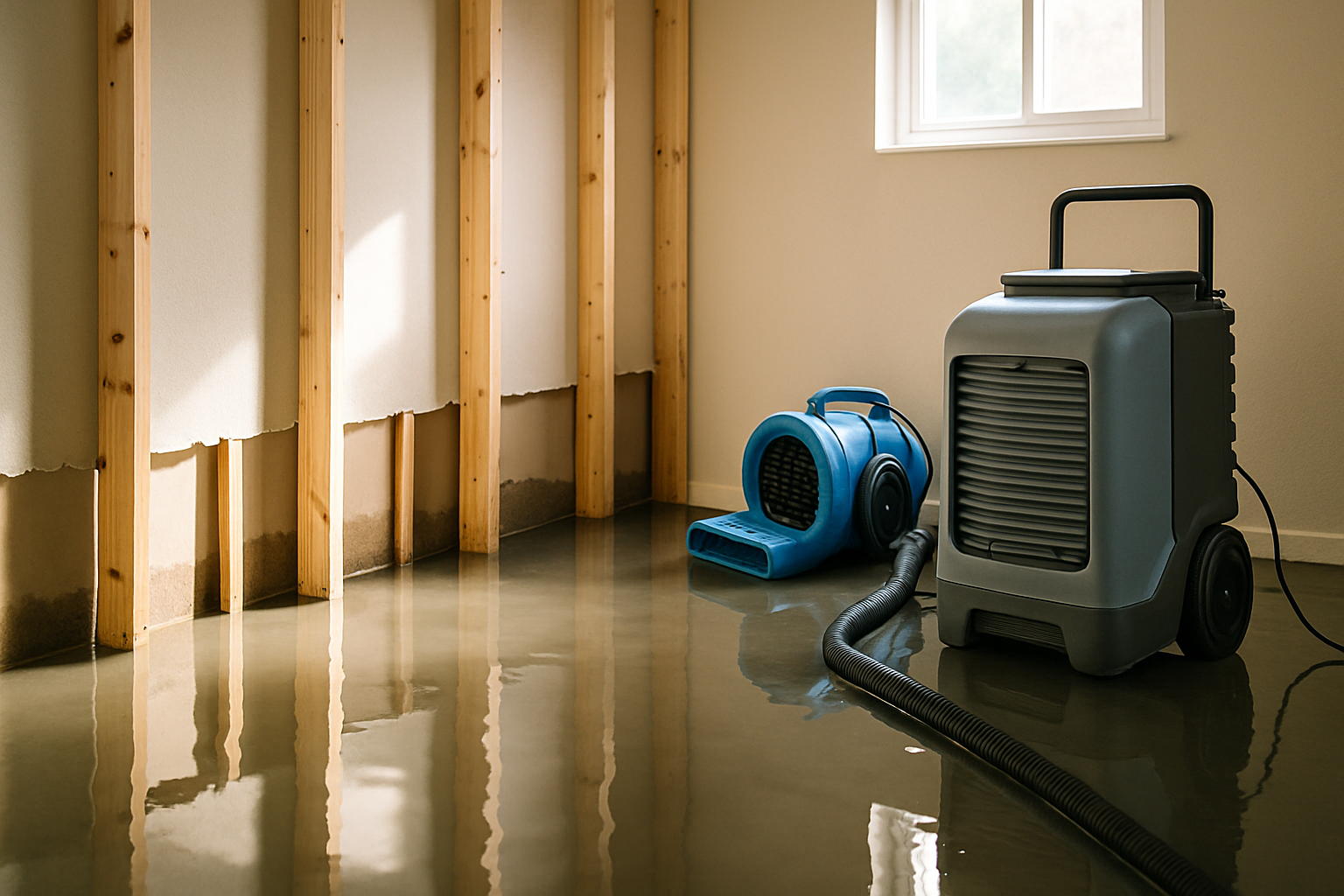
    The first hours matter more than people realize. The goal on day one is simple: get the water out, get airflow and dehumidification on the wet materials, and stabilize the area so it stops spreading. A full plan for repairs comes after a 24–48 hour reassessment, once we can see how the structure is actually drying — not before.

    I know the equipment is loud and the fans are annoying to live with for a few days. I get it. But I won’t ever tell you it’s fine to shut them off early — that’s exactly how a contained leak turns into hidden mold weeks later. What I can promise is that I’ll make the process as least disruptive as possible while it’s running.

    You’re not overreacting

    With a heat advisory stacking days of extreme AC use back to back, this is exactly the window when quiet drain issues turn into real water damage across North Texas. Checking your closet or attic access today isn’t paranoid — it’s the smart, five-minute habit that saves a homeowner thousands.

    If you’re in Cross Roads, Pilot Point, or anywhere nearby and you’re seeing signs of a leak, or you just want a second set of eyes before it becomes a bigger problem, give me a call. I’m running free water damage inspections through the end of the month, no pressure, no obligation — just an honest look and a straight answer about what you’re dealing with.

    -Ally
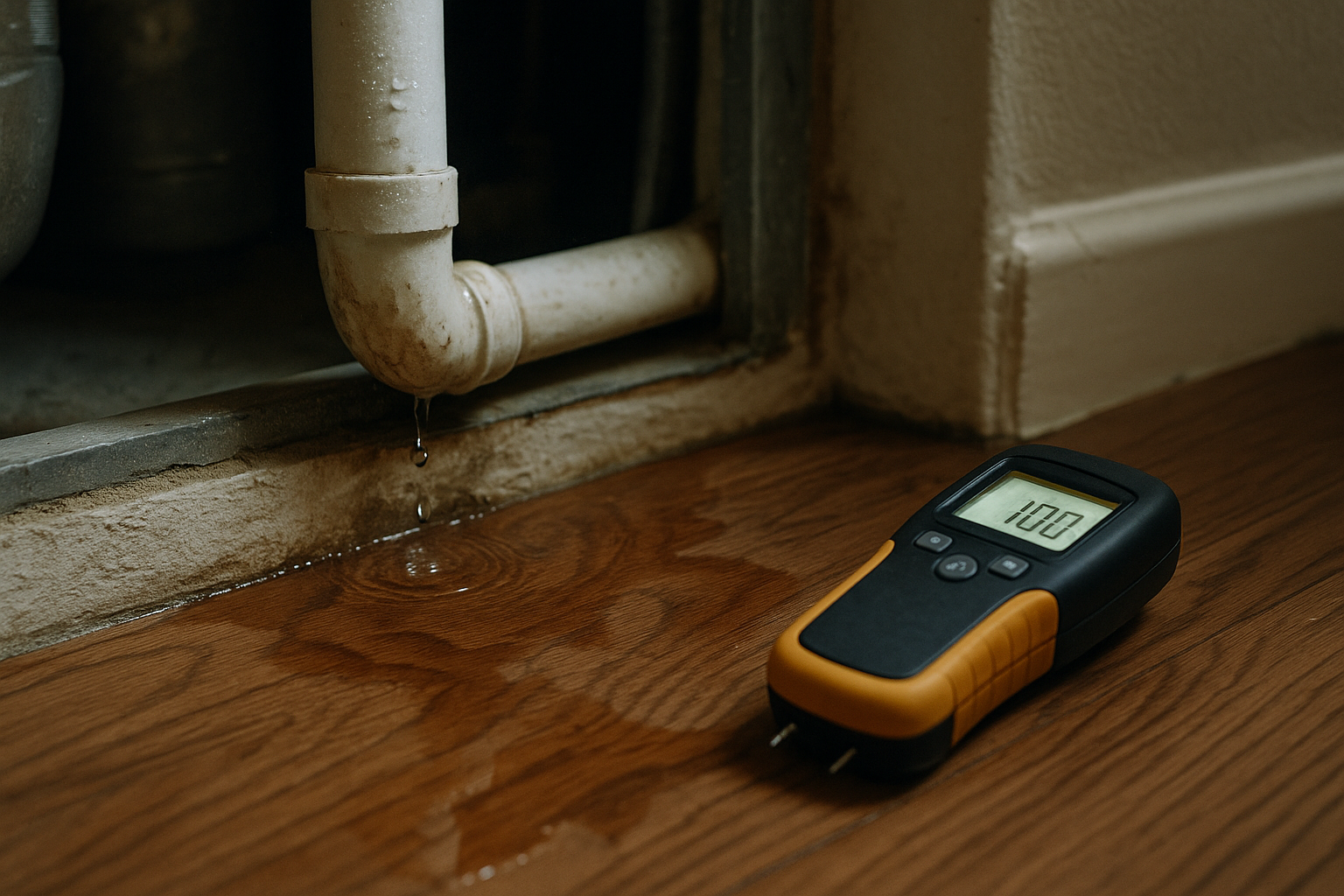
  • AC Condensation Leaks in Krugerville, TX: Prevent Water Damage

    AC Condensation Leaks in Krugerville, TX: Prevent Water Damage

    If your AC has been running nonstop the last couple of days, go check your drain line right now — I’ll wait. With the heat index hitting 110° today and tomorrow across North Texas, this is exactly the kind of stretch that turns a small, invisible drip into a soaked ceiling or a warped wall in Krugerville homes.

    I know that sounds dramatic for something as unglamorous as air conditioner condensation. But this is one of those quiet water damage causes that catches people off guard every single summer, and this week’s heat is setting up the perfect conditions for it.

    Why extreme heat causes AC condensation backup

    Your air conditioner isn’t just cooling air — it’s pulling moisture out of it, especially on days like today when the outdoor heat index is brutal and your unit is working overtime. All that moisture collects as condensation and is supposed to drain out through a small PVC pipe, usually running from the indoor air handler out to the side of your house.

    When your AC runs harder and longer (which it will, at 110°), it produces more condensation than usual. If that drain line has even a partial clog — algae, dirt, a bit of sludge — the extra volume can be enough to back the water up and overflow the drain pan instead of draining outside.

    From there, that water doesn’t stay put. It runs into your attic insulation, down through your ceiling drywall, or behind the walls near your air handler — often for hours or days before anyone notices a stain or a soft spot in the ceiling.

    A quick check that takes two minutes

    Here’s what I’d do in my own house today:

    • Find your indoor air handler (often in a closet, attic, or garage) and look at the drain pan underneath it — is there standing water?
    • Go outside and find where the condensate drain line exits the house (usually a small white PVC pipe near the unit). Is it actively dripping? A slow, steady drip during peak heat is normal. No drip at all, when your AC has clearly been running, can be a sign of a clog.
    • Check the ceiling below or near your air handler for any new discoloration, sagging, or a musty smell.
    • If your system has a secondary drain pan with a float switch, make sure nothing’s tripped it — some units are built to shut the AC off before it overflows, which is a good problem to have.

    If you see standing water, active dripping indoors, or any ceiling staining — that’s not a “wait and see” situation. Water sitting in a ceiling cavity in 110° heat and humidity is exactly the environment mold loves, and the longer it sits, the more it spreads into places you can’t see from the room.

    What happens if it’s already gotten past “just noticed it”

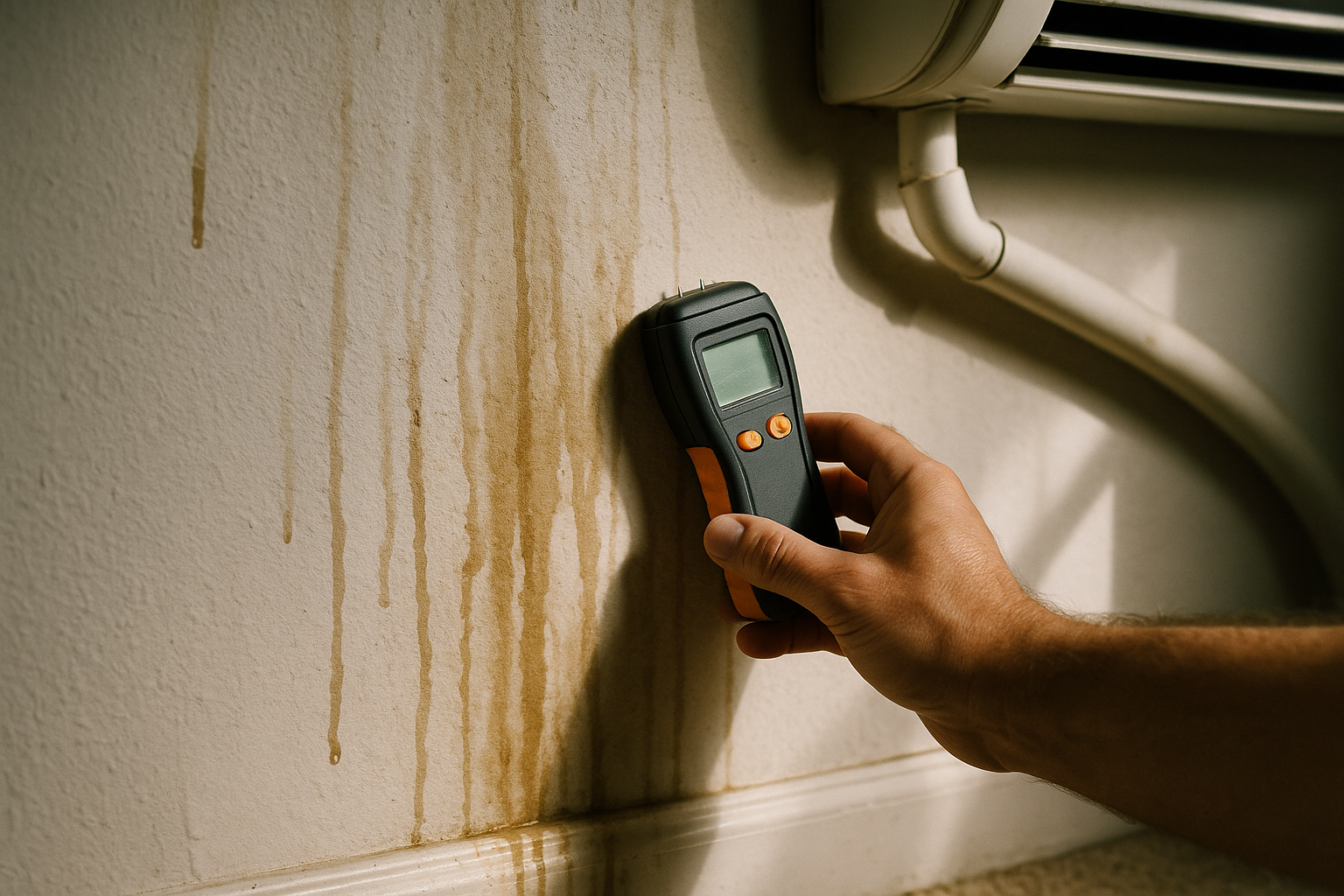
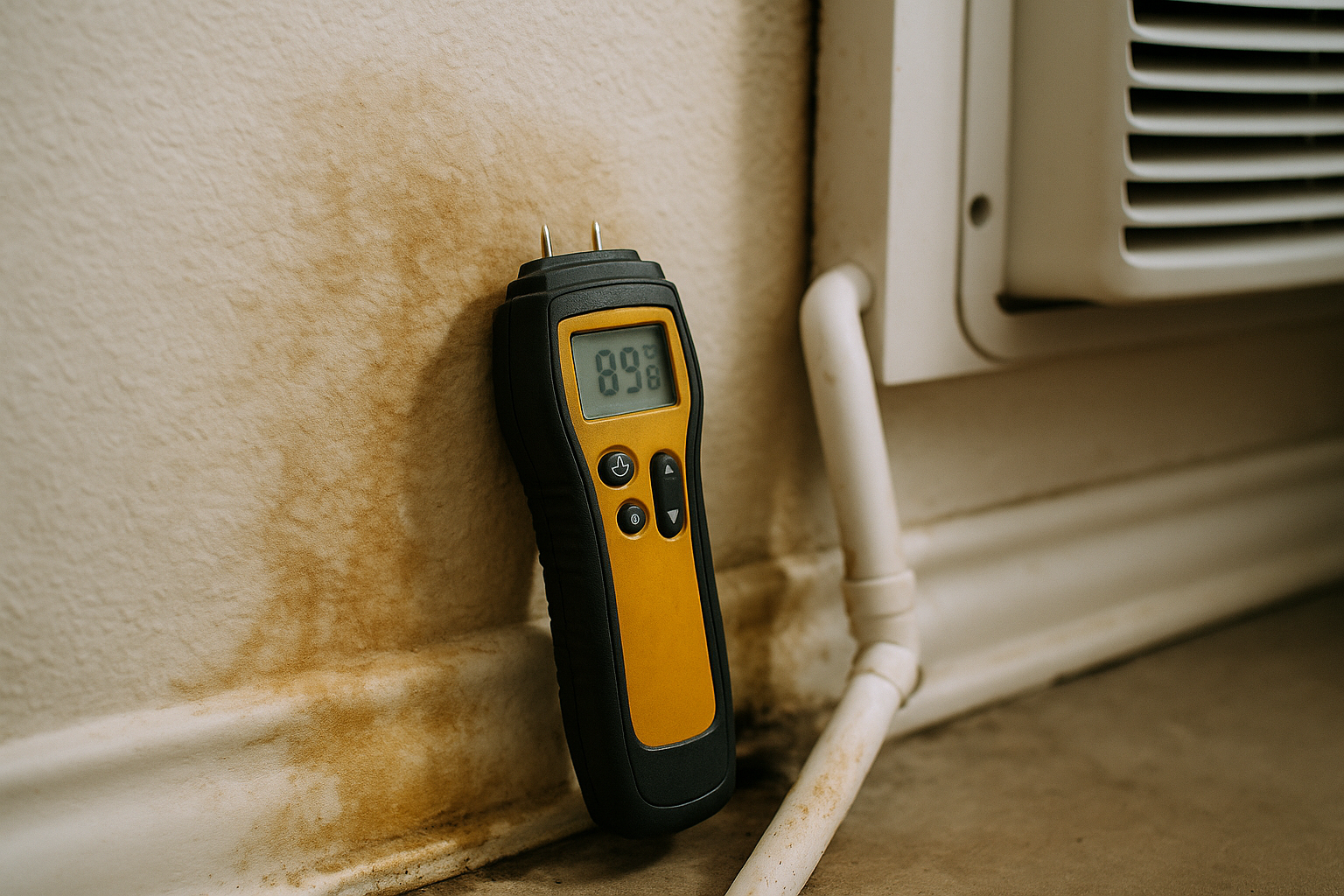
    If you’re past the two-minute check and you’ve already got wet drywall, a stained ceiling, or water damage spreading, the first priority isn’t guessing — it’s stopping the water, drying the structure properly, and figuring out how far it traveled. That’s where a moisture meter and thermal camera earn their keep, because AC leaks love to hide behind walls and above ceilings where you’d never think to look.

    I won’t tell you it’s no big deal, and I won’t tell you it’s the end of the world either. Most AC condensation damage, caught early, is very manageable. Caught late, it gets expensive fast — that’s just the honest truth of it.

    We’re right here in North Texas

    Merlene Mitigation is based in Pilot Point, and Josh personally handles every water damage call and inspection across our North Texas service area, Krugerville included. No call center, no subcontracted stranger showing up at your door — just one accountable person who’ll tell you straight what you’re dealing with.

    Right now, through July 29th, we’re offering free water damage inspections — so if you found something during your two-minute check today, or you’re just not sure, there’s no cost to finding out.

    Give us a call. We’d rather look at it today and tell you it’s nothing than have you find out the hard way in a month.

    -Ally

  • AC Condensation Leaks in Aubrey, TX: Heat Index 109°

    AC Condensation Leaks in Aubrey, TX: Heat Index 109°

    If your air conditioner has been running nearly nonstop this week, you’re not imagining it. With the heat index climbing to 109° across Aubrey and the rest of North Texas this weekend, AC systems are working harder — and longer — than they’re built to handle for days on end. That extra strain doesn’t just show up on your electric bill. It shows up as water, often in places you won’t notice until the damage is already done.

    Why extreme heat causes condensation backups

    Your AC doesn’t just cool air — it pulls moisture out of it. That moisture collects on the evaporator coil and drips into a condensate drain line, which carries it safely outside. When your system runs around the clock in brutal heat, it produces far more condensation than usual, and that drain line has to keep up hour after hour.

    Add in the algae, dust, and debris that build up in most drain lines over a season, and you’ve got a bottleneck waiting to happen. When the line clogs, that water has nowhere to go but back into your system — and often, right down through your ceiling or into your walls.

    What to check right now

    A few minutes of checking today can save you a much harder week later:

    • Look at the drain pan under your indoor unit (usually in the attic or a closet). Standing water or rust stains mean trouble is already brewing.
    • Check the drain line’s outside termination — it’s usually a white PVC pipe near your outdoor unit. Water should be dripping out. If it’s bone dry during a heavy-run day, that can actually be a sign of a clog upstream.
    • Watch your ceilings, especially under attic-mounted units — a small brown stain today can mean saturated insulation and drywall tomorrow.
    • Listen for a shutoff switch tripping — many systems have a float switch that turns the AC off if the pan fills. If your air stops cooling and the outdoor unit isn’t running, this could be why — and it’s actually doing its job protecting your home.

    Why “it’s just a little water” is worth taking seriously

    Condensation leaks are quiet. There’s no dramatic pipe burst — just a slow drip, day after day, into insulation, drywall, or subfloor that stays damp far longer than it looks. That’s exactly the kind of moisture that leads to hidden structural damage and mold growth, because the surface can look dry while the material underneath stays wet for days.

    It looking dry is not the same thing as it being dry. That’s the piece that catches people off guard every summer.

    When to call a professional

    If you’ve found active water, a stained ceiling, or musty smell near a vent or attic unit, it’s worth having it looked at before it spreads. A clogged drain line itself is often a straightforward HVAC fix — but the water damage it’s already caused is a different question, and that’s where we come in.

    I can’t promise a leak won’t be an inconvenience — but I can promise to give you a clear, honest picture of what’s actually going on in your home, and a straightforward plan to dry it out right.

    A local offer, while this heat wave runs its course

    Through July 29th, Merlene Mitigation is offering free water damage inspections for homeowners in Aubrey and the surrounding area. No pressure, no upsell — just a real look with a moisture meter and thermal camera so you know whether that condensation leak has caused damage that needs attention, or whether you’re in the clear.

    Merlene Mitigation is a small, local, owner-operated business based just down the road in Pilot Point. When you call, you get me — Josh — not a call center, not a rotating crew. That’s how you get honest answers and fair prices, heat wave or not.

    If you’re dealing with a suspected AC leak in Aubrey or nearby, give us a call. We’d rather catch it small than let it become a bigger job for everyone.

    -Ally

  • AC Condensation Leaks in Gunter, TX: 107° Heat Causes Hidden Water Damage

    AC Condensation Leaks in Gunter, TX: 107° Heat Causes Hidden Water Damage

    If your AC has been running nonstop since sunrise and you noticed a musty smell near a vent, or a faint water stain creeping across a ceiling tile — please don’t wait until Monday to look into it. With the heat index sitting at 107° today and staying there through the weekend, this is exactly the kind of stretch that causes AC condensation leaks in Gunter, TX and across North Texas. And a lot of that damage happens quietly, inside a wall or attic, long before anyone notices a drip.

    Why extreme heat causes AC drain backups

    Your air conditioner isn’t just cooling air — it’s pulling moisture out of it, especially on brutal, humid days like this one. That water is supposed to travel down a small condensate drain line and exit safely outside. But when your unit is working overtime for days straight, a few things happen:

    • More condensation is produced than usual, faster than the line is used to handling
    • Algae, dust, and gunk that’s been sitting in the drain line finally gets pushed into a clog
    • The drain pan fills faster than a slow leak or crack can keep up with

    The result is an AC drain backup — water finds the path of least resistance, and that’s often down into a ceiling, along an attic floor, or behind a wall near your air handler.

    Why this kind of leak is so sneaky

    A burst pipe announces itself. A condensation leak doesn’t. It’s usually slow, small, and hidden in a space you don’t check every day — an attic, a closet with the air handler, above a garage. That’s what makes hidden water damage during extreme heat so much more dangerous long-term than it looks in the moment. By the time you see a stain or smell something musty, there’s a good chance moisture has been sitting in insulation or drywall for a while already.

    Surfaces dry fast. What’s underneath doesn’t. That gap is where mold risk and real structural damage live.

    What to check right now, today

    This takes ten minutes and it’s genuinely worth doing during a heat advisory like this one:

    • Look at your indoor unit or air handler closet. Any water on the floor, staining, or a musty smell?
    • Find your condensate drain line (usually a white PVC pipe near your outdoor unit). Is water actively dripping from it? A little drip is normal on a hot day like today — no drip at all when the AC is running hard can actually be a sign of a clog.
    • Check the emergency shut-off float switch if your system has one — it should stop the AC before an overflow, but it’s not foolproof, especially on an older system.
    • Look at ceilings below the attic and around vents for any new discoloration, sagging, or soft spots.

    If you find standing water, a backed-up pan, or a stain that’s spreading — turn the AC off at the thermostat, call an HVAC tech to clear the line, and don’t run the system again until it’s confirmed clear. That part’s on the HVAC side, not us — but it’s the right first move to stop the source.

    If water’s already gotten into the structure

    Once water has actually reached drywall, insulation, or subfloor, this becomes our part. The reason we push people to check now, during a stretch like this weekend’s, is that catching it early is the difference between a small, contained dry-out and something that spreads into a bigger, more expensive repair.

    I can’t promise it won’t be disruptive to have drying equipment running for a few days — but I can promise we’ll make it as least disruptive as possible, and we’ll walk you through exactly what’s happening and why, every step.

    Josh handles every inspection and every job personally — there’s no call center, no rotating crew of strangers, just one accountable local guy who lives in Pilot Point and answers his own phone. That keeps overhead low, which means fair prices, and it means the person who inspects your home is the same person who’s still checking in on it three days later.

    A quick, free step this week

    Through July 29th, we’re offering free water damage inspections for anyone in Gunter and the surrounding area who wants a second set of eyes on a stain, a smell, or just peace of mind after a run of heat like this. No pressure, no pushy sales pitch — just an honest look and a straight answer about whether it’s something to watch or something to act on.

    If you’re in Gunter, Pilot Point, or anywhere in North Texas and this weekend’s heat has you wondering about your AC or a spot on the ceiling, give us a call. I’d rather you check and it be nothing, than skip it and find out the hard way in August.

    -Ally

  • AC Condensation Leaks in Celina, TX: Prevention Guide

    AC Condensation Leaks in Celina, TX: Prevention Guide

    If you’ve noticed a musty smell near your hallway closet, a soft spot in the ceiling under an upstairs vent, or a little puddle by your indoor AC unit — don’t wait to see if it goes away on its own. It won’t. And in Celina’s summer heat, it can turn into a real problem faster than you’d think.

    Your air conditioner isn’t just cooling your house right now — it’s working overtime, running longer cycles, and pulling more moisture out of the air than it does any other time of year. That moisture has to go somewhere. Usually, it drains away quietly through a small condensate line you never think about. But when that line gets clogged, “quietly” is exactly the problem — because the water finds somewhere else to go instead, and it’s rarely somewhere convenient.

    Why Summer Heat Makes This Worse

    Here’s the simple version: the harder your AC runs, the more condensation it produces. In North Texas summers, that means your system might be pulling gallons of water a day out of the air inside your home.

    All of that water is supposed to drip into a pan, then drain out through a small PVC pipe — usually to the outside, or into a utility drain. Over a season (or a few), that line collects algae, dust, and gunk, the same way a shower drain does. Add the extra strain of a brutal Texas July, and a partially clogged line becomes a fully blocked one, right when your system is working its hardest.

    What a Condensation Drain Backup Actually Looks Like

    This isn’t usually a dramatic flood. It’s sneaky. Watch for:

    • A musty or mildew smell near a closet, attic access, or your indoor AC unit
    • Water stains or soft, discolored spots on ceilings — especially under a second-floor unit
    • Standing water in the emergency drain pan under your unit
    • Your AC randomly shutting off (many modern systems have a float switch that kills power when the pan overflows — annoying, but honestly a small mercy, since it’s trying to stop the exact damage we’re talking about)
    • Warped baseboards, bubbling paint, or a soft spot in flooring near a closet system

    None of these look like an emergency at first glance. That’s exactly why they cause so much damage — the water is often trapped inside a wall cavity, subfloor, or ceiling long before it’s obvious from the outside.

    Why “It Looks Dry” Doesn’t Mean It Is Dry

    This is something I say a lot, because it matters: surfaces dry fast. Drywall, insulation, and subflooring hold onto moisture much longer, often for days, out of sight. That hidden moisture is exactly what mold needs to get started. By the time you can see or smell a problem clearly, the water’s usually been sitting for a while.

    Simple Prevention Before August Hits

    The good news — this is one of the more preventable causes of home water damage out there:

    • Have your AC serviced annually, ideally before peak summer demand. A tech can flush the condensate line as part of routine maintenance.
    • Pour a cup of distilled vinegar down the condensate line every couple of months during cooling season — it helps break down the algae buildup that causes clogs.
    • Check the drain pan and float switch periodically, especially if your system is in an attic or closet above living space.
    • Keep an eye (and nose) out near vents, closets, and attic access points for that musty smell — it’s often the earliest warning sign you’ll get.

    None of that requires special equipment or a professional visit every time — just a little attention during the months your system works hardest.

    If It’s Already Happened

    If you’ve found water damage from a backed-up AC line, don’t just towel it up and hope. Hidden moisture behind walls or under flooring needs real drying equipment and a plan — not guesswork, and not a box fan pointed at it for a weekend. Once the structure has had time to soak up water, cutting corners now usually costs a lot more later.

    I can’t promise it won’t be a hassle to sort out — but I can promise to be straight with you about what’s actually going on in your home, and to make it as painless as possible to fix.

    If you’re in Celina, Pilot Point, or anywhere else in North Texas and you’re staring at a stain you’re not sure about, give Merlene Mitigation a call. I’ll walk you through what to look for, what it likely means, and what — if anything — needs to happen next. No pressure, no upsell, just an honest look from someone who’ll treat your home like it’s mine.

    -Ally

  • AC Leaking in the Heat? Here’s What to Do Now

    AC Leaking in the Heat? Here’s What to Do Now

    If you stepped outside in Krugerville today, you already know: that’s not just “hot,” that’s a 107° heat index kind of hot. Your AC unit knows it too — and it’s working harder than it has all year to keep up. That extra strain is exactly why we tend to see a spike in calls about water where water shouldn’t be, right around the base of the air handler or dripping from a ceiling vent.

    Here’s the good news: an AC leak is one of the most preventable water problems there is, if you catch it early. Let’s talk about why it’s happening right now, and what to do about it before it turns into something bigger.

    Why heat advisories cause AC leaks

    Your air conditioner doesn’t just cool the air — it pulls moisture out of it, too. That condensation has to go somewhere, and normally it drains quietly out through a small PVC line to the outside.

    On a day like today, your system is running nearly nonstop to keep the house comfortable. More runtime means more condensation, which means more water moving through that drain line. If there’s even a little bit of algae, dust, or debris built up in there — which is common, especially if the line hasn’t been cleaned in a while — this is the day it finally clogs.

    Once it clogs, that water has nowhere to go but back up and out. Most systems have a drain pan underneath as a backup, but pans overflow, and float switches (if the unit even has one) don’t always catch it in time. That’s when you start seeing a wet spot on the ceiling below the attic unit, or water pooling near the indoor air handler.

    What to check right now

    • The drain line termination — usually a PVC pipe outside near the condenser, or one that ends near your water heater. Is it dripping steadily? A slow drip is normal on a day like today. A stream, or no flow at all, is worth a closer look.
    • The attic access, if your air handler is up there. Look for staining on the ceiling below it, or a damp spot near the unit itself.
    • Around the indoor unit — closet, utility room, wherever it lives. Standing water in the drain pan means the primary line is clogged and the backup is catching it.
    • Ceiling stains or a musty smell in rooms below an attic unit — these show up before you’d notice water dripping.

    If you find standing water or a clog, this is a good moment to call your HVAC technician for a proper repair — that part’s really their trade, not ours. But if water has already made it into drywall, insulation, flooring, or a ceiling, that’s where we come in.

    Why the wet stuff matters more than it looks like it should

    A little AC condensation on the ceiling doesn’t look like much. But drywall and insulation hold onto moisture, and North Texas humidity doesn’t help it dry out on its own. Give it a few days in this heat, closed up in a warm attic, and you’ve got the right conditions for mold to start — quietly, out of sight, right where you can’t see it.

    That’s the thing about water damage that surfaces don’t tell you: what looks dry on top can still be wet underneath. If a leak’s been going on for a while, or you’re not sure how long that ceiling stain has been there, it’s worth having it checked properly rather than guessing.

    If it’s already gotten past “small drip”

    If you’re looking at a sagging ceiling, a soaked carpet, or water actively coming through a light fixture — stop guessing and call someone. The first hours matter: getting the water out, drying the area properly, and catching it before it spreads is what keeps a bad day from becoming a bad month.

    I can’t promise it won’t be disruptive — pulling out wet materials and running drying equipment never is. But I can promise to make it as least disruptive as possible, and to walk you through exactly what’s happening and why, every step of the way.

    We’re offering free inspections this week

    With this heat advisory pushing so many systems to their limit, we’re offering free water damage inspections through July 29th for North Texas homeowners — Krugerville included. No pressure, no upsell. Just a straight answer on whether that ceiling stain or damp spot is something to watch, or something to act on now.

    Merlene Mitigation is a small, local, owner-operated outfit based just down the road in Pilot Point. When you call, you get me or my husband — not a call center, not a stranger in a branded truck. Lower overhead means fair prices, and one accountable person means nothing gets lost between “we found a problem” and “here’s how we fix it.”

    If today’s heat has you eyeing a wet spot with suspicion, give us a call. We’d rather look at ten false alarms than have one homeowner wait too long on the real thing.

    -Ally

  • AC Condensation Backup in Sanger, TX During Heat Wave

    AC Condensation Backup in Sanger, TX During Heat Wave

    If you’ve noticed a mystery drip near your ceiling, a musty smell in a closet, or a small puddle by your air handler this week — your AC probably isn’t broken. It’s drowning.

    With the heat index climbing to 106° across North Texas today and tomorrow, air conditioners all over Sanger are working harder than they have all year. Harder work means more condensation, and more condensation means more water trying to squeeze through the same skinny drain line that’s been quietly doing its job for years. Sometimes it just can’t keep up.

    Why 106° Turns Your AC Into a Water Problem

    Your air conditioner doesn’t just cool the air — it pulls moisture out of it. That moisture collects on the evaporator coil and drips into a small condensate pan, then runs out through a thin PVC drain line, usually to the outside or into a floor drain.

    On a mild day, that’s a slow trickle. On a brutal, high-heat-index day like this one, your system runs longer and pulls far more humidity out of the air — which means far more water moving through that same narrow line. If there’s any buildup inside it — algae, dust, a little rust, a bit of sludge — this is exactly the kind of day it finally gets overwhelmed.

    What an Overwhelmed Drain Line Actually Does

    When the drain line can’t move water fast enough, it backs up. Depending on your setup, that backup can:

    • Overflow the condensate pan and drip through the ceiling below an attic unit
    • Trip a float switch and shut your AC off completely (annoying, but better than the alternative)
    • Slowly seep into insulation, drywall, or framing with no visible sign at first

    That last one is the one that worries me most. A little water in the wrong spot inside a wall cavity, sitting in 100°+ attic heat, is exactly the kind of hidden moisture that turns into a much bigger problem before anyone notices.

    Signs Your Drain Line Is Struggling Right Now

    • A stain or wet spot on the ceiling, especially under an attic or closet unit
    • Water around the base of your indoor unit
    • Your AC randomly shutting off (that float switch doing its job)
    • A musty smell that wasn’t there last week
    • Visible water in the drain line’s clean-out or overflow pan

    If you’re seeing any of these, don’t wait it out. A slow drip during a heat wave like this can mean days of moisture working its way into places you can’t see.

    What You Can Do Today

    A few things are genuinely fine to check yourself, and I’d tell you the same thing if you called me directly:

    • Check the outdoor drain line opening for a slow drip or none at all — no drip on a running system is a red flag.
    • Look at the overflow pan under an attic unit for standing water.
    • Have an HVAC tech clear the line if you suspect a clog — this is squarely their expertise, not ours, and a good one can often flush it same-day.

    Where I do want to be your first call is if water has already made its way into drywall, ceiling, insulation, or flooring. Once moisture is inside the structure, “it looks dry now” doesn’t mean much — surfaces dry fast, but what’s underneath can stay wet for days, quietly setting up conditions for mold. That’s the part that needs real drying equipment and someone who knows how to check moisture behind the surface, not just on top of it.

    Why This Week Especially

    Heat index events like this one put stress on every part of a home’s systems at once — roofs, AC units, plumbing. Older or original drain lines in Sanger homes, especially ones that haven’t been serviced in a while, are exactly the kind of thing that fails quietly during a stretch like this rather than all at once. A little attention now is a lot cheaper than a repair later.

    And because right now is exactly when this kind of thing happens, we’re offering free water damage inspections through July 29th for North Texas homeowners who want a second set of eyes — no pressure, no obligation, just an honest look and a plan if something needs attention.

    If you’ve got a drip, a stain, or just a bad feeling about that closet unit, give us a call. I’ll walk you through exactly what’s going on and what — if anything — needs to happen next. Josh is one call away, and he’ll treat your home the way he’d want his own treated.

    -Ally

  • Water Damage Restoration in Prosper, TX: Fast Recovery Guide

    Water Damage Restoration in Prosper, TX: Fast Recovery Guide

    If you’re reading this with wet carpet under your feet or rain still hammering the roof, here’s the short version: turn off the electricity to the affected area if you can do it safely, stop the water source if there is one, and start moving valuables out of the way. Everything else can wait five minutes. Come back and read the rest once you’ve done that.

    Prosper gets hit hard when North Texas summer storms roll through — fast, heavy rain, hail, straight-line winds, and sometimes a roof or window that just wasn’t built for what came down. And the tricky part about storm water isn’t the puddle you can see. It’s what happens underneath it over the next 24 to 48 hours if nobody deals with it.

    The First Few Hours Matter Most

    Water damage isn’t just about the mess. It’s about how fast that moisture gets into places you can’t see — subfloor, drywall cavities, insulation — and starts causing problems that are a lot more expensive than the original storm.

    Here’s what to do while you’re waiting on help:

    • Safety first. If water is anywhere near an outlet or panel, don’t wade in. Call an electrician or your utility company if you’re not sure it’s safe.
    • Stop the source if you can. A shut-off valve for a burst pipe, a tarp over a hole in the roof — anything that slows the water coming in.
    • Document before you touch anything. Photos and video of the standing water, the source, and anything damaged. Your insurance company will want this, and it’s much easier to get it now than to reconstruct it later.
    • Move what you can. Furniture legs, rugs, boxes on the floor — get them up and out of the water if it’s safe to do so.
    • Call a restoration company. Not next week. Today.

    That last one isn’t just me talking my own book. Mold can start establishing itself in as little as 24 to 48 hours in the right conditions, and North Texas summer humidity is exactly the right conditions.

    What Actual Restoration Looks Like

    When we get a call for storm damage cleanup in Prosper, day one is about stabilizing the situation — not making every decision at once. We get the standing water out, apply an antimicrobial treatment to slow bacterial and mold growth, and set up commercial drying equipment: real dehumidifiers and air movers, not the kind you’d find in a laundry room.

    Then we reassess in 24 to 48 hours. That gap matters. It lets the structure start drying, lets us get accurate moisture readings with a thermal camera and moisture meter, and lets everyone — you, us, your insurance adjuster — get a clear, honest picture of the real scope before big decisions get made.

    I’ll be straight with you: the drying process is loud and a little disruptive. Air movers running around the clock aren’t fun to live with. I can’t promise it won’t be a hassle — but I can promise to make it as least disruptive as possible, and I’ll never tell you it’s fine to shut the equipment off early to get some quiet. Turning it off before the structure hits a proper dry standard risks the very mold and secondary damage we’re trying to prevent. Think of it as the impromptu remodel nobody asked for — annoying now, but there’s a plan, and there’s an end to it.

    A Word on Insurance

    A lot of homeowners assume storm damage “probably isn’t covered” and don’t even file a claim. Often that’s not true — it depends on your policy and the cause of loss, and it’s worth finding out rather than guessing. Document everything, call your carrier promptly, and don’t be afraid to ask questions about what your policy actually says. A restoration company that’s scoped the damage honestly can make that conversation a lot easier.

    Why Local, Accountable Help Matters

    Merlene Mitigation is based right up the road in Pilot Point, and I handle water damage and inspections personally — not a rotating crew of strangers. If your situation needs more than mitigation — larger mold remediation, roofing, rebuild — I stay involved and bring in trusted, vetted professionals I’d use in my own home, so you’ve got one accountable person overseeing the whole job instead of getting handed off. Lower overhead means fair prices, and it means you’re never just a ticket number.

    If you’re dealing with water damage right now, or you just want a straight answer about what to do next, reach out. Storm restoration near you in Prosper shouldn’t mean waiting on hold with a call center — it should mean talking to someone who’s going to walk through it with you.

    -Ally

  • AC Condensation Overflow in Denton Heat: Prevention & Fixes

    AC Condensation Overflow in Denton Heat: Prevention & Fixes

    If your AC has been running nonstop today, here’s something worth checking before you head to bed tonight: the drip pan under your indoor unit, and the drain line running out of it. With a heat index near 114°F across Denton County today, air conditioners are working harder than they’re built to work — and that extra strain is exactly what causes condensation drain lines to clog, crack, or back up. When that happens, water doesn’t stay contained. It finds your ceiling, your closet, your attic insulation, or the wall behind your unit.

    This is a quiet kind of water damage. No storm, no leak you can hear — just a slow overflow that can soak drywall and insulation for hours before anyone notices. Let’s talk about what to watch for tonight, and what to do if you catch it early.

    Why extreme heat causes AC drain line failure

    Your air conditioner pulls moisture out of the air as it cools your home — that water is supposed to drain out through a small condensate line, usually PVC pipe, into a drain or outside your house. On a normal day, that’s a manageable amount of water.

    On a day like today, your system runs longer and harder, which means it’s pulling more moisture out of the air than usual — sometimes gallons more over a 24-hour stretch. If that drain line has any buildup of algae, dirt, or debris (which most lines do, eventually), the extra volume is often what pushes it from “slow trickle” to “fully clogged.” Once it’s clogged, the water has nowhere to go but back up — into the drip pan, and eventually over the edge.

    Warning signs to check tonight

    • A water stain or soft spot on the ceiling below or near your attic AC unit.
    • Musty smell near a closet or utility room where your indoor unit lives.
    • Visible water or standing moisture in the drip pan under the unit.
    • Your AC suddenly stops cooling — many systems have a safety float switch that shuts the unit off when the pan fills, which is actually a good sign your system is protecting your house. Don’t just reset it and move on; find out why it filled up.
    • Water near the outdoor condensation drain line

    What you can safely do right now

    A few things are genuinely fine to check yourself, no plumber required:

    • Look at the drip pan and drain line for standing water or visible clogs.
    • If you know where your condensate line’s cleanout is, a wet/dry vac on the outside opening can sometimes pull a clog free.
    • Keep a towel or shallow container under the unit temporarily if you spot dripping, just to protect the floor while you sort out the cause.

    If none of that resolves it, or you’re not sure where to even look, that’s a good moment to call an HVAC tech rather than guess. I’d rather be honest with you about that than pretend every fix is a DIY job — some are, some aren’t, and a backed-up line deep in the line set usually needs the right tools.

    If water’s already gotten into drywall or insulation

    This is where I want to be straight with you: once water has soaked into drywall, insulation, or wood framing, it doesn’t matter how hot and dry the air outside is — that moisture isn’t evaporating on its own fast enough to prevent mold growth or structural damage underneath. “It looks dry” and “it is dry” are two different things, and the difference is exactly where hidden problems start.

    If you’re looking at a stained ceiling or a damp closet floor tonight, the sooner it gets properly dried — with real moisture readings, not just a guess — the smaller and cheaper the problem stays.

    We’re here if you need us

    I can’t promise a night like tonight won’t be stressful — but I can promise that if water’s gotten into your home, we’ll treat it like it’s ours: honest about what’s actually needed, nothing more. Josh handles every water damage call personally, so you’re not getting handed off to a stranger, and our lower overhead means fair pricing without cutting corners.

    If you’re in Pilot Point, Denton, or anywhere in North Texas and you’re staring at a wet ceiling tonight, give us a call. We’d rather help you catch it early than have it wait until morning.

    -Ally