Tag: ac repair

  • AC Condensation Leaks in Denton, TX: Prevent Water Damage Now

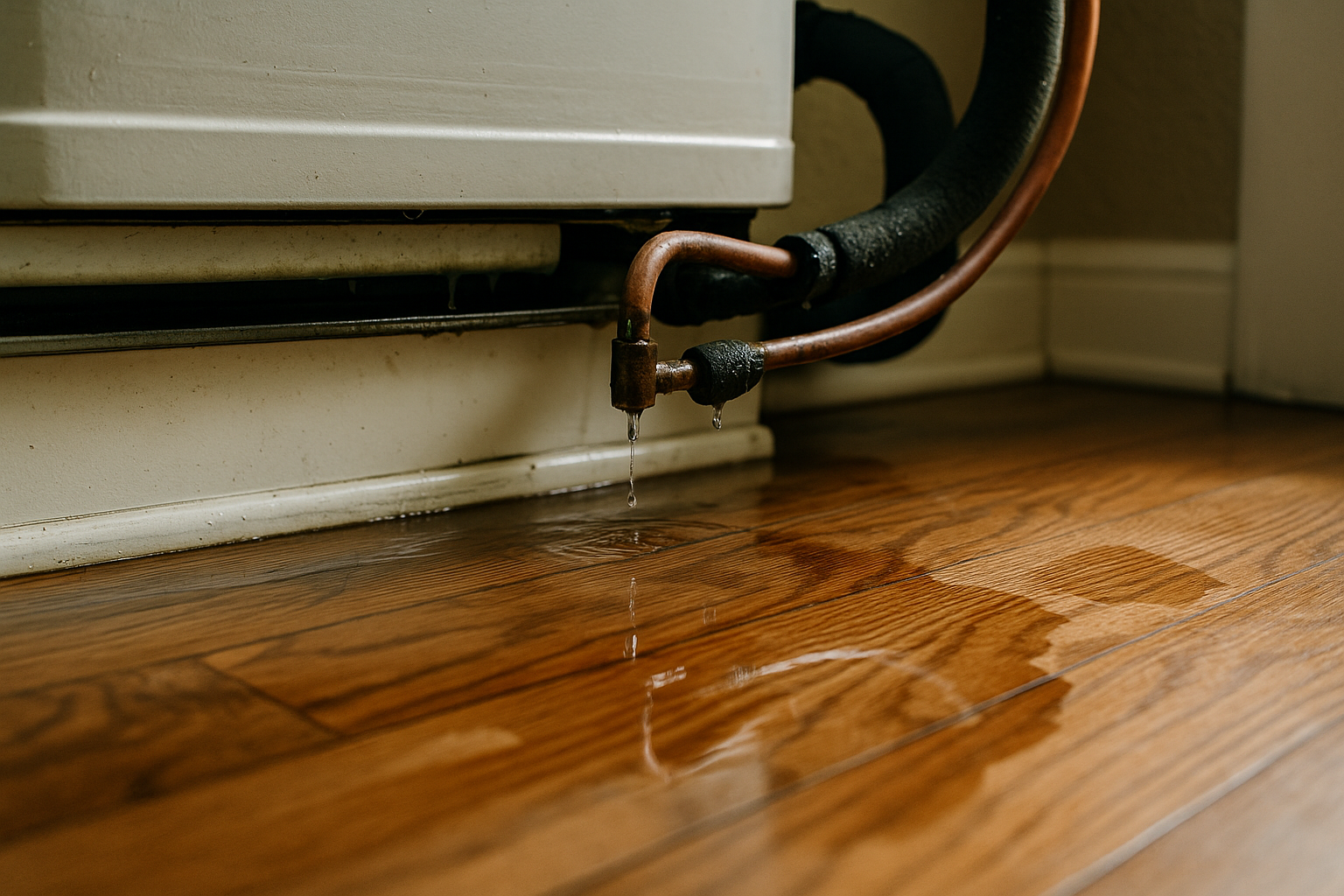
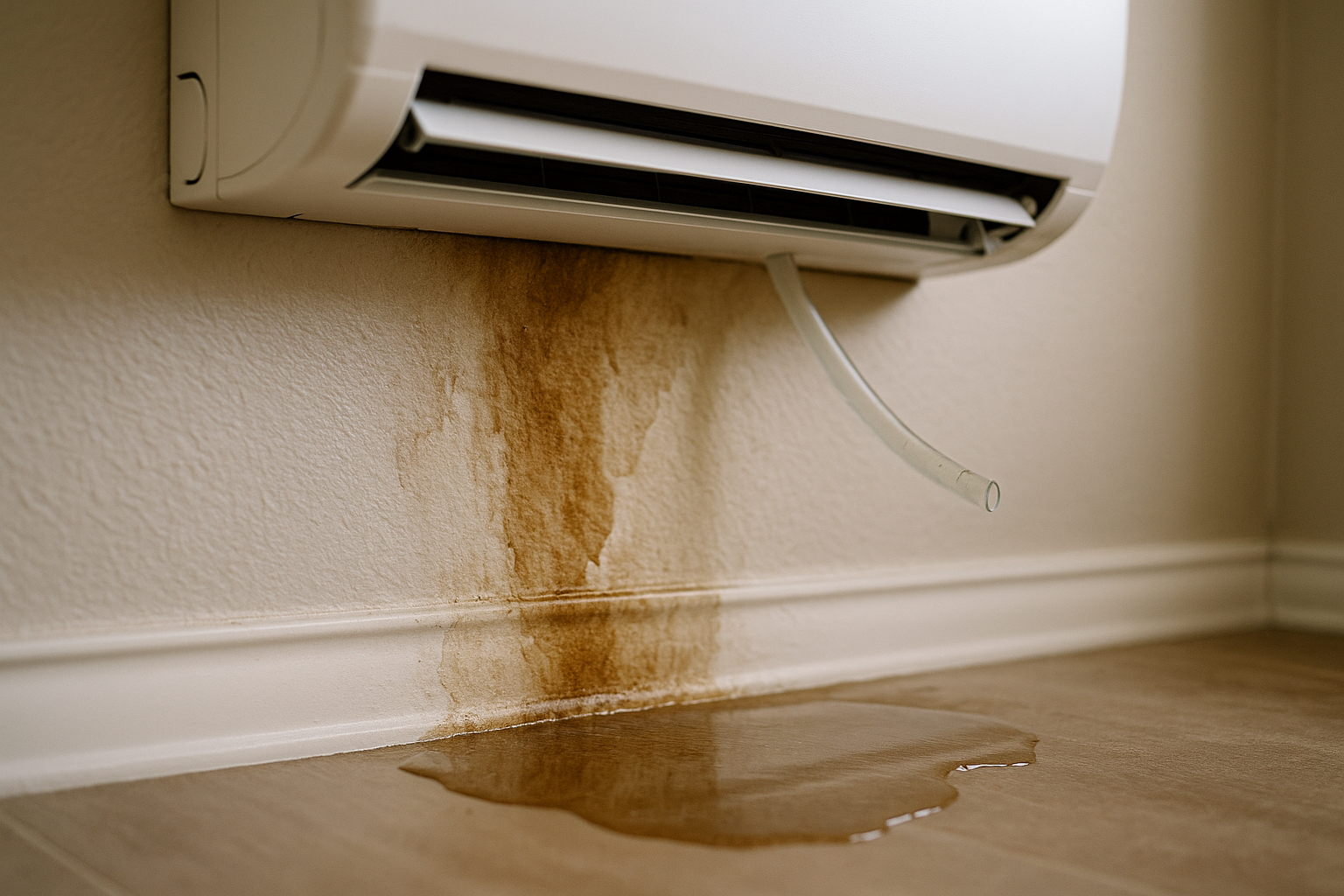
    If your AC has been running nonstop this week, you’re not imagining it. With heat index values pushing past 105° across Denton and the rest of North Texas, every air conditioner in the county is working harder than it has all year. And there’s a quiet side effect of that extreme heat that catches a lot of homeowners off guard: the drain line that carries condensation away from your AC unit can clog, back up, and overflow, sometimes right into your ceiling or wall before you ever notice a drop.

    I want to walk you through why this happens during heat waves specifically, what to check today, and what to do if you’re already seeing signs of trouble.

    Why heat waves cause AC condensation leaks

    Your air conditioner doesn’t just cool air, it pulls moisture out of it. That moisture collects on the evaporator coil and drips down into a condensate drain pan, then runs out through a small PVC drain line, usually to the outside of your house.

    When it’s this hot, your system runs longer and more often, which means it’s pulling more moisture out of the air than usual. More condensation means more water moving through that little drain line. If there’s even a small clog already forming, extreme heat is what pushes it past the tipping point and into an overflow.

    Algae, dust, and gunk build up in these lines slowly over months. You usually don’t notice until a heat wave asks more of the system than it’s been asked to do all year. That’s exactly what’s happening across Denton and North Texas right now.

    Signs your drain line may already be backing up

    • A musty smell near a vent, closet, or the ceiling below an attic AC unit
    • Water stains or a soft spot forming on the ceiling under an attic-mounted air handler
    • Standing water in the drain pan, or around an indoor unit in a closet or utility room
    • Your AC randomly shutting off (many systems have a safety switch that kills the unit when the pan overflows, which is actually a good sign your system is protecting your home)
    • Visible water or damp drywall near where ductwork or the air handler sits

    If you catch it at the “safety switch tripped” stage, you’re in good shape. If you’re seeing a stain spreading on the ceiling, that tells you water has already been sitting somewhere it shouldn’t for a while.

    What to check today, before it becomes an emergency

    You don’t need any special tools for a basic AC drain inspection. Here’s what I’d walk through in my own house:

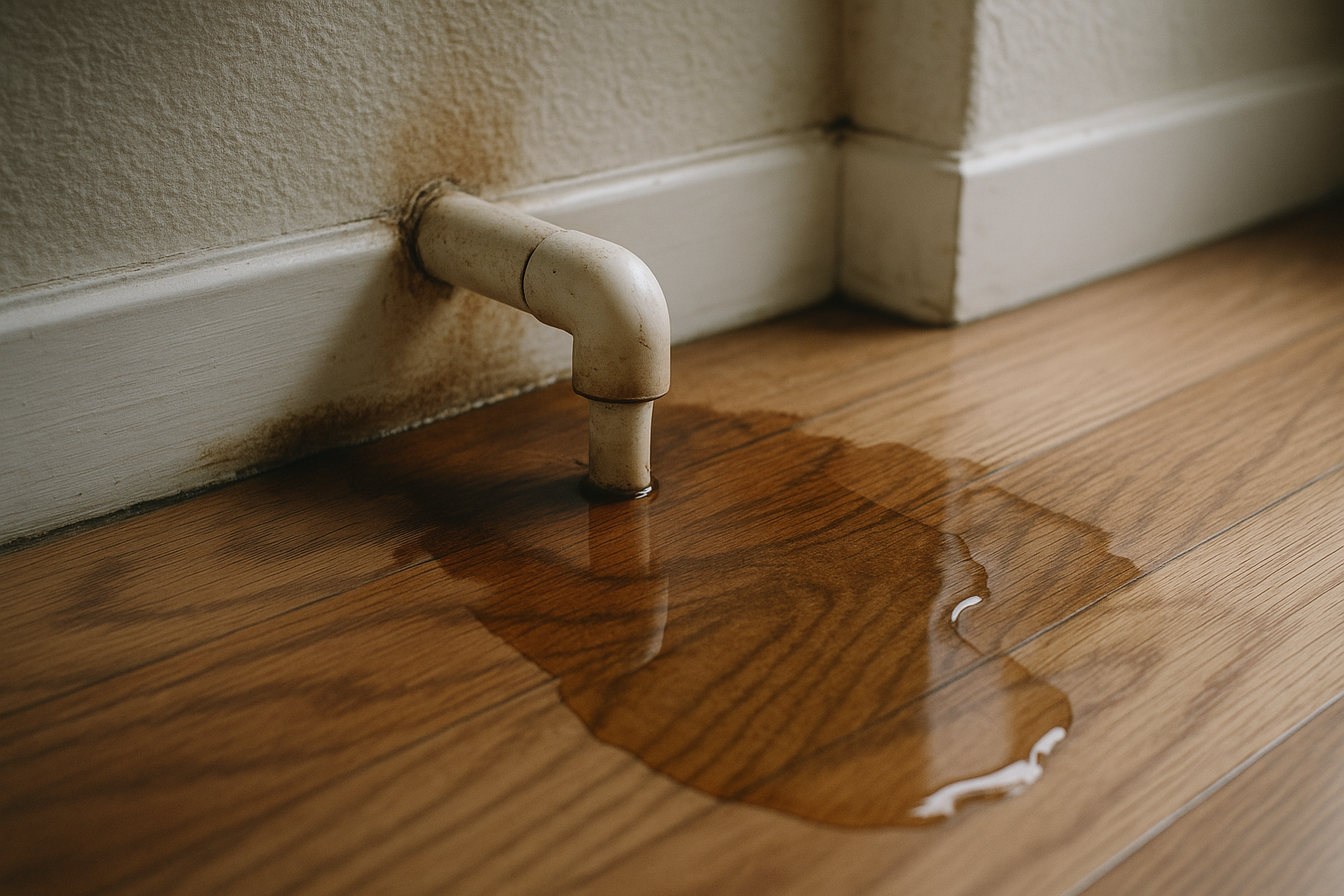
    1. Find your drain line’s outdoor exit, usually a white PVC pipe near your outdoor unit or along the side of the house. Water should be flowing freely when the AC is running. No flow at all can mean a clog upstream.
    2. Check the drain pan under an attic or closet air handler for standing water or rust.
    3. Look at the ceiling directly below an attic unit for any discoloration, sagging, or a faint yellow-brown ring.
    4. Listen for your system cycling oddly or shutting off and back on more than usual.

    If everything looks dry and the drain is flowing, you’re probably fine, just keep an eye on it through the rest of this heat spell. If you see any standing water or staining, that’s worth acting on now rather than waiting.

    Why this matters more than it looks like it does

    Here’s the thing about AC condensation leaks: the surface almost always looks fine long after the real damage has started. A small ceiling stain can mean insulation, drywall, and framing above it have already been wet for days. Moisture that sits in a wall cavity or attic space in 105° heat is exactly the environment mold needs to get going. It doesn’t take long.

    This is the same principle behind any water intrusion, hidden moisture is the real threat, not the puddle you can see. If you’re not sure whether what you’re looking at is “just a stain” or something that needs a real moisture check, that’s a fair thing to want a second opinion on.

    If you’re already dealing with water damage from an AC overflow

    Turn the AC system off at the thermostat (not the drying equipment if a restoration company already has fans running, that’s a different situation, and that equipment needs to stay on to do its job). Contain what water you can with towels, and get eyes on it, whether that’s your own or a professional’s, sooner rather than later. The first 24 to 48 hours matter more than people expect.

    I’m based in Pilot Point and serve Denton and the surrounding North Texas towns. Josh personally handles every inspection and every job, no crew being dispatched, no stranger showing up you’ve never talked to. If you’re seeing signs of an AC drain overflow or just want a second set of eyes before this heat wave does more damage, call or text anytime. Because it’s just Josh running things, overhead stays low and so do the prices, and you always know exactly who’s showing up.

    And if today isn’t an emergency day but you’d rather be ready before one happens, our free guide, The First 24 Hours After Water Damage, walks through exactly what to do first and why. Worth five minutes now so you’re not guessing later.

    -Ally

  • AC Condensation Leaks in Extreme Heat: What to Do Now

    If your AC has been running nonstop today, there’s a good reason: with the heat index hitting 105° across North Texas, every unit in Pilot Point is working as hard as it possibly can. And when an AC works that hard for that long, one small, quiet part of the system tends to fail first: the condensation drain line. That’s the line most homeowners never think about, right up until it backs up and starts dripping into a ceiling or pooling around a closet.

    So let’s talk about what’s actually happening, and what you can do about it today, before tonight.

    Why extreme heat causes AC leaks

    Your air conditioner doesn’t just cool air, it pulls moisture out of it too. All that moisture has to go somewhere, and normally it drains out quietly through a small condensate line, usually PVC pipe, that runs from the indoor unit to the outside of your house.

    On a mild day, that line barely gets tested. On a day like today, with the unit running almost continuously, it’s moving far more water than usual. If there’s any algae, dust, or debris built up inside that line, this is exactly the kind of day it clogs. Once it clogs, the water has nowhere to go but back up and out, usually through the drain pan, and often right into your ceiling, attic insulation, or the wall behind a closet.

    What to check today

    You don’t need any special tools for this. Just a few minutes and a flashlight.

    • Look at your indoor unit or attic access. If you can see the drain pan under the air handler, check whether it’s full or overflowing.
    • Check the outside drain line. There’s usually a white PVC pipe near your outdoor unit that should be dripping steadily on a hot day like this. If it’s bone dry, that can actually be a warning sign that the water is backing up somewhere inside instead.
    • Look for ceiling stains, sagging drywall, or a musty smell near where ductwork or an air handler sits above a room.
    • Feel around baseboards and closet floors near interior walls that back up to HVAC equipment.

    If you find standing water or a wet ceiling spot right now, the priority is simple: turn the AC off at the thermostat (not the drying equipment if you already have any running, just the AC unit itself), soak up what you can with towels, and get a fan moving air across the wet area if you have one. That buys you time. It doesn’t fix the underlying leak.

    A word about “it’s probably nothing”

    I understand the instinct to wait it out, especially in this heat when the last thing you want is your AC off for even an hour. But water damage from a condensation backup behaves the same as any other kind of water intrusion: it looks small on the surface and holds moisture in the structure underneath, where you can’t see it. A stain the size of a dinner plate today can be the edge of a wet insulation bed that’s been soaking for hours. Left alone overnight, especially in North Texas humidity, that’s exactly the setup for hidden mold growth down the line.

    It’s not about panic. It’s about not letting a cheap fix turn into an expensive one because nobody caught it in time.

    If it’s already gotten into drywall, insulation, or flooring

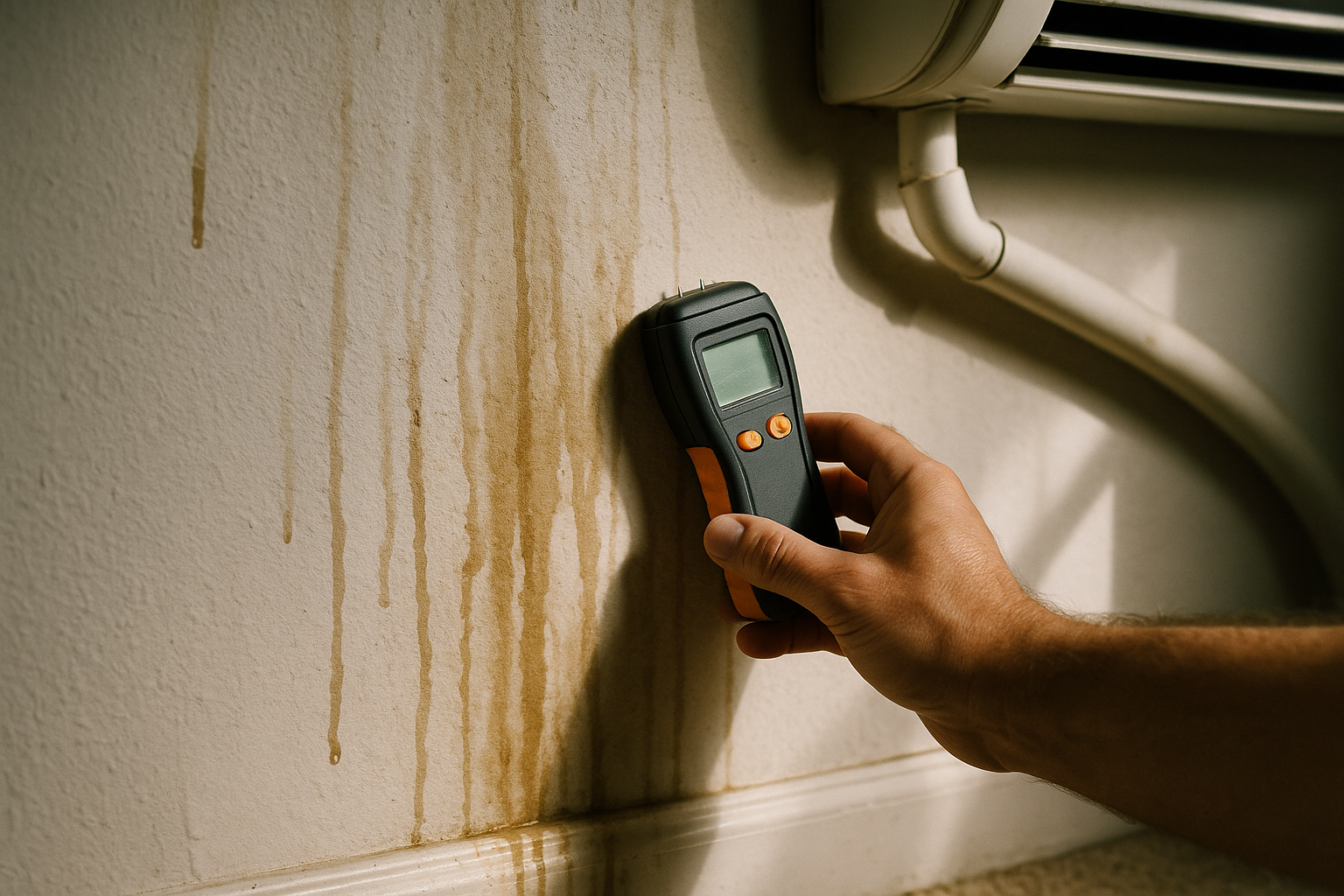
    Once water is inside a wall cavity or soaked into insulation, drying it out right takes more than open windows and a box fan, even with the AC off. That’s genuinely where a moisture meter and real drying equipment earn their keep, because the goal isn’t just “it feels dry to the touch,” it’s confirming the structure itself is actually back to a safe moisture level.

    If you’re in Pilot Point or anywhere in North Texas and you’re staring at a wet ceiling tonight, give me a call or send a text, whichever is easier for you. I’m Josh, I own Merlene Mitigation, and I’m the one who shows up, not a call center and not a rotating crew. That means you get a straight answer about what you’re actually dealing with, and a fair price, because there’s no franchise overhead built into what I charge.

    And if today isn’t your emergency, but you want to be ready in case a day like this ever is, I put together a free guide called The First 24 Hours After Water Damage. It walks through exactly what to do in the first hours after any kind of leak, AC-related or otherwise, so you’re not figuring it out while the clock is running.

    Stay cool out there, and don’t hesitate to reach out if something doesn’t look right.

    -Ally

  • AC Condensation Leaks During Heat Waves: What to Check Now

    If you’ve stepped outside today, you already know: this heat is no joke. With an Extreme Heat Warning in effect across North Texas through tonight and into Sunday, we’re looking at a heat index of 105–108°F. Your AC unit knows it too — it’s running harder and longer than it has all year.

    Here’s the thing most homeowners don’t think about until it’s too late: when your AC works overtime, so does its condensation drain line. And that little line backing up quietly in your attic or utility closet can turn into a soggy ceiling or a warped floor before you ever notice a problem.

    Let’s walk through what’s happening, what to check right now, and what to do if you find water where it shouldn’t be.

    Why extreme heat causes AC leaks

    Your air conditioner pulls moisture out of the air as it cools your home — that’s the condensation. Normally, it drips into a pan and drains outside through a small PVC line. During a normal week, that’s a slow, steady trickle.

    During a stretch like this one, your system runs almost nonstop, which means it’s pulling far more moisture out of the air than usual. More condensation means more strain on that drain line. And if there’s already a partial clog in there — a little algae, some dust, a bit of debris — this is exactly the kind of heat wave that pushes it over the edge into a full overflow.

    That’s the honest science behind why AC drain line overflow spikes during heat warnings like this one. It’s not bad luck. It’s physics catching up to a system that was already borderline.

    Your rapid action checklist

    Take five minutes today to check these spots. It’s the cheapest insurance you’ll get all summer.

    • Check the drain pan under your indoor unit. If it’s in the attic, that’s usually above a closet or hallway ceiling — look for staining or sagging drywall below it.
    • Look at the PVC drain line outside where it exits your house. Water should be dripping out. If it’s bone dry during a heavy-run day like today, that can actually be a warning sign the line is clogged and backing up somewhere else instead.
    • Check your emergency shut-off float switch if your system has one — it should stop the AC before an overflow happens. Not all older systems have this installed.
    • Walk your ceilings, especially under the attic unit’s footprint. A small brown ring or soft spot in drywall is often the first visible sign of a slow leak that’s been going on for days.
    • Feel your carpet or flooring near interior closets that house the air handler. Damp or cool-to-the-touch spots are worth investigating immediately.

    If you find water

    First, don’t panic — but don’t wait, either. Water damage from an AC leak is sneaky because it often starts small and hidden, which is exactly why it’s so easy to underestimate. What looks like a coin-sized stain on the ceiling today can mean insulation and drywall have been wet for a while.

    Turn off the AC unit at the thermostat or breaker if you can safely do so, and call an HVAC tech to address the actual clog or mechanical issue. That part isn’t something we handle — but the water damage left behind is exactly our lane.

    If there’s already visible water intrusion — stained drywall, a wet ceiling, damp flooring — the clock matters. Materials that stay wet in this heat and humidity can start growing mold within 24 to 48 hours. Getting air moving and the moisture measured quickly is what keeps a small leak from becoming a bigger, more expensive repair.

    We’re here if you need us

    This is exactly the kind of week we exist for. If you’re in Pilot Point or anywhere in North Texas and you’ve found water damage from an AC leak, give us a call or shoot us a text — Josh is usually on-site within the hour for situations like this, and texting works great if that’s easier for you in the middle of a busy day.

    We’re a small, local operation — Josh handles every inspection personally, which means you’re getting one accountable person who knows your case from start to finish, not a call center and a rotating crew. Lower overhead means fair pricing, and it means someone who actually cares whether your home dries out right.

    If nothing’s leaking at your place today, that’s great news — hang onto it. But it’s worth having a plan before you need one. We put together a free guide, The First 24 Hours After Water Damage, that walks through exactly what to do the moment you find water, AC-related or otherwise. Stay cool out there, North Texas.

    -Ally

  • AC Condensation Leaks in Celina, TX: Heat Warning Checklist

    AC Condensation Leaks in Celina, TX: Heat Warning Checklist

    If your AC has been running non-stop these last few days, you’re not imagining it. With the heat index sitting at 110°F or higher across Celina, your system is working harder than it ever does — and that means the little pan under your indoor unit is working harder too. Right now, in this stretch of extreme heat, condensation overflow is one of the most common (and most avoidable) causes of hidden water damage we see in North Texas homes.

    The good news: a five-minute check today can catch a problem before it becomes a soaked ceiling or a moldy closet floor next week. Here’s exactly what to look for.

    Why extreme heat makes this worse

    Your air conditioner doesn’t just cool the air — it pulls moisture out of it, and that moisture has to go somewhere. Normally it drips into a condensate pan and drains outside through a small line. But when your system runs 24/7 in a heat warning like this one, it produces far more condensation than it does on a mild day. That’s more water moving through a line that might already have a little algae, dust, or a kink in it — and it doesn’t take much to back it up.

    When that line clogs or the pan overflows, water doesn’t announce itself. It runs quietly into your ceiling, your closet, or the wall behind your unit — often for hours or days before you ever see a stain.

    Your 5-minute checklist

    • Check the drain pan. If your unit is in an attic, closet, or garage, look at the pan underneath it. Any standing water, even a little, means something’s already backing up.
    • Look for the drip. Follow the condensate line (usually white PVC pipe) outside to where it drains. It should be actively dripping while your AC runs. No drip at all during this heat is a red flag — it likely means a clog upstream.
    • Feel around the indoor unit. Run your hand along the floor, baseboards, and nearby walls near your air handler. Any dampness, softness, or a musty smell is worth investigating right away.
    • Check the ceiling below an attic unit. A small brown ring or soft spot on the ceiling under an attic-mounted system is often the first visible sign of a slow overflow that’s been happening for a while.
    • Listen for your safety switch. Many systems have a float switch that shuts the AC off if the pan fills up. If your unit suddenly stops cooling during this heat wave, don’t assume it’s just old — check the pan before you call for AC repair.

    What to do if you find water

    If you catch it early — just a damp pan, no real spread — a wet/dry vac and a call to your AC technician to clear the line is often enough. That’s an honest answer, and we’ll always give you the honest one, even when it means less work for us.

    But if you’re finding water in the ceiling, soaked insulation, or a spot that’s clearly been wet for more than a day, that’s different. Water hidden behind drywall or insulation doesn’t just dry on its own, and “it looks dry” on the surface is never the same as it actually being dry underneath. That’s when it’s worth having it looked at properly — the earlier, the better, since a small, contained leak is a lot cheaper to deal with than one that’s had 48 hours to spread.

    We’re here if you need us

    Merlene Mitigation is based right here in North Texas, serving Celina, Pilot Point, and the surrounding towns. If you find water damage from AC overflow — today, tomorrow, or anytime this heat sticks around — give us a call or shoot a text. Josh personally handles inspections and is typically on-site within the hour for emergencies, so you’re not waiting around wondering who’s coming or when.

    And if things are fine today but you want to be ready in case they’re not, our free guide, The First 24 Hours After Water Damage, walks through exactly what to do — and what to expect — in those first critical hours. No obligation, just something worth having before you need it.

    Stay cool out there, Celina.

    -Ally

  • AC Condensation Leaks in Little Elm: What to Check Now

    AC Condensation Leaks in Little Elm: What to Check Now

    If you’re in Little Elm today, you already know it’s brutal out there. With a heat advisory in effect and the heat index climbing toward 108°, your AC isn’t just running — it’s fighting for its life. And that means today is exactly the kind of day AC condensation leaks show up and start quietly ruining a ceiling, a closet, or a wall before anyone notices.

    I want to walk you through what’s happening, what to check right now, and when a small drip becomes a call-us situation.

    Why extreme heat causes AC leaks

    On a normal day, your AC pulls humidity out of the air and drains that condensation outside through a small line. On a day like today, your system runs nearly nonstop to keep up with the heat, which means it’s producing far more condensation than usual — and running the drain line and pan much harder than they’re built for.

    That’s when small problems become big ones fast:

    • A slightly clogged condensate line backs up instead of draining
    • An aging drain pan overflows instead of catching the excess
    • A secondary safety pan (if you have one) fills up and finally lets go

    And because most of this happens in the attic or a closet, right above drywall and insulation, you often don’t see it until there’s a stain on the ceiling or water coming through a light fixture.

    What to check right now

    This takes five minutes and could save you a real headache:

    • Look at the ceiling below your attic AC unit for any discoloration, sagging, or a fresh damp spot.
    • Check the drain pan under the indoor unit (closet or attic) for standing water.
    • Look outside at the end of the condensate drain line — it should be dripping steadily, not gushing or bone dry.
    • Feel the wall or ceiling near vents and returns for anything soft or damp to the touch.

    If everything looks normal, great — that’s a good sign your system is keeping up. Keep an eye on it over the next few days while this heat sticks around.

    If you find water — what happens next matters

    Here’s the thing most homeowners don’t realize: it’s not the water itself that does the real damage. It’s what happens in the 24 to 48 hours after, while the structure underneath stays wet and nobody’s looking. Drywall, insulation, and wood soak that moisture up long after the surface looks dry, and that’s exactly the environment mold needs to take hold.

    If you find active water damage today:

    1. Shut off the AC unit that’s leaking, if it’s safe to do so
    2. Move anything valuable out of the way of dripping water
    3. Soak up what you can with towels
    4. Call for an inspection before you patch anything or turn a fan on it yourself

    I know it’s tempting to just grab a box fan and call it handled. But real drying takes commercial equipment and moisture readings to confirm the structure is actually dry — not just dry to the touch. Guessing on this one is how a $300 fix turns into a $3,000 one.

    Why homeowners in Little Elm call Josh

    Merlene Mitigation is run by one person — Josh — which means when you call, you’re not getting routed through a call center or handed off to a rotating crew. You get one accountable local guy who shows up, tells you the truth about what he’s seeing, and treats your ceiling like it’s his own. Lower overhead means fair prices, and it means someone who’s actually invested in getting it right, not just getting through the day.

    On a day like today, Josh is typically on-site within the hour for emergencies. If you call and he’s mid-job with another customer, he’ll call you back with a real ETA — you’re not being ignored, you’re just next in line, and he’ll get to you.

    If you’re dealing with water right now in Little Elm or anywhere in North Texas, call or text Josh — texting works great if you’re mid-crisis and can’t talk. And if today isn’t your emergency but you want to be ready before it is, grab our free guide, The First 24 Hours After Water Damage — it walks through exactly what to do in that critical window, before we ever get there.

    Stay cool out there, and keep an eye on that ceiling.

    -Ally

  • AC Condensation Leaks in Sanger, TX: Act Now Before Mold Starts

    AC Condensation Leaks in Sanger, TX: Act Now Before Mold Starts

    If you’re in Sanger today and the heat index is pushing past 102°, your AC isn’t just working hard — it’s working at the edge of what it was built for. And when a system runs that hard for that long, the part most people never think about is the one most likely to fail first: the condensation drain.

    Here’s why that matters more this week than it did last month, and what to check before you head to bed tonight.

    Why extreme heat makes condensation leaks worse

    Your AC doesn’t just cool air — it pulls moisture out of it. That moisture has to go somewhere, usually down a small drain line into a pan or out to your yard. On a normal day, that system keeps up fine.

    On a 102° heat index day, your unit runs longer and harder to keep your house comfortable, which means it’s pulling more moisture out of the air for more hours at a time. More condensation, more strain on that little drain line, and a much smaller margin for error if it’s even slightly clogged or tilted the wrong way.

    A drain line that’s been “fine” all spring can back up in a single brutal week like this one. And once it backs up, that water has to go somewhere — usually straight down into your ceiling, closet, or wall.

    What to check right now

    This takes about ten minutes and doesn’t require any tools:

    • The drain pan under your indoor unit (attic or closet) — any standing water or rust stains?
    • The ceiling below your attic unit — any new soft spots, discoloration, or a faint musty smell?
    • The drain line itself — is it dripping steadily outside, or has it gone bone dry? Both can be a sign something’s off.
    • Around vents and the AC closet — any new bubbling paint or soft drywall?

    If you catch any of that today, that’s genuinely good news — it means you caught it early, while it’s still a small, cheap problem instead of a big, expensive one.

    Why the next 24 hours matter

    This is the part people underestimate. A slow AC leak doesn’t look dramatic. A little water behind drywall, a damp patch of insulation — it doesn’t scream for attention the way a burst pipe does. So it gets ignored.

    But moisture trapped in warm, humid North Texas air is exactly the environment mold needs to get established, and it doesn’t need days to start — it can begin within 24 to 48 hours. The surface might look dry to the touch while the material underneath is still holding water. That’s the trap: “it looks dry” is not the same thing as “it is dry.”

    If you find active moisture today, the right first move is simple: get the AC leak stopped (a technician can usually clear or repair a drain line quickly), and get the wet area drying — not just wiped up. Genuine structural drying uses commercial dehumidifiers and air movers working together, not the same appliance you’d run in a laundry room. That distinction is the difference between a problem that’s really gone and one that quietly comes back as mold in a few weeks.

    If it’s already gotten ahead of you

    Sometimes you don’t catch it until there’s a stain on the ceiling or a smell that won’t go away. If that’s where you’re at, don’t panic — but don’t wait on it either. The first 24 hours are about stabilizing: getting the water out, drying the area properly, and figuring out how far it traveled before it’s decided by guesswork.

    I can’t promise it won’t be a little disruptive to sort out — but I can promise to make it as least disruptive as possible, and to be straight with you about what’s actually needed versus what isn’t.

    Sanger homeowners, I’m nearby

    Merlene Mitigation is based just down the road in Pilot Point, and I cover Sanger and the surrounding North Texas area. If you’ve found something concerning today, call or text and I’ll help you figure out what you’re actually looking at — no guessing, no upsell, just an honest read on what’s happening in your home. Because MM is a small, owner-run operation, you’re talking directly to the person doing the work, not a call center — and that keeps things both faster and fair on price.

    If nothing’s wrong today but you’d rather be ready before it is, I put together a free guide called The First 24 Hours After Water Damage — it walks through exactly what to do in that first critical window, AC leak or otherwise. Worth five minutes now so you’re not scrambling later.

    Stay cool out there, Sanger.

    -Ally

  • AC Condensation Leaks in Prosper, TX: August Heat Risk

    AC Condensation Leaks in Prosper, TX: August Heat Risk

    If your air conditioner has run almost nonstop this week, you’re not imagining it. With heat index values pushing 104° across North Texas, AC systems in Prosper are working harder than they have all year — and that extra strain is exactly when condensation drain lines start to fail. Here’s the part most homeowners don’t know: an AC leak rarely announces itself. It just quietly drips into a ceiling, a closet, or a subfloor until the damage is already done.

    I want to walk you through what’s actually happening inside your system right now, and what to check today, while it’s still a small problem.

    Why extreme heat makes drain lines fail

    Your AC doesn’t just cool the air — it pulls moisture out of it, and all that water has to go somewhere. Normally, it drains through a small PVC line to the outside or into a drain pan. When your system runs longer and harder, like it has been this week, it produces more condensation than usual, and a line that was “mostly fine” can suddenly can’t keep up.

    A few things tend to go wrong at once in weather like this:

    • Algae and sediment build up faster in a line that’s constantly wet, eventually clogging it completely.
    • Drain pans overflow when the float switch (if there even is one) is old, corroded, or was never installed correctly.
    • Attic units — common in a lot of Prosper homes — leak straight down into insulation and ceiling drywall, where you won’t see it until there’s a stain or a sag.

    None of this is dramatic. That’s the problem. It’s a slow drip, not a burst pipe, which means it can go on for days or weeks before anyone notices.

    What to check today

    This takes about five minutes and doesn’t require any tools:

    • Look at the drain line outside — is water actively dripping from it? A little is normal on a hot day. A steady stream isn’t.
    • Check under and around your indoor unit — closet units, garage units, and utility room units are easy to peek at. Look for water stains, warping, or a musty smell.
    • Look at ceilings below or near attic units — a yellowish stain, a soft spot, or peeling paint is often the first visible sign of a leak that’s been going on for a while.
    • Feel the wall or baseboard near your unit — if it’s damp or cool to the touch and shouldn’t be, that’s worth investigating.

    If you find standing water or an active drip, don’t just wipe it up and hope it stops — that’s treating the symptom, not the source. And please don’t turn off your AC to “give it a break.” In this heat, that just trades one problem for a bigger one.

    Why this matters more than it looks like it should

    Water that sits in a wall cavity or subfloor in 100°+ heat and humidity is close to ideal conditions for mold growth — often within 24 to 48 hours. What starts as a $150 drain line clear-out can turn into cutting out drywall, replacing insulation, and dealing with mold if it’s left too long. The heat doesn’t cause the leak, but it absolutely accelerates what happens after one starts.

    If you find water damage

    The first move is always the same: stop the source, then start drying. If it’s a small, fresh spot you caught early, a fan and a dehumidifier from the closet can sometimes be enough — I’ll always tell you honestly if that’s the case. But if the water’s been sitting a while, soaked into flooring, or you’re not sure how long it’s been there, that’s when it’s worth having someone actually check what’s happening underneath, not just what you can see on the surface.

    That’s really the whole philosophy behind how I work: I’m not going to recommend anything I wouldn’t do in my own home, and I’d rather tell you it’s a quick fix than talk you into more than you need.

    Here if you need me

    If you’re in Prosper, Pilot Point, or anywhere in North Texas and you’ve found a leak, a stain, or just want a second set of eyes before it becomes a bigger issue, give me a call or send a text — whichever’s easier for you. I’m typically on-site within the hour for anything urgent, and if I’m already with another customer, I’ll call you back with a real ETA.

    And if things are fine today but you’d rather be prepared than caught off guard later, I put together a free guide called “The First 24 Hours After Water Damage” — worth five minutes now so you’re not scrambling to figure it out later.

    -Ally

  • AC Condensation Leaks in Cross Roads, TX: What to Watch

    If you’ve walked past your air conditioner this week and heard it running almost nonstop, that’s not your imagination. With heat index values hitting 102° across North Texas through Friday, every AC system in Cross Roads is working about as hard as it ever will this year. And when an AC works that hard, it makes a lot more condensation than usual — condensation that has to go somewhere.

    Most of the time, it goes right where it’s supposed to: down a drain line and out of your house. But this is exactly the kind of week when drain lines clog, drain pans overflow, and homeowners find water where they never expected it — a ceiling stain, a damp closet, a puddle by the water heater closet where the air handler lives.

    Why extreme heat makes AC leaks more likely

    Your air conditioner doesn’t just cool your house — it pulls moisture out of the air, and that moisture has to drain away. On a mild day, that’s a manageable amount of water. On a 102° heat index day, your unit runs longer hours and pulls a lot more moisture, which means a lot more condensate flowing through that drain line.

    If there’s already a little algae buildup, a little dust, or a slightly sagging pan, extreme heat is what pushes a minor drainage issue into an actual overflow. It’s not that anything broke overnight — it’s that the system finally hit its limit under the added load.

    The most common signs of an AC drainage problem

    • A musty smell near a closet, attic access, or wherever your air handler is located
    • A ceiling stain or soft spot below an attic-mounted unit
    • Water pooling around the base of the indoor unit
    • The AC suddenly shutting off on its own (many systems have a safety switch that kills the unit when the pan overflows — that’s actually a good thing, and worth knowing about)
    • Higher humidity indoors even with the AC running

    Any one of these is worth a look today, not next week. Water damage from a slow AC leak is sneaky — it often builds for days before it’s obvious, quietly soaking insulation, drywall, or subfloor the whole time.

    What you can actually do right now

    A few simple habits go a long way toward AC overflow leak prevention, especially during a stretch like this one:

    • Check your drain line’s outdoor discharge point. If it’s not dripping at all during a hot, humid stretch, that can be a sign of a clog upstream.
    • Look at your indoor drain pan** if you can access it safely — is there standing water?
    • Change your air filter if it’s been more than a month or two. A dirty filter restricts airflow, which can contribute to drainage issues.
    • Have a plumber or HVAC pro flush the line if you haven’t in a while. This one’s genuinely a DIY-friendly maintenance item for a lot of homeowners, and I’d rather tell you that honestly than talk you into a call you don’t need.

    Where it stops being DIY: once water has actually gotten into drywall, flooring, insulation, or a ceiling, the surface drying out doesn’t mean the structure underneath is dry. That’s where hidden moisture likes to hide, and it’s exactly the kind of thing that turns into a mold conversation a few weeks later if it’s not handled right.

    If you’re already looking at water damage

    If you’ve found actual water — not just a damp filter, but real water damage on a ceiling, wall, or floor — the first move is simple: figure out how far it’s traveled, and get it drying quickly. The longer it sits, the more it spreads and the more it costs to fix.

    I can’t promise the process won’t be a little disruptive — drying equipment isn’t quiet, and nobody loves having fans running in their living room for a few days. But I can promise to make it as least disruptive as possible, and to be straight with you about what’s actually needed and what isn’t.

    Merlene Mitigation is a small, local, owner-operated company based right here in Pilot Point. Josh personally handles the water damage inspections and mitigation work in Cross Roads and the surrounding area — no big-company overhead, no stranger showing up who’s never met you. Right now, through August 6th, we’re offering a free water damage inspection for North Texas homeowners who want a second set of eyes before they decide anything.

    If you’re dealing with a leak today, call or text Josh directly — many folks prefer texting, and that’s just fine. If nothing’s actively wrong but you want to be ready in case it ever is, grab our free guide, The First 24 Hours After Water Damage. It walks through exactly what to do in the first hour of a leak, before help arrives — genuinely worth five minutes of your time, heat index or not.

    -Ally

  • AC Condensation Leaks in Sanger, TX During Extreme Heat

    If your air conditioner has been running nearly nonstop this week, you’re not imagining it. With heat index values hitting 102–103° across North Texas today and holding through Thursday, AC systems in Sanger are working harder than they have all year. And when an AC works that hard for that long, something else starts happening quietly behind the scenes: condensation drain lines start to fail.

    This isn’t a someday problem. It’s a this-week problem. Here’s what’s going on, why it matters, and what to actually do about it.

    Why Extreme Heat Causes AC Leaks

    Every AC system pulls moisture out of the air as it cools your home. That water is supposed to travel down a small drain line and exit safely outside. Under normal summer conditions, that system works fine.

    But when the heat index climbs into the triple digits, your unit runs longer cycles, more often, for more hours a day. More run time means more condensation, more volume moving through that drain line — and more opportunity for a clog, a crack, or a slow leak to turn into standing water somewhere you can’t see.

    The most common culprits we see this time of year:

    • Clogged condensate drain lines — algae and sediment build up over a season and finally block the line completely.
    • Overwhelmed drain pans — pans that handled light condensation just fine start overflowing under heavy, continuous use.
    • Cracked or disconnected lines in the attic, where a slow drip can travel along framing and insulation for days before it ever shows up as a stain on your ceiling.

    Why This Matters More Than It Looks Like It Does

    Here’s the part that catches people off guard: by the time you see a water stain on the ceiling or ceiling tile, the moisture has usually already been sitting in your attic insulation or wall cavity for a while. It looks dry on the surface. It often isn’t dry underneath.

    That gap between “looks fine” and “is fine” is exactly where mold gets its start. Moisture is the root cause of mold growth — always. The faster that moisture is found and dried out, the less likely it turns into a bigger, more expensive problem down the road.

    Signs Your AC Might Be Leaking Right Now

    • A musty smell near a vent, closet, or ceiling
    • A ceiling stain that’s new or slowly spreading
    • Visible moisture or dripping near your indoor AC unit
    • Your AC has been running almost continuously for several days straight
    • A soft or discolored spot on drywall near an AC line

    If you’re seeing any of these, it’s worth having it looked at now rather than waiting to see if it gets worse. It usually does.

    What We’d Actually Tell You To Do

    If you catch it early, sometimes a call to your HVAC company for a routine drain line clear is genuinely all you need — we’d rather tell you that than send someone out for no reason. That’s not us being modest, that’s just being honest with you, and honesty is the whole point of working with someone local.

    But if there’s already water damage — a stained ceiling, a wet closet floor, soaked insulation — that’s a different situation. That’s when it’s time for a real water damage inspection, not just an AC repair. Water sitting in a structure doesn’t fix itself once the drain line gets cleared. It needs to be found, measured, and properly dried, or it becomes tomorrow’s mold problem.

    Right now, we’re offering a free water damage inspection for Sanger and North Texas homeowners (through 8/6/2026) — no pressure, no obligation, just an honest look and a straight answer about what you’re dealing with.

    If You’re in Sanger or Denton County Right Now

    Merlene Mitigation is based just down the road in Pilot Point, and we serve Sanger and the surrounding Denton County communities directly. Josh personally handles every inspection — no call center, no subcontracted crew showing up at your door. Just one accountable person who’ll tell you exactly what’s going on and what it’ll take to fix it.

    Give us a call or shoot a text if you’d rather — a lot of folks prefer texting, and that works just fine for us too. We’ll get you taken care of.

    And if things are fine at your place today but you want to be ready just in case — heat index like this makes “just in case” feel a lot more real — grab our free guide, The First 24 Hours After Water Damage. It walks through exactly what to do in the first day of a leak, before we ever get there.

    -Ally