
Tag: aubrey tx

  • AC Condensation Leaks in Aubrey, TX: Prevention Guide

    If you’ve walked past your air conditioner today and heard it running nonstop, that’s not your imagination. With the heat index sitting around 107° across Aubrey and the rest of North Texas this week, your AC is working harder than it has all year — and that’s exactly when condensation drain problems show up.

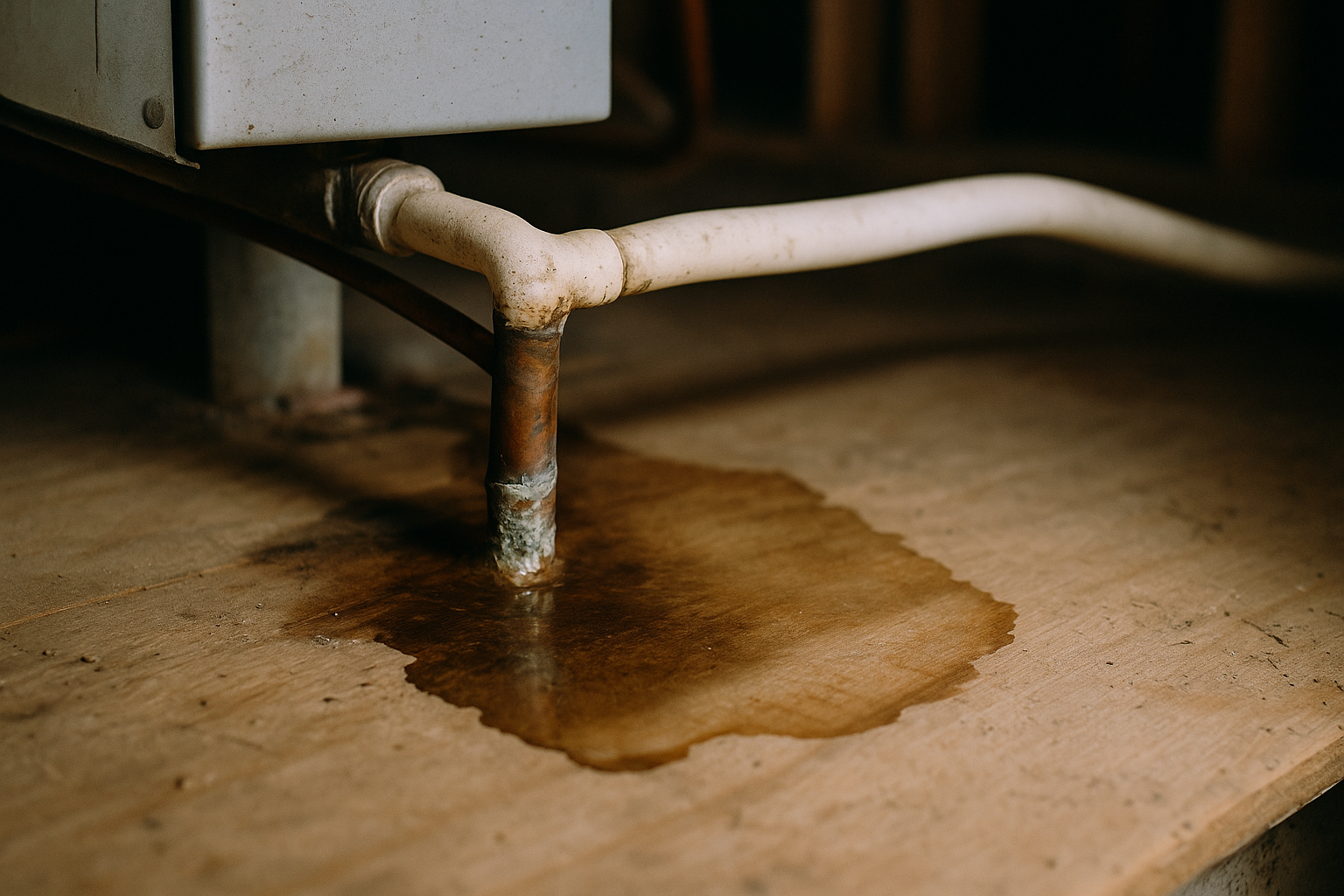
    Here’s the thing most homeowners don’t know until it happens to them: the same system keeping your house cool is also pulling gallons of water out of the air every single day. All that water has to go somewhere. Usually it drains out quietly through a small line you never think about. But when that line clogs, or the pan underneath it overflows, that water ends up in your ceiling, your walls, or pooled on the floor next to your unit — and you may not notice until there’s a stain or a soft spot.

    Why extreme heat makes this worse

    During a heat warning like this one, your AC runs longer cycles, more often, for days on end. More runtime means more condensation produced, which means more strain on that little drain line and pan. A clog that would’ve been a minor drip in April can turn into a steady leak in July — right when everyone’s system is maxed out and it’s hardest to get a same-day appointment with anyone.

    An AC drain clog in Aubrey, Texas doesn’t usually announce itself with a bang. It’s slow. A little water damage today, a little more tomorrow, until you’re looking at a stained ceiling or warped flooring and wondering how long it’s actually been going on.

    Your 10-minute prevention checklist

    Good news — most of this you can check yourself, today, before it becomes a problem:

    • Look at the drain pan. If your unit is in an attic or closet, there’s a secondary pan underneath. Check it for standing water — that’s an early warning sign the primary line is clogged.
    • Check the condensate line outside. It’s usually a white PVC pipe near your outdoor unit. It should be dripping steadily in this heat. If it’s bone dry while your AC is running, that’s a red flag — the water’s backing up somewhere instead of draining out.
    • Look for a musty smell or damp spot near your indoor unit, closet, or the ceiling below an attic unit. Algae and gunk build up inside that drain line over time, especially in summer, and that smell is often the first clue.
    • Test the float switch, if your system has one. It’s a small safety switch designed to shut the AC off before the pan overflows. If yours is old or was never installed, that’s worth mentioning to your HVAC tech.
    • Don’t ignore a warm house with a running AC. Sometimes the first sign of an overflow issue is the safety switch doing its job and shutting the system down. If your AC won’t turn on and it’s tripped that switch, there may already be water where you can’t see it.

    If you find water damage

    If you do find damage — a soft ceiling spot, a wet patch of carpet, warped baseboards — please don’t wait it out to “see if it dries on its own.” Hidden moisture inside drywall or under flooring doesn’t dry the way a wet countertop does, and it’s exactly the kind of thing that turns into a mold problem if it sits for a few days in this heat and humidity.

    I can’t promise it won’t be disruptive to get it properly dried out — but I can promise to make it as least disruptive as possible, and to walk you through exactly what’s happening at every step.

    You’re not just calling “a company”

    When you call Merlene Mitigation, you’re calling Josh — the person who shows up, does the inspection, and stays on your job from start to finish. No call center, no rotating crew of strangers. Lower overhead means fair, honest pricing, and one accountable person who treats your home like his own. That’s the whole idea behind MM: I’m on your team, not just on the clock.

    If you’re in Aubrey, Pilot Point, or anywhere in the surrounding North Texas area and you’re seeing signs of an AC leak or water damage this week, give Josh a call or shoot a text — texting is easy and a lot of people prefer it, especially when they’re not sure yet if it’s a big deal or not. Either way, you’ll get a straight answer.

    And if nothing’s wrong today but you’d rather be prepared than caught off guard, grab our free guide, The First 24 Hours After Water Damage. It’s free, it’s genuinely useful, and it’s the kind of thing you’ll be glad you read before you need it instead of after.

    -Ally

  • AC Condensation Leaks in Aubrey, TX: What to Check Now

    AC Condensation Leaks in Aubrey, TX: What to Check Now

    If you’re in Aubrey today, you already know it’s brutal out there. With the heat advisory pushing the heat index to 104°, your air conditioner is working harder than it has all year — running longer cycles, pulling more moisture out of the air, and putting more strain on parts that quietly fail without warning. One of the most common: the AC condensation drain line.

    Here’s the thing about a condensation leak — it rarely announces itself with a dramatic gush. It’s a slow drip, tucked inside a wall cavity or above a ceiling, doing damage for days before anyone notices a stain. And on a day like today, with the system running nearly nonstop, that slow drip has a lot more opportunity to become a real problem.

    So before you do anything else this afternoon, take five minutes and check these things. It’s the kind of five minutes that saves you a much longer week.

    Why heat advisories are prime time for AC drain failures

    Your AC doesn’t just cool the air — it pulls humidity out of it, and that moisture has to go somewhere. It collects in a drain pan and exits through a condensation line, usually a thin PVC pipe running out near your foundation or into a drain.

    On a normal day, that system handles a manageable amount of water. On a 104° day, with the unit running almost continuously to keep up, it’s processing far more condensation than usual. If there’s already a partial clog — algae, dust, a bit of sludge buildup — today is the day it finally backs up and overflows.

    Your 5-minute checklist, right now

    • Look at the drain pan. If you have an indoor unit in a closet or attic, check the pan underneath it for standing water.
    • Check the drain line outside. Find where the condensation line exits your house (often near the outdoor unit) and confirm water is actually dripping out. No drip during a heavy-run day like today is a red flag — it likely means a clog upstream.
    • Look up. If your air handler is in the attic, check the ceiling below it for any new discoloration, soft spots, or a faint musty smell.
    • Check around vents and the unit itself for any dampness, drips, or a puddle that wasn’t there yesterday.
    • Listen for your float switch. If your system suddenly shuts off entirely, don’t panic — that may actually be a safety switch doing its job, stopping the unit before an overflow gets worse. It’s uncomfortable, but it beats the alternative.

    If you find standing water or a stain, turn off the AC at the thermostat and, if you’re comfortable, at the breaker. Yes, it means an uncomfortable house on a 104° day. That’s a real trade-off, and I won’t pretend it isn’t. But letting the unit keep running while it’s actively overflowing can turn a small, contained issue into water working its way through drywall, insulation, and framing — which is a much bigger job than anyone wants.

    What happens if water’s already gotten into the structure

    If you’ve caught actual damage — a stained ceiling, damp drywall, a soft spot underfoot — the surface being dry to the touch doesn’t mean the structure underneath is dry. That’s one of the most common myths in this business, and it’s the reason small leaks turn into mold problems weeks later. Moisture hides in places you can’t see or touch, and that’s exactly where trouble grows.

    This is where a proper inspection matters — checking moisture content in the material itself, not just what’s visible on the surface, so you know the true extent before it’s a bigger, more expensive fix.

    We’re here for it, Aubrey

    Merlene Mitigation is based just up the road in Pilot Point, and we handle water damage and inspections all across North Texas — Aubrey included. Josh is the one who answers the phone and the one who shows up, so you’re not getting bounced between a call center and a rotating crew. Lower overhead means fair pricing, and one accountable person means nothing gets lost in translation.

    If you’re seeing signs of an AC leak today, give us a call or shoot a text — Josh is usually on-site within the hour for situations like this, and texting works great if a phone call isn’t convenient in the moment.

    And if nothing’s leaking today but you’d rather be ready than sorry, we put together a free guide called The First 24 Hours After Water Damage. It walks through exactly what to do the moment you find water, before help arrives — worth having on hand long before you ever need it.

    Stay cool out there, Aubrey.

    -Ally

  • AC Condensation Leaks in Aubrey, TX: 99° Heat Warning

    AC Condensation Leaks in Aubrey, TX: 99° Heat Warning

    If you walked past your hallway closet today and noticed a faint musty smell, or spotted a small dark ring forming on the ceiling below your attic AC unit, don’t ignore it. With heat index values hitting 108° in Aubrey today and tomorrow, your air conditioner is working harder than it has all year — and that extra strain is exactly when condensation drainage tends to fail first.

    Here’s what’s actually happening inside your system, and how to catch a problem before it turns into water damage behind your walls or ceiling.

    Why 99° Days Are Hard on Your AC’s Drainage

    Every air conditioner pulls moisture out of the air as it cools your home. That moisture has to go somewhere — normally down a condensate line and out to a drain or the outside of your house.

    On a mild day, that system barely notices the work. On a day like today, your AC is running nearly nonstop to keep up with the heat, which means it’s pulling more moisture out of the air than usual, for longer stretches of time. More condensation, more hours of runtime, more strain on a drain line that might already have a little algae buildup or a slow clog nobody’s noticed yet.

    That’s the tipping point. A condensate line that’s been draining “just fine” for months can back up the moment it’s asked to handle a 99° day’s worth of moisture. When it backs up, that water has to go somewhere else — and “somewhere else” is often your ceiling, your closet, or the wall behind your unit.

    Signs of an AC Overflow Worth Checking Today

    You don’t need special equipment to catch most of these early. Just a few minutes and your own eyes:

    • A musty or damp smell near vents, closets, or wherever your unit or ductwork runs — often the first sign, even before you see anything.
    • Discoloration or a soft spot on the ceiling below an attic unit, or on a wall near a closet unit.
    • Water pooling near the indoor unit or a drip pan that’s full or overflowing.
    • Your AC running longer than usual without cooling the house like it should — sometimes a sign it’s struggling, not just the heat.
    • A drain line that’s supposed to drip outside and isn’t — worth a quick look if you know where yours terminates.

    Any one of these on its own might be nothing. But on a day this hot, it’s worth five minutes to check, because condensation leaks are sneaky. The surface can look dry while the insulation, drywall, or subfloor underneath is holding water you can’t see. That hidden moisture is exactly where mold risk starts.

    What To Do If You Catch One

    If you find active water: turn off the AC unit at the thermostat (not the drying equipment if you already have some running — but for a fresh AC leak, shutting down the unit itself is fine and often the right first move to stop more water from coming). Then get towels down, move anything valuable off the wet spot, and take a few pictures for your records.

    Small, caught-early leaks are often a simple fix — a clogged line cleared, a full drip pan emptied. But if water’s been sitting for a while, or you’re seeing that ceiling stain and don’t know how long it’s been there, that’s worth getting a real set of eyes on it. Moisture behind a wall doesn’t announce itself, and “it looks dry” is never the same as “it is dry.”

    Aubrey Homeowners: We’re Local, and We’re On Your Team

    I’m Ally, and I write for Merlene Mitigation — a small, honest, owner-operated water damage restoration company based just up the road in Pilot Point. Josh handles every inspection himself, with real moisture-detection equipment, not guesswork. No big franchise overhead, no crew of strangers — just one accountable person who treats your home like his own.

    If you’re dealing with an AC leak or water damage anywhere in the Aubrey area right now, give us a call or send a text — texting works great if you’re mid-crisis and can’t talk. We’ll get you a straight answer and, if you need it, Josh is typically on-site within the hour.

    And if nothing’s wrong today but you’d rather be ready before it is, grab our free guide, The First 24 Hours After Water Damage. It walks through exactly what to do in the first hours of a leak — AC overflow or otherwise — so you’re not scrambling if today’s heat ever catches your system off guard.

    Stay cool out there, Aubrey.

    -Ally

  • AC Condensation Leaks in Aubrey, TX: What to Check Now

    If you live in Aubrey and your AC has been running nearly nonstop this week, here’s something worth checking today, not next week: the little drain line that carries condensation away from your unit. With the heat index sitting at 104° through the weekend, that drain is working harder than it has all year, and it’s exactly the kind of thing that fails quietly until it doesn’t.

    I want to walk you through what’s actually happening inside your system right now, what to look for, and what to do if you find a problem. Most of this you can check yourself in five minutes.

    Why This Weekend Is Different

    Your air conditioner doesn’t just cool air, it pulls moisture out of it too. That moisture has to go somewhere, so it drips into a condensate pan and drains out through a small PVC line, usually to the outside or into a floor drain.

    When it’s 104° and your AC is running almost around the clock to keep up, it’s pulling more moisture out of the air than usual, and doing it more often. More condensation means more strain on that drain line. If there’s already a little algae, dirt, or a sagging section anywhere in that line, this is the weekend it backs up.

    That backup doesn’t always announce itself. Sometimes it’s a puddle by the indoor unit. Sometimes it’s water tracking quietly into a wall cavity or a ceiling above a closet, and you don’t find out until there’s a stain or a smell.

    What to Check Today

    • The drain pan under your indoor unit. Standing water, rust, or a musty smell means it’s not draining the way it should.
    • The condensate line itself. If you can see it, look for water sitting in the line or dripping somewhere it shouldn’t.
    • Ceiling or wall stains near the unit, especially if it’s in an attic or a closet. A faint yellow-brown ring is often the first visible sign of a slow leak that’s been going on longer than you’d think.
    • The float switch, if your system has one. It’s designed to shut the AC off before overflow happens. If your unit randomly stopped cooling, this could be why, and it’s actually doing its job.
    • Any musty smell in a room near the unit. Nose knows before eyes do, most of the time.

    If You Find Water

    Don’t panic, but don’t wait either. A condensation leak caught early is usually a simple fix. A condensation leak left to run for a few days behind drywall or under flooring is a different problem entirely, and a much more expensive one.

    Water doesn’t stay where you first see it. It follows gravity and gaps in framing, which means the wet spot on your ceiling might be nowhere near where the actual damage is spreading underneath.

    If you’ve got standing water or a wall or ceiling that’s staying damp, that’s when it’s worth having someone actually look at it, not just guess. A moisture meter and a thermal camera can tell you what’s happening inside a wall without cutting into it, which saves you money and guesswork.

    Why Speed Matters More Than People Realize

    Here’s the honest truth: it’s not the first hour of water damage that costs you, it’s the ones you didn’t know were happening. In this heat and humidity, hidden moisture behind a wall doesn’t just sit there. It becomes exactly the environment mold needs to get started, usually within 24 to 48 hours.

    That’s why, on any water damage call, the first move is always the same: get the water out, stabilize the area, get drying equipment running. Then reassess in a day or two once things are under control. It’s not complicated, it just has to happen quickly.

    We’re Here If You Need Us

    I’m Ally, and I write for Merlene Mitigation, a small, local water damage restoration company based right here in Pilot Point. Josh runs it personally, no call center, no rotating crew of strangers, just one accountable person who shows up, explains what’s actually going on, and treats your home like it matters.

    If you’re in Aubrey or anywhere around North Texas and you’re seeing water where it shouldn’t be, or you just want a second set of eyes before it becomes a bigger problem, give Josh a call or shoot him a text. Texting works great if that’s easier for you.

    And if nothing’s wrong today but you’d rather be ready than caught off guard, we put together a free guide called The First 24 Hours After Water Damage. It’s the kind of thing worth reading now, on a calm day, so you already know exactly what to do if this heat ever does turn a small drip into something bigger.

    -Ally

  • Hidden Water Leaks in Aubrey, TX: Summer Heat Damage

    Hidden Water Leaks in Aubrey, TX: Summer Heat Damage

    If your house has felt like it’s holding its breath through this heat, you’re not imagining it. Triple-digit days don’t just stress out your air conditioner — they can turn a small, quiet leak into a much bigger problem, and they do it fast. If you’ve got a slow drip somewhere behind a wall or under a floor in Aubrey right now, summer is exactly the season that makes it worse.

    Why heat speeds up hidden water damage

    It seems backwards at first. Shouldn’t 100-degree heat just… dry things out? Sometimes. But here’s what’s actually happening inside your walls and under your slab:

    • Heat accelerates mold and bacterial growth. Warm, humid conditions behind drywall are close to ideal growing conditions. A leak that might sit quietly for weeks in cooler months can turn into a mold concern in days during a North Texas summer.
    • AC condensation adds to the problem. Your air conditioner is working overtime right now, and condensation lines and coils under stress are more likely to clog or leak — often right where you’d never think to look.
    • Soil movement stresses your plumbing. Texas clay soil shrinks in extreme heat and drought, and that shift can crack or separate pipe joints underground or under the slab — a classic summer cause of slow leaks nobody sees coming.
    • Materials expand and contract. The heat cycles your home goes through, hot during the day, cooler at night with the AC running, cause tiny movements in pipes and seals. Over a season, that’s enough to turn a “someday” leak into a “right now” leak.

    None of this means every home has a hidden leak. It means summer is when a small one gets loud, and by the time you see it, it’s usually been going on longer than you’d think.

    Signs of a hidden leak worth checking on

    Most hidden leaks don’t announce themselves with a puddle. They show up in smaller, easier-to-miss ways:

    • A water bill that’s crept up without an obvious reason
    • A musty smell in one room, especially near a bathroom, kitchen, or laundry area
    • Baseboards or flooring that feel soft, or flooring that seems to be lifting slightly
    • A cool or damp spot on a wall or floor that doesn’t match the rest of the room
    • Discoloration on drywall or ceiling, even faint
    • The sound of running water when nothing’s turned on

    Any one of these on its own might be nothing. A couple together, especially during a heat wave, is worth a closer look.

    “It looks dry” doesn’t mean it is dry

    This is one of the things I explain most often, and it matters more in summer than any other season: the surface of a wall or floor can look and feel completely dry while the structure underneath is still holding moisture. Drywall, wood framing, and subfloor absorb and hold water long after the surface has evaporated. That hidden moisture is exactly where mold risk lives, and heat only speeds that process along.

    Real detection means checking below the surface, not just eyeballing it. A moisture meter and thermal imaging can find what your eyes can’t, which is the whole point.

    Why acting fast matters

    I can’t promise every leak turns into a disaster if you wait a few weeks. But I can tell you the math almost always runs the same direction: a leak caught early is a repair. A leak caught late is a remodel. The difference between “we dried out one wall” and “we’re replacing subfloor, drywall, and dealing with mold” is often just a matter of time and heat.

    If you’re in Aubrey or nearby, I’m glad to take a look

    Merlene Mitigation is based just down the road in Pilot Point, and Aubrey is well within the area I serve. If something feels off in your home, a musty smell, a spike in your water bill, a spot that never quite dries, I’d rather come check it and tell you it’s nothing than have you wait and find out the hard way that it wasn’t. Right now I’m offering a free water damage inspection through August 6th, 2026, no pressure, no obligation.

    You can call or text me directly, and I’ll walk you through what I’m seeing and what I’d do about it, plainly and honestly. As a one-person, family-run operation, you’ll always be talking to the same person who shows up at your door.

    And if nothing’s wrong today but you want to be ready in case it ever is, grab my free guide, The First 24 Hours After Water Damage. It’s the same thing I’d tell a neighbor to keep by the fridge, just in case.

    -Ally

  • AC Condensation Leaks in Aubrey, TX: Heat Index Warning

    AC Condensation Leaks in Aubrey, TX: Heat Index Warning

    If your AC has been running nonstop this week, you’re not imagining it. With the heat index climbing to 98-99° across Aubrey over the next 48 hours, every air conditioner in town is about to work harder than it has all summer. And that means one small, easy-to-ignore part of your system is about to get put to the test: the condensation drain line.

    Here’s why that matters more than most people think.

    Why extreme heat makes AC leaks so much more likely

    Your AC doesn’t just cool the air, it pulls moisture out of it too. That moisture has to go somewhere, and normally it drains out quietly through a small condensate line you never think about.

    When the heat index spikes, your system runs longer and pulls more moisture out of the air than usual. More runtime and more condensation means more water moving through that drain line, day after day, hour after hour. If there’s already a little algae buildup, a small clog, or a slow leak in that line, this is exactly the kind of stretch that pushes it past the tipping point.

    A drain line that’s been “fine” for two years can overflow in an afternoon once the system is working this hard.

    Where the water actually goes

    This is the part that catches people off guard. AC condensation leaks in Aubyrn TX homes usually don’t show up as a puddle on the floor first. Most systems live in an attic or a closet, and the water finds the path of least resistance, which is usually down through your ceiling drywall before you ever see it.

    By the time you notice a brown stain spreading across the ceiling, or paint starting to bubble, water has often been sitting in that spot for a while. And wherever water sits undisturbed in North Texas heat and humidity, mold has a real head start.

    That’s the honest, unglamorous truth about a lot of AC drain line overflow situations. The visible damage is just the tip of it. What’s soaked into the insulation, the drywall, or the framing above your ceiling is the part that actually determines how big a job you’re looking at.

    What to check today, before the heat peaks

    You don’t need any special tools for this. Just five minutes and a flashlight.

    • Look at the ceiling below and around your indoor AC unit for any discoloration, sagging, or soft spots.
    • If you have an attic access point, take a look at the drain pan under the unit. Standing water or rust stains are an early warning sign.
    • Check the outdoor condensate drain line (the PVC pipe near your outdoor unit) to make sure water is actually dripping out of it while the AC runs. No drip at all can mean a clog upstream.
    • If your system has a safety float switch, make sure nothing is blocking it. That little switch is designed to shut the system down before it overflows, and it’s worth confirming it’s actually working.

    If any of that looks off, it’s worth having it looked at now, while it’s a maintenance call, and not later, once it’s a ceiling.

    If you already see a stain or a leak

    Don’t just wipe it up and hope it dries out on its own. In this heat and humidity, “it looks dry” on the surface almost never means it’s dry underneath. That’s true of AC condensation leaks the same as any other kind of water damage in Aubrey Texas homes, the water that’s already soaked into materials is the part you can’t see and can’t judge with your eyes alone.

    I’ll be straight with you: not every drip needs a full inspection. But if there’s an actual stain, sagging drywall, or a musty smell, that’s worth having someone take a real look before it becomes a bigger, more expensive problem.

    We’re here if you need us

    Merlene Mitigation is a small, local operation, it’s really just Josh doing the inspections and the work himself, which means no call center, no runaround, and no marked-up overhead getting passed on to you. Right now we’re offering free water damage inspections through August 6th for North Texas homeowners, so if something under that ceiling has you wondering, there’s no reason to sit with the worry.

    You can call or text Josh directly, whichever is easier for you, and he’ll get back to you quickly.

    And if nothing’s leaking today but you just want to be ready in case it ever does, we put together a free guide called The First 24 Hours After Water Damage. It walks through exactly what to do in that first day, before we ever get involved, so you’re never caught off guard.

    -Ally

  • AC Condensation Leaks in Aubrey, TX: Act Now on Heat Advisory

    AC Condensation Leaks in Aubrey, TX: Act Now on Heat Advisory

    If you’ve stepped outside in Aubrey today, you already know: the heat index is sitting at 107°, there’s an active Heat Advisory, and every AC unit in town is running like it’s got somewhere to be. That’s exactly the kind of stretch when we start getting calls about water where there shouldn’t be water — a wet spot on the ceiling, a puddle by the closet where the air handler lives, a musty smell that wasn’t there last week.

    Here’s the thing worth knowing before it becomes an emergency: your AC isn’t just cooling your house right now. It’s also working overtime to pull moisture out of the air, and all that condensation has to go somewhere. When it can’t get where it’s supposed to go, it goes where it’s not supposed to — into your ceiling, your walls, your floors.

    Why heat waves like this cause condensation drain backups

    Your AC’s condensate drain line carries away the water your system pulls out of the air as it cools. On a mild day, that’s a manageable trickle. On a day like today, with the unit running nearly nonstop to keep up, it’s a lot more water moving through that same small line — and it doesn’t take much to back it up.

    A little algae, a bit of dust, a kinked line, or a clogged drain pan can all cause the same result: water backing up instead of draining out. On a normal day, you might not even notice. On a 107° heat index day, with the system running around the clock, that backup can fill a drain pan or soak a ceiling in a matter of hours.

    What to check right now

    This takes five minutes and it’s worth doing today, especially with the advisory in effect:

    • Look at the ceiling below or near your indoor AC unit for any staining, sagging, or bubbling paint.
    • Check the drain pan under your air handler (usually in the attic, a closet, or the garage) for standing water.
    • Feel around the base of the unit and nearby walls for dampness or a musty smell.
    • Look at the drain line outside — it should be dripping steadily, not dry and not backed up.

    If any of that turns up wet, damp, or musty, don’t wait it out. Condensation leaks are quiet by nature — they don’t flood a room, they seep, which means the real damage is often happening inside your walls and ceiling long before it shows up where you can see it. That’s the hidden water damage that turns a $200 drain-line clog into a much bigger repair.

    Why speed actually matters here

    I’ll be honest with you: not every AC leak needs an emergency call. If you catch it early, drying it out and clearing the line can be a simple fix. But once moisture sits in drywall, insulation, or subfloor for more than a day or two — especially in heat and humidity like we’ve got right now — mold risk climbs fast, and “small leak” turns into “replace the ceiling.”

    That’s really the whole judgment call: how long has it been wet, and how humid is it in there. Those two things decide whether you’re looking at a quick dry-out or something more involved.

    Merlene Mitigation is running free inspections through July 29th

    Because this kind of heat tends to expose problems all at once across North Texas, we’re offering free water damage inspections through July 29th. If you’ve found something damp, or you just want a second set of eyes before it becomes a problem, there’s no cost and no pressure to walk through it with you.

    When you call, you’re talking to Josh — the person who actually shows up, assesses the moisture, and tells you straight whether it’s a simple fix or something that needs real drying equipment. No call center, no subcontracted stranger, no upsell. Low overhead means fair prices, and one accountable person means nothing gets lost between “who do I call” and “who actually fixes it.”

    If you’re in Aubrey, Pilot Point, or anywhere in North Texas and something feels off with your AC or you’ve spotted water where it shouldn’t be, reach out. We’d rather look at it today and tell you it’s nothing than have you find out in three weeks that it wasn’t.

    And if nothing’s wrong today but you’d rather be ready than caught off guard next time, our free guide, The First 24 Hours After Water Damage, walks through exactly what to do in the first hours after you find water — before you ever need it.

    -Ally
  • AC Condensation Leaks in Aubrey, TX: Heat Index 109°

    AC Condensation Leaks in Aubrey, TX: Heat Index 109°

    If your air conditioner has been running nearly nonstop this week, you’re not imagining it. With the heat index climbing to 109° across Aubrey and the rest of North Texas this weekend, AC systems are working harder — and longer — than they’re built to handle for days on end. That extra strain doesn’t just show up on your electric bill. It shows up as water, often in places you won’t notice until the damage is already done.

    Why extreme heat causes condensation backups

    Your AC doesn’t just cool air — it pulls moisture out of it. That moisture collects on the evaporator coil and drips into a condensate drain line, which carries it safely outside. When your system runs around the clock in brutal heat, it produces far more condensation than usual, and that drain line has to keep up hour after hour.

    Add in the algae, dust, and debris that build up in most drain lines over a season, and you’ve got a bottleneck waiting to happen. When the line clogs, that water has nowhere to go but back into your system — and often, right down through your ceiling or into your walls.

    What to check right now

    A few minutes of checking today can save you a much harder week later:

    • Look at the drain pan under your indoor unit (usually in the attic or a closet). Standing water or rust stains mean trouble is already brewing.
    • Check the drain line’s outside termination — it’s usually a white PVC pipe near your outdoor unit. Water should be dripping out. If it’s bone dry during a heavy-run day, that can actually be a sign of a clog upstream.
    • Watch your ceilings, especially under attic-mounted units — a small brown stain today can mean saturated insulation and drywall tomorrow.
    • Listen for a shutoff switch tripping — many systems have a float switch that turns the AC off if the pan fills. If your air stops cooling and the outdoor unit isn’t running, this could be why — and it’s actually doing its job protecting your home.

    Why “it’s just a little water” is worth taking seriously

    Condensation leaks are quiet. There’s no dramatic pipe burst — just a slow drip, day after day, into insulation, drywall, or subfloor that stays damp far longer than it looks. That’s exactly the kind of moisture that leads to hidden structural damage and mold growth, because the surface can look dry while the material underneath stays wet for days.

    It looking dry is not the same thing as it being dry. That’s the piece that catches people off guard every summer.

    When to call a professional

    If you’ve found active water, a stained ceiling, or musty smell near a vent or attic unit, it’s worth having it looked at before it spreads. A clogged drain line itself is often a straightforward HVAC fix — but the water damage it’s already caused is a different question, and that’s where we come in.

    I can’t promise a leak won’t be an inconvenience — but I can promise to give you a clear, honest picture of what’s actually going on in your home, and a straightforward plan to dry it out right.

    A local offer, while this heat wave runs its course

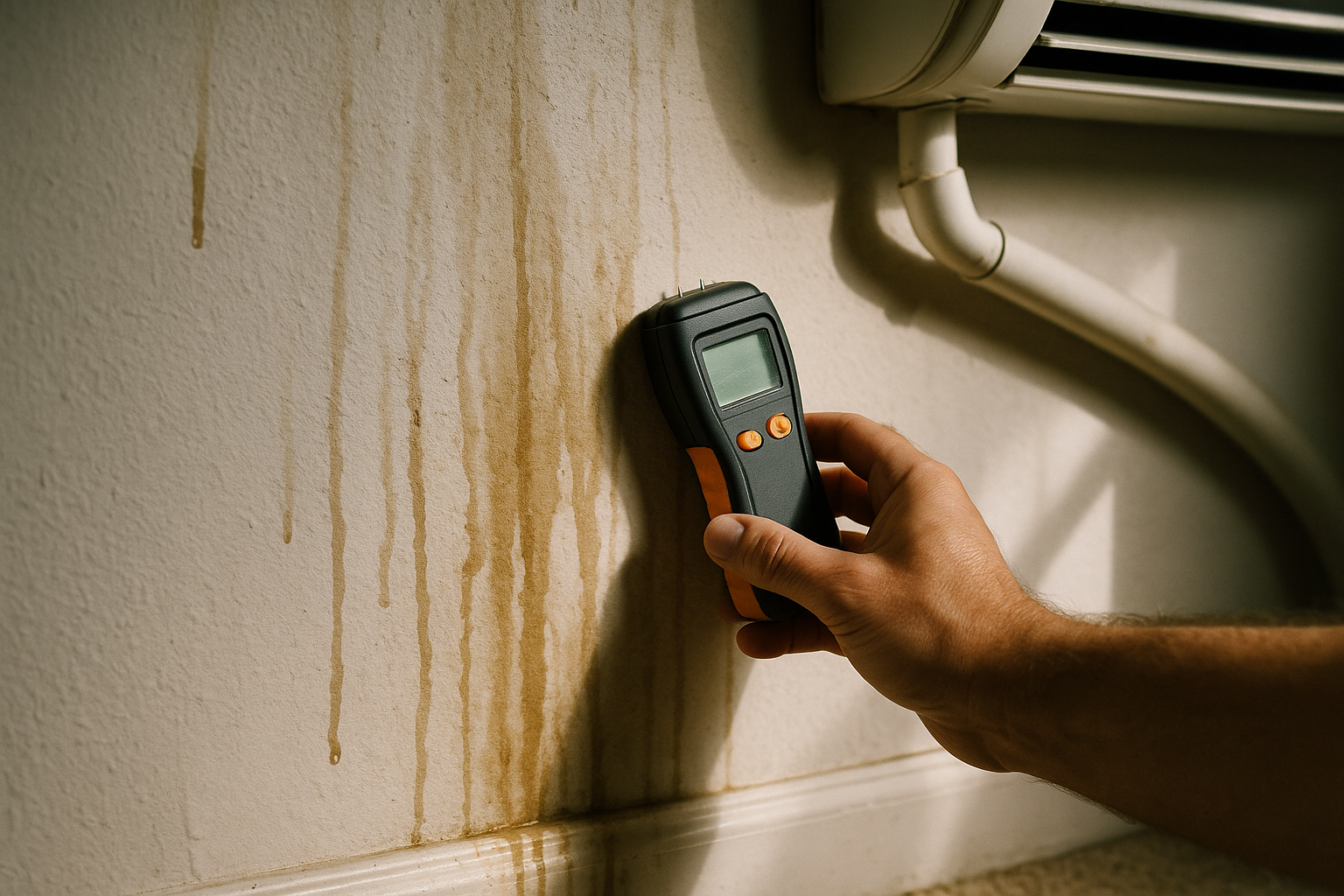
    Through July 29th, Merlene Mitigation is offering free water damage inspections for homeowners in Aubrey and the surrounding area. No pressure, no upsell — just a real look with a moisture meter and thermal camera so you know whether that condensation leak has caused damage that needs attention, or whether you’re in the clear.

    Merlene Mitigation is a small, local, owner-operated business based just down the road in Pilot Point. When you call, you get me — Josh — not a call center, not a rotating crew. That’s how you get honest answers and fair prices, heat wave or not.

    If you’re dealing with a suspected AC leak in Aubrey or nearby, give us a call. We’d rather catch it small than let it become a bigger job for everyone.

    -Ally