
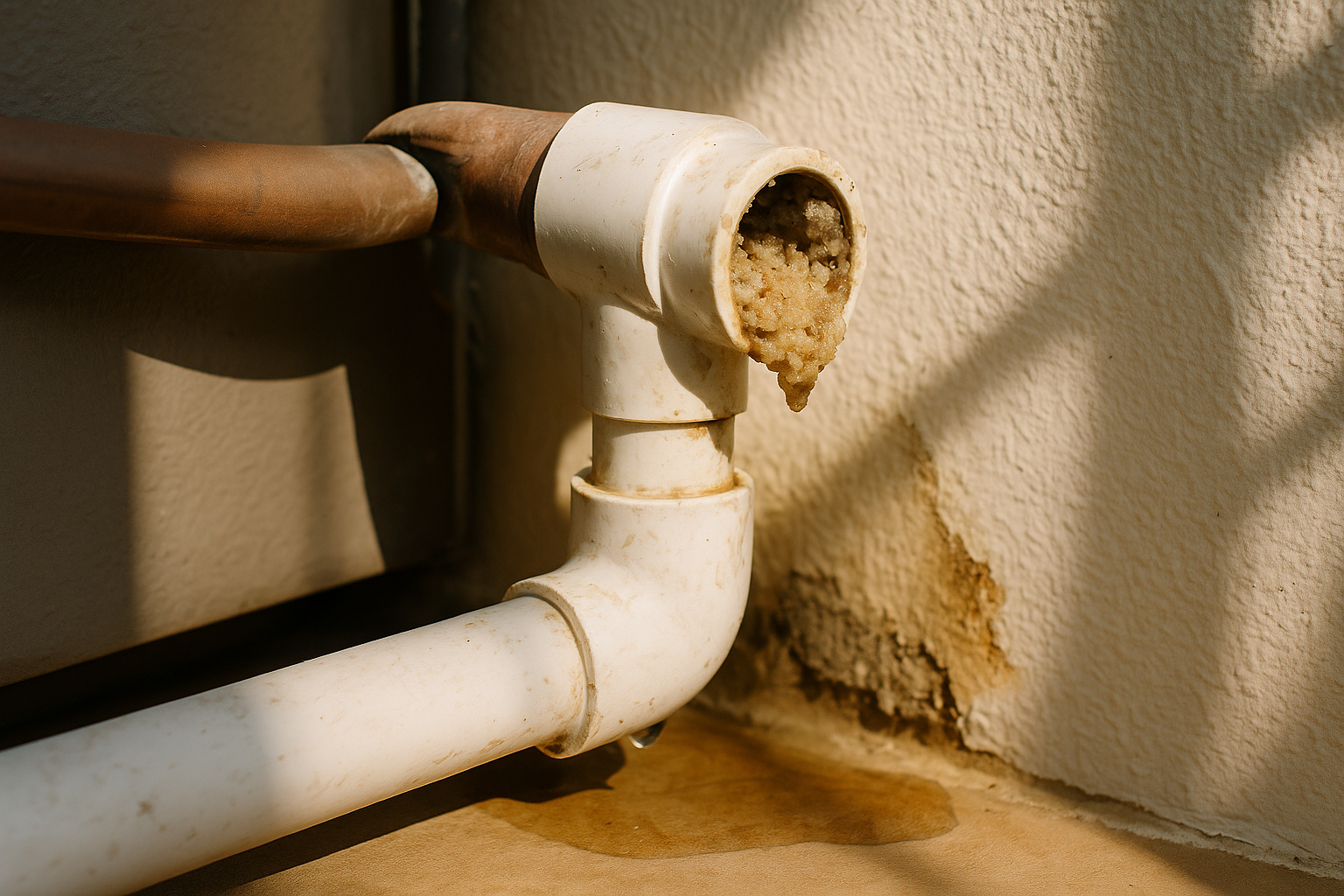
If you live in Providence Village and your AC has been running nonstop this week, here’s something worth checking today: that little drain line quietly carrying condensation away from your unit. With the heat index sitting at 108° across North Texas today and tomorrow, your system is working harder than it has all year, and that means more condensation, more strain on the drain line, and a real uptick in the kind of AC leaks that start small and end up costing a lot more than a service call.
I want to walk you through why this happens, what to look for, and what to do about it, before it turns into a wall full of wet insulation.
Why 108° heat makes AC leaks more likely
Your air conditioner doesn’t just cool the air, it pulls moisture out of it. That moisture collects on the evaporator coil and drips down into a drain pan, then out through a small PVC drain line, usually to the outside of your house.
When the heat index climbs into the 100s, your AC runs longer and harder to keep up, which means it’s pulling significantly more moisture out of the air than on a mild day. More condensation means more water trying to move through that same small drain line. If there’s already a little algae buildup, a bit of dust, or a slow clog in there, this is exactly the kind of stretch where it finally backs up.
And here’s the part that catches people off guard: a condensation backup doesn’t announce itself. It doesn’t sound an alarm. It just quietly overflows the drain pan, or backs up into the ductwork, and starts finding its way into places you can’t see, like the wall cavity behind a closet, or the insulation above a hallway ceiling.
Early signs worth checking right now
You don’t need special equipment to catch this early. A few minutes of looking is usually enough:
- A musty smell near a vent, closet, or the room where your indoor AC unit or air handler is located.
- A ceiling stain that’s new, even faint, especially if your air handler is in the attic.
- Water or a damp spot around the base of the indoor unit or near the drain line outside.
- Your AC running longer than usual without cooling like it should, which can point to a bigger issue alongside the drain.
- A visibly slow or dripping drain line outside your home, where it’s supposed to drain freely.
If you catch any of these today, don’t wait it out. Water that’s found its way into drywall or insulation doesn’t dry on its own just because the AC gets fixed. It sits there, and that’s when hidden water damage and mold risk really start.
What you can do right now
A few simple things go a long way during a stretch like this:
- Have your AC technician check and flush the condensate drain line as part of routine maintenance, especially if it’s been a while.
- Keep an eye on the drain pan and line every few days during peak heat, not just once a season.
- If you notice standing water in the pan or a damp ceiling, treat it as worth a look right away, not something to check on “this weekend.”
I’ll be honest with you: most of the time, a slow drain line is a simple fix. But if water has already gotten into your walls, ceiling, or insulation, that’s a different situation, and it’s worth having someone assess the actual moisture, not just guess based on what you can see. Surfaces dry fast. What’s underneath doesn’t always follow.
If you’re in Providence Village, Pilot Point, or nearby
This is exactly the kind of week where a fast, honest inspection saves people money down the road. I’m not going to tell you every AC drip means a disaster, because it usually doesn’t. But when it’s 108° outside and your system hasn’t had a break in days, it’s worth knowing for sure instead of hoping it’s fine.
If you’re dealing with a leak, a musty smell, or just want a second set of eyes on it, give Merlene Mitigation a call. Josh is local to Pilot Point, handles these inspections personally, and will tell you straight whether it’s something small or something that needs real attention. No inflated diagnosis, no unnecessary work, just an honest answer.
And if nothing’s happening at your place right now but you want to be ready just in case, we put together a free guide called The First 24 Hours After Water Damage. It walks through exactly what to do in those first critical hours, so you’re not scrambling if the day ever comes.
Stay cool out there, and keep an eye on that drain line.
-Ally
Leave a Reply