Tag: condensation leaks

  • AC Condensation Leaks in Providence Village, TX: 108° Heat

    AC Condensation Leaks in Providence Village, TX: 108° Heat

    If you live in Providence Village and your AC has been running nonstop this week, here’s something worth checking today: that little drain line quietly carrying condensation away from your unit. With the heat index sitting at 108° across North Texas today and tomorrow, your system is working harder than it has all year, and that means more condensation, more strain on the drain line, and a real uptick in the kind of AC leaks that start small and end up costing a lot more than a service call.

    I want to walk you through why this happens, what to look for, and what to do about it, before it turns into a wall full of wet insulation.

    Why 108° heat makes AC leaks more likely

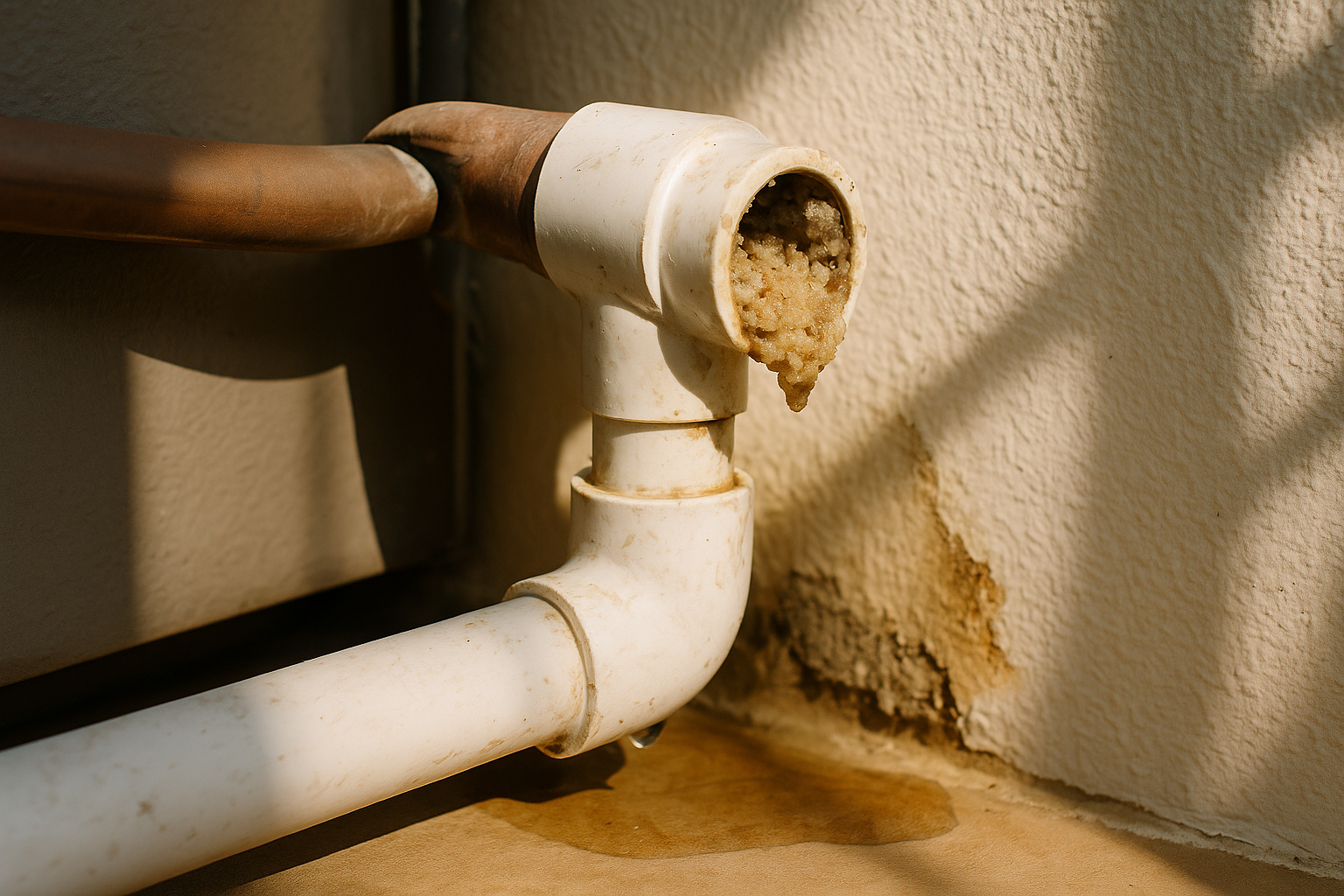
    Your air conditioner doesn’t just cool the air, it pulls moisture out of it. That moisture collects on the evaporator coil and drips down into a drain pan, then out through a small PVC drain line, usually to the outside of your house.

    When the heat index climbs into the 100s, your AC runs longer and harder to keep up, which means it’s pulling significantly more moisture out of the air than on a mild day. More condensation means more water trying to move through that same small drain line. If there’s already a little algae buildup, a bit of dust, or a slow clog in there, this is exactly the kind of stretch where it finally backs up.

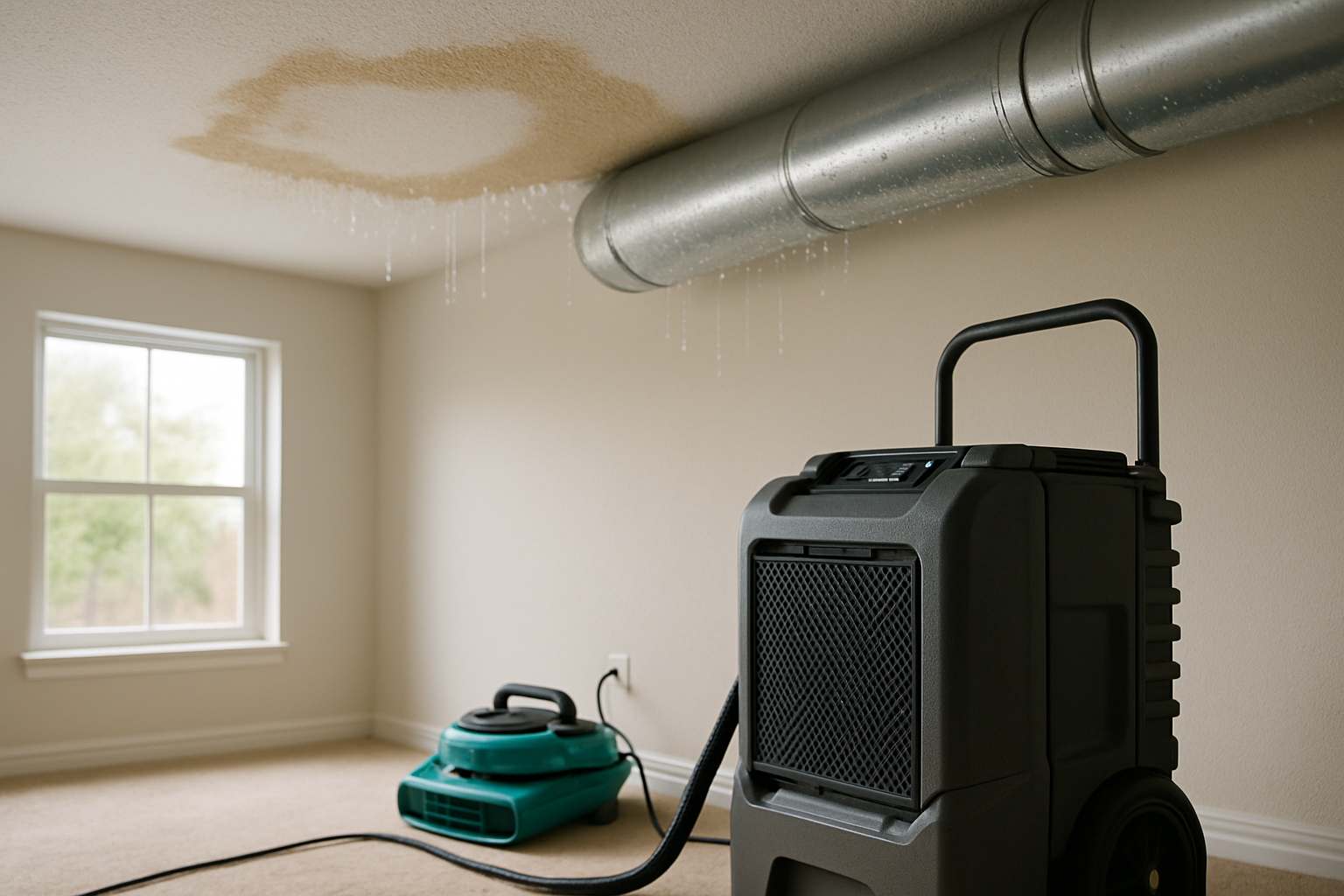
    And here’s the part that catches people off guard: a condensation backup doesn’t announce itself. It doesn’t sound an alarm. It just quietly overflows the drain pan, or backs up into the ductwork, and starts finding its way into places you can’t see, like the wall cavity behind a closet, or the insulation above a hallway ceiling.

    Early signs worth checking right now

    You don’t need special equipment to catch this early. A few minutes of looking is usually enough:

    • A musty smell near a vent, closet, or the room where your indoor AC unit or air handler is located.
    • A ceiling stain that’s new, even faint, especially if your air handler is in the attic.
    • Water or a damp spot around the base of the indoor unit or near the drain line outside.
    • Your AC running longer than usual without cooling like it should, which can point to a bigger issue alongside the drain.
    • A visibly slow or dripping drain line outside your home, where it’s supposed to drain freely.

    If you catch any of these today, don’t wait it out. Water that’s found its way into drywall or insulation doesn’t dry on its own just because the AC gets fixed. It sits there, and that’s when hidden water damage and mold risk really start.

    What you can do right now

    A few simple things go a long way during a stretch like this:

    • Have your AC technician check and flush the condensate drain line as part of routine maintenance, especially if it’s been a while.
    • Keep an eye on the drain pan and line every few days during peak heat, not just once a season.
    • If you notice standing water in the pan or a damp ceiling, treat it as worth a look right away, not something to check on “this weekend.”

    I’ll be honest with you: most of the time, a slow drain line is a simple fix. But if water has already gotten into your walls, ceiling, or insulation, that’s a different situation, and it’s worth having someone assess the actual moisture, not just guess based on what you can see. Surfaces dry fast. What’s underneath doesn’t always follow.

    If you’re in Providence Village, Pilot Point, or nearby

    This is exactly the kind of week where a fast, honest inspection saves people money down the road. I’m not going to tell you every AC drip means a disaster, because it usually doesn’t. But when it’s 108° outside and your system hasn’t had a break in days, it’s worth knowing for sure instead of hoping it’s fine.

    If you’re dealing with a leak, a musty smell, or just want a second set of eyes on it, give Merlene Mitigation a call. Josh is local to Pilot Point, handles these inspections personally, and will tell you straight whether it’s something small or something that needs real attention. No inflated diagnosis, no unnecessary work, just an honest answer.

    And if nothing’s happening at your place right now but you want to be ready just in case, we put together a free guide called The First 24 Hours After Water Damage. It walks through exactly what to do in those first critical hours, so you’re not scrambling if the day ever comes.

    Stay cool out there, and keep an eye on that drain line.

    -Ally
  • AC Condensation Leaks in Celina, TX: Prevention Guide

    AC Condensation Leaks in Celina, TX: Prevention Guide

    If you’ve noticed a musty smell near your hallway closet, a soft spot in the ceiling under an upstairs vent, or a little puddle by your indoor AC unit — don’t wait to see if it goes away on its own. It won’t. And in Celina’s summer heat, it can turn into a real problem faster than you’d think.

    Your air conditioner isn’t just cooling your house right now — it’s working overtime, running longer cycles, and pulling more moisture out of the air than it does any other time of year. That moisture has to go somewhere. Usually, it drains away quietly through a small condensate line you never think about. But when that line gets clogged, “quietly” is exactly the problem — because the water finds somewhere else to go instead, and it’s rarely somewhere convenient.

    Why Summer Heat Makes This Worse

    Here’s the simple version: the harder your AC runs, the more condensation it produces. In North Texas summers, that means your system might be pulling gallons of water a day out of the air inside your home.

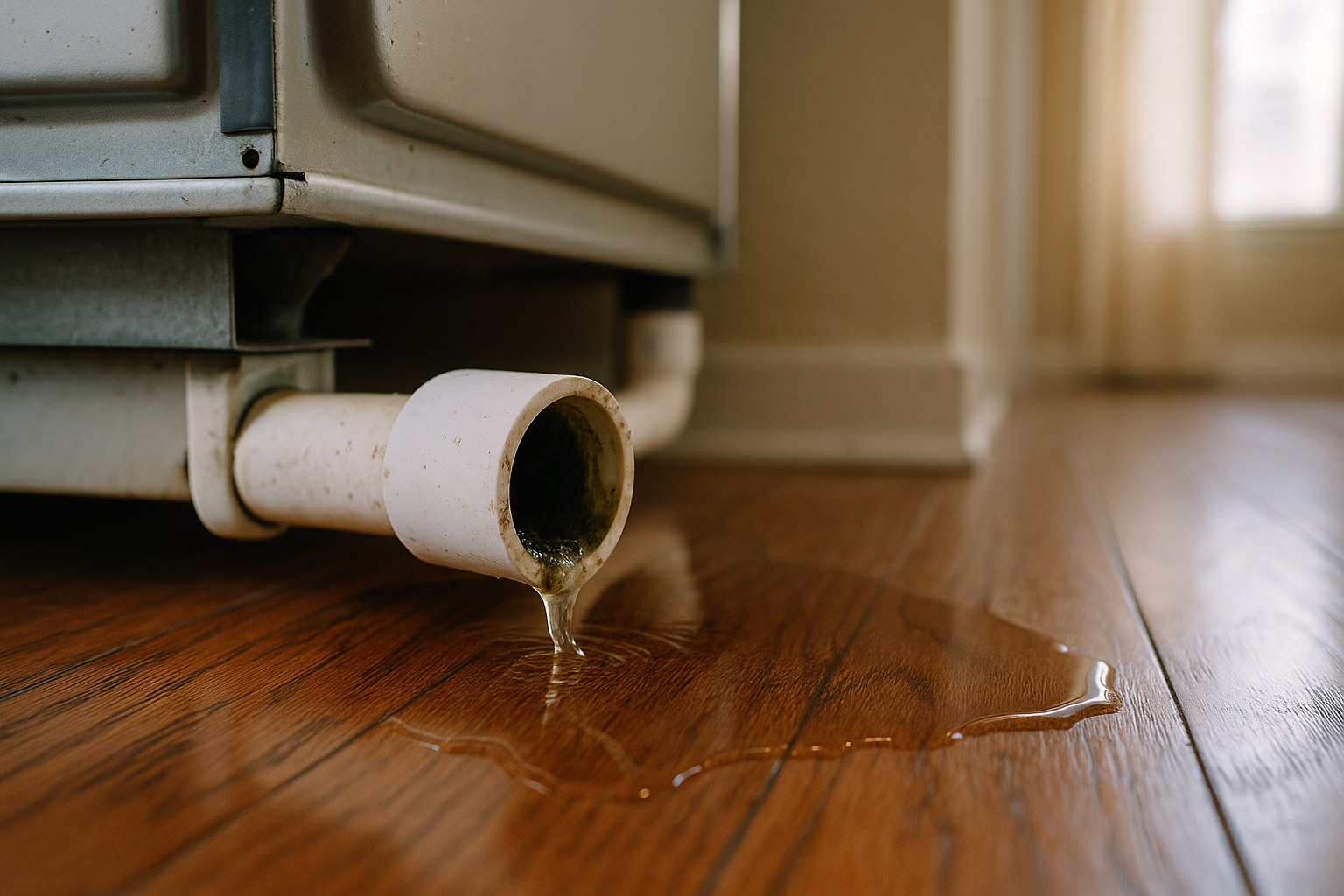
    All of that water is supposed to drip into a pan, then drain out through a small PVC pipe — usually to the outside, or into a utility drain. Over a season (or a few), that line collects algae, dust, and gunk, the same way a shower drain does. Add the extra strain of a brutal Texas July, and a partially clogged line becomes a fully blocked one, right when your system is working its hardest.

    What a Condensation Drain Backup Actually Looks Like

    This isn’t usually a dramatic flood. It’s sneaky. Watch for:

    • A musty or mildew smell near a closet, attic access, or your indoor AC unit
    • Water stains or soft, discolored spots on ceilings — especially under a second-floor unit
    • Standing water in the emergency drain pan under your unit
    • Your AC randomly shutting off (many modern systems have a float switch that kills power when the pan overflows — annoying, but honestly a small mercy, since it’s trying to stop the exact damage we’re talking about)
    • Warped baseboards, bubbling paint, or a soft spot in flooring near a closet system

    None of these look like an emergency at first glance. That’s exactly why they cause so much damage — the water is often trapped inside a wall cavity, subfloor, or ceiling long before it’s obvious from the outside.

    Why “It Looks Dry” Doesn’t Mean It Is Dry

    This is something I say a lot, because it matters: surfaces dry fast. Drywall, insulation, and subflooring hold onto moisture much longer, often for days, out of sight. That hidden moisture is exactly what mold needs to get started. By the time you can see or smell a problem clearly, the water’s usually been sitting for a while.

    Simple Prevention Before August Hits

    The good news — this is one of the more preventable causes of home water damage out there:

    • Have your AC serviced annually, ideally before peak summer demand. A tech can flush the condensate line as part of routine maintenance.
    • Pour a cup of distilled vinegar down the condensate line every couple of months during cooling season — it helps break down the algae buildup that causes clogs.
    • Check the drain pan and float switch periodically, especially if your system is in an attic or closet above living space.
    • Keep an eye (and nose) out near vents, closets, and attic access points for that musty smell — it’s often the earliest warning sign you’ll get.

    None of that requires special equipment or a professional visit every time — just a little attention during the months your system works hardest.

    If It’s Already Happened

    If you’ve found water damage from a backed-up AC line, don’t just towel it up and hope. Hidden moisture behind walls or under flooring needs real drying equipment and a plan — not guesswork, and not a box fan pointed at it for a weekend. Once the structure has had time to soak up water, cutting corners now usually costs a lot more later.

    I can’t promise it won’t be a hassle to sort out — but I can promise to be straight with you about what’s actually going on in your home, and to make it as painless as possible to fix.

    If you’re in Celina, Pilot Point, or anywhere else in North Texas and you’re staring at a stain you’re not sure about, give Merlene Mitigation a call. I’ll walk you through what to look for, what it likely means, and what — if anything — needs to happen next. No pressure, no upsell, just an honest look from someone who’ll treat your home like it’s mine.

    -Ally

  • AC Condensation Leaks During Extreme Heat: A Pilot Point Guide

    AC Condensation Leaks During Extreme Heat: A Pilot Point Guide

    If your AC has been running nonstop since sunrise — and it probably has — you’re not imagining it. With today’s heat index climbing to 113° here in North Texas, your system is working harder than it has all year. And a hardworking AC system is exactly when small drainage problems turn into a puddle in the hallway or a stain spreading across the ceiling.

    Here’s what’s actually happening, what to watch for, and what to do if you spot trouble.

    Why extreme heat causes AC leaks

    Your AC doesn’t just cool air — it pulls moisture out of it, and that moisture has to go somewhere. Normally it drips into a condensate pan and drains outside through a small line. On a mild day, that’s a slow trickle. On a 113° heat index day, your system is running longer and harder, pulling way more moisture out of the air, and that condensate line is handling a lot more volume than it was ever really tested on.

    Two things tend to go wrong:

    • The drain line clogs. Algae, dust, and gunk build up over time. Add a heavy load of condensation and a partial clog becomes a full blockage — the water backs up and finds the nearest low point, which is often your attic insulation, a ceiling, or a closet floor.
    • The coil freezes, then floods. Ironically, a system straining in extreme heat can ice over if airflow is restricted (dirty filter, low refrigerant, blocked vents). When that ice melts, it doesn’t drip — it dumps, all at once, faster than the drain pan can handle.

    Warning signs worth checking today

    None of these take more than a few minutes, and all of them are worth doing before you go to bed tonight while the system keeps grinding away:

    • A musty smell near a vent, closet, or the attic access
    • A ceiling stain that’s new or slightly bigger than it was yesterday
    • Water or dampness around the indoor AC unit or in the drain pan underneath it
    • The AC running constantly but the house not quite getting cool
    • A little puddle by the outdoor condensate line where it exits the house — actually a good sign, it means it’s draining like it should

    If you catch water pooling somewhere it shouldn’t be, that’s your cue to act — not tomorrow, tonight.

    What to do if you find water

    Turn off the AC at the thermostat if the leak is coming from the unit itself — that stops feeding the problem. Then get as much standing water up as you can with towels or a wet vac. Move anything porous (rugs, boxes, furniture) off the wet area.

    What I’d ask you not to do is assume it’s minor because the puddle looks small. Surfaces dry fast in this heat. What’s underneath — drywall, insulation, subfloor — holds moisture a lot longer, and that’s exactly the kind of hidden dampness that turns into a mold problem within 24–48 hours if it isn’t dried properly.

    Why fast, proper drying matters more in summer heat

    Heat and humidity are mold’s favorite combination. A water event that might sit “okay” for a day in cooler weather can start growing problems much faster when it’s this hot outside — and often this humid inside, if your AC is struggling. That’s why the first move after any leak is always the same: get it dry, and get it dry right, not just dry on the surface.

    If you bring in help, don’t let anyone talk you into shutting off drying equipment early because it’s noisy or inconvenient — I know those fans are a pain, and I’ll never pretend otherwise, but turning them off before the structure is actually dry is how small leaks turn into much bigger, much more expensive problems.

    When to call a pro

    A licensed HVAC tech should look at the AC itself — that’s not something I do. But if water has already gotten into your ceiling, walls, floors, or attic insulation, that’s squarely my world. I can’t promise it won’t be disruptive to have equipment running for a few days — but I can promise to make it as least disruptive as possible, and to be straight with you about what’s actually needed and what isn’t.

    If you’re in Pilot Point or anywhere nearby in North Texas and you’ve found water where it shouldn’t be, give me a call. I’ll walk through it with you, tell you honestly whether it’s a “watch it” situation or a “let’s dry this now” situation, and go from there — no pressure, no upsell, just a straight answer from someone local who’ll treat your home like it’s mine.

    -Ally