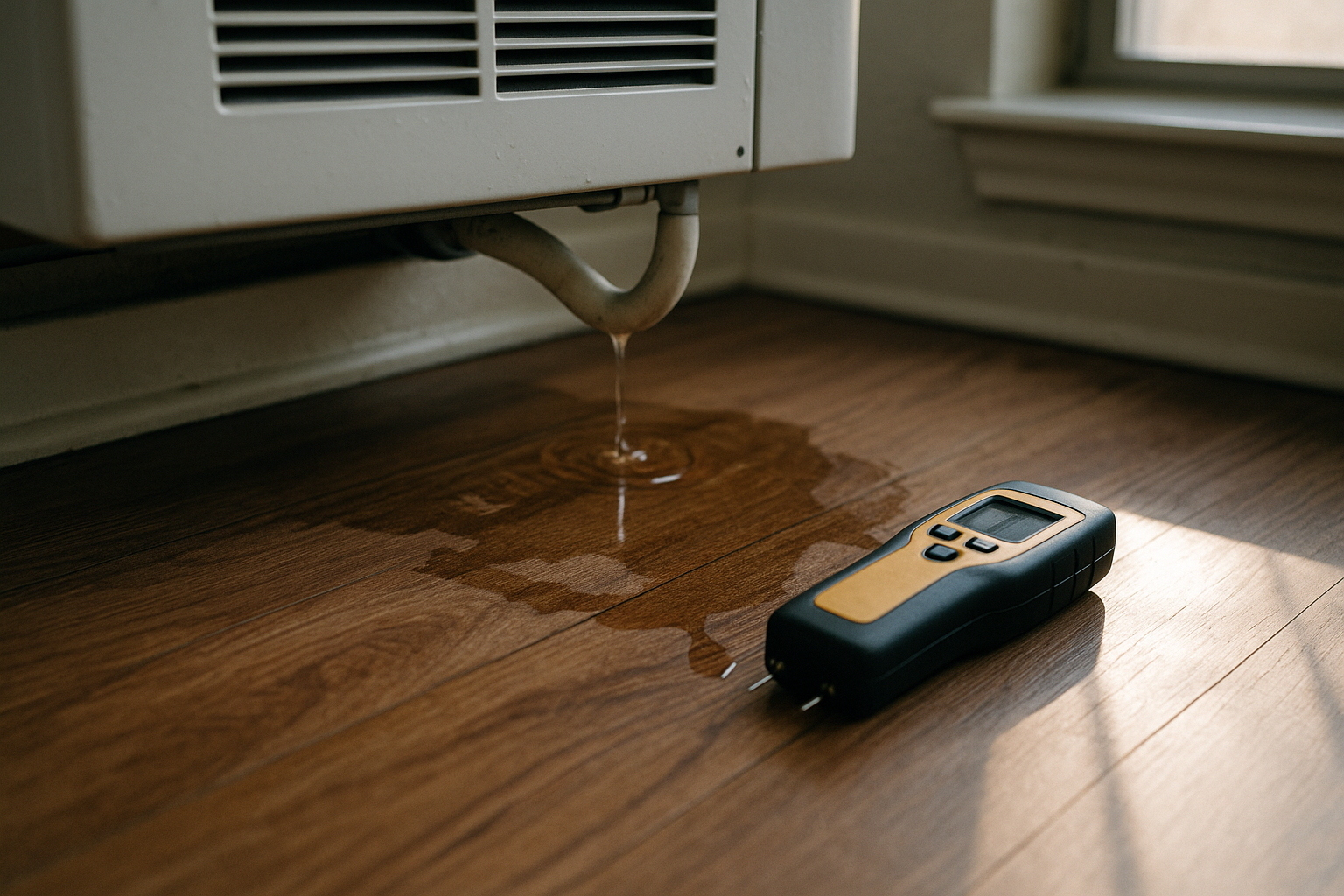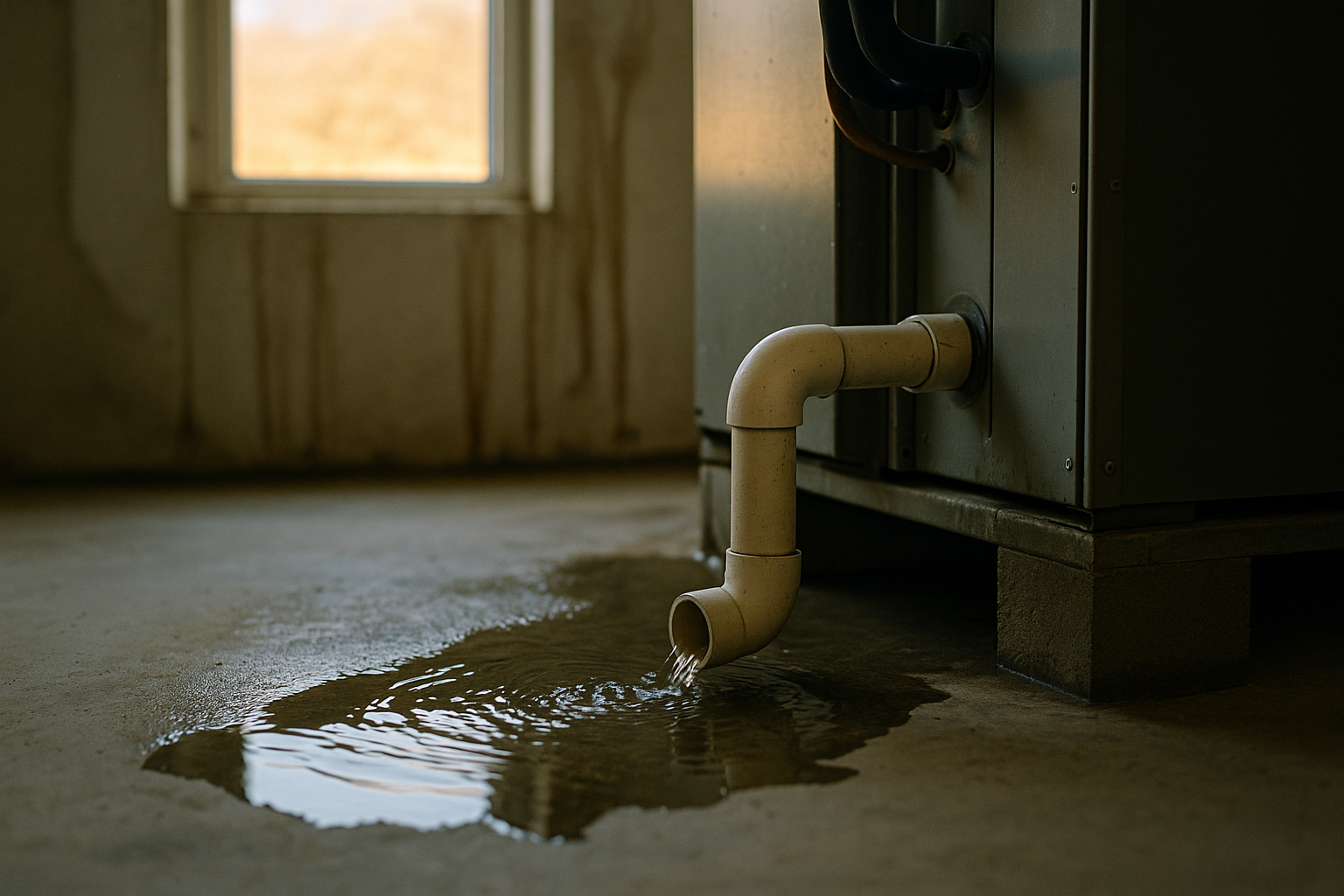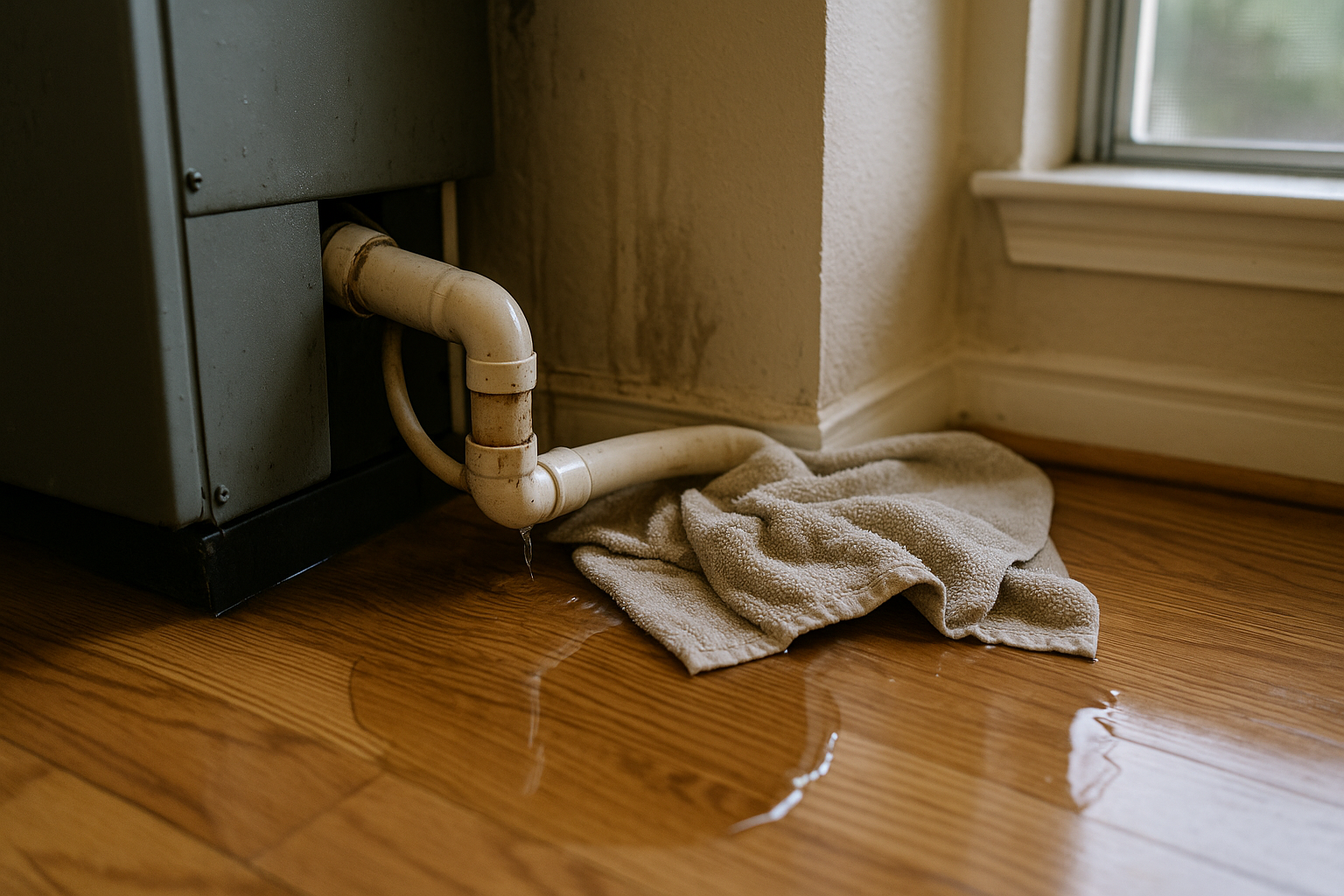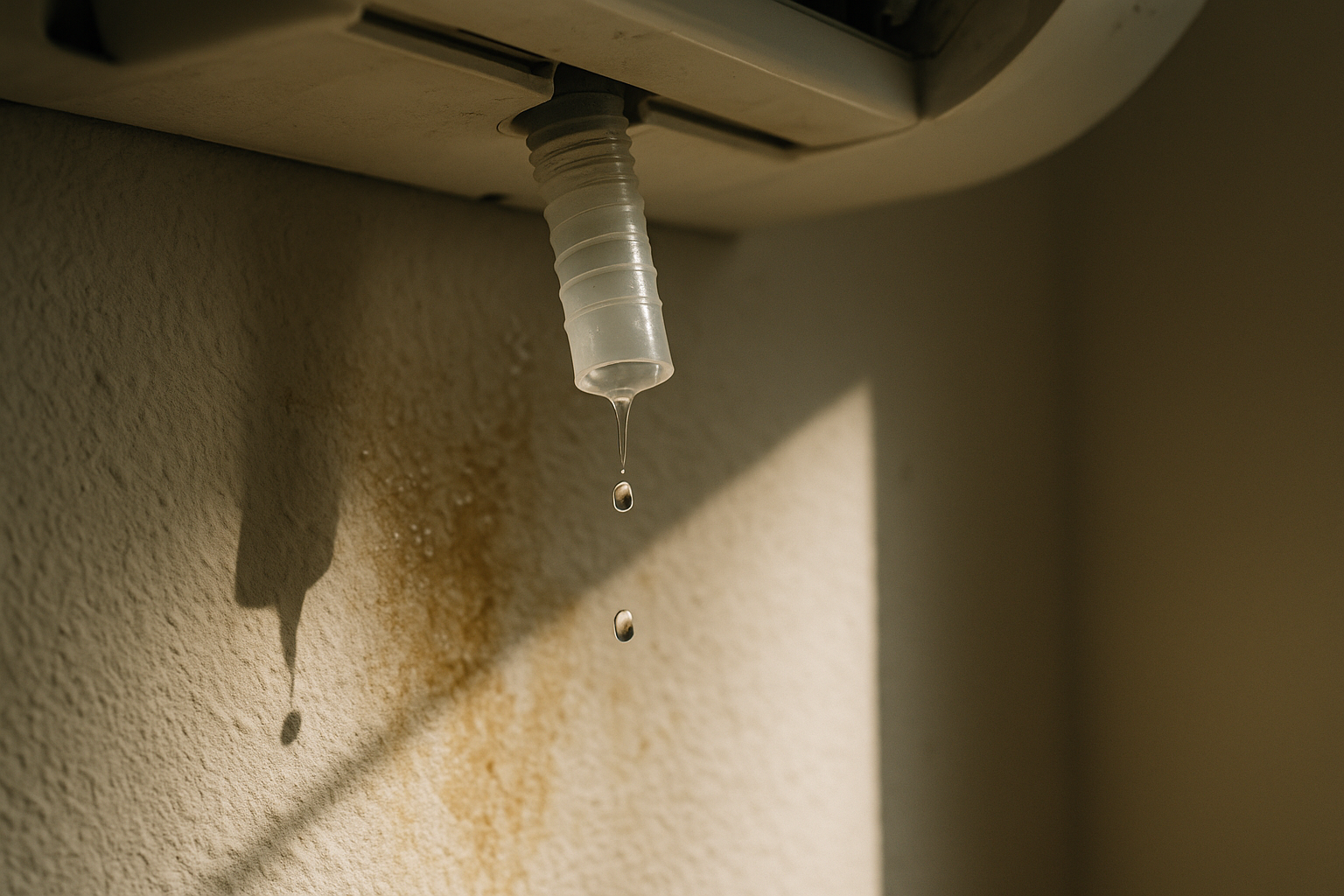
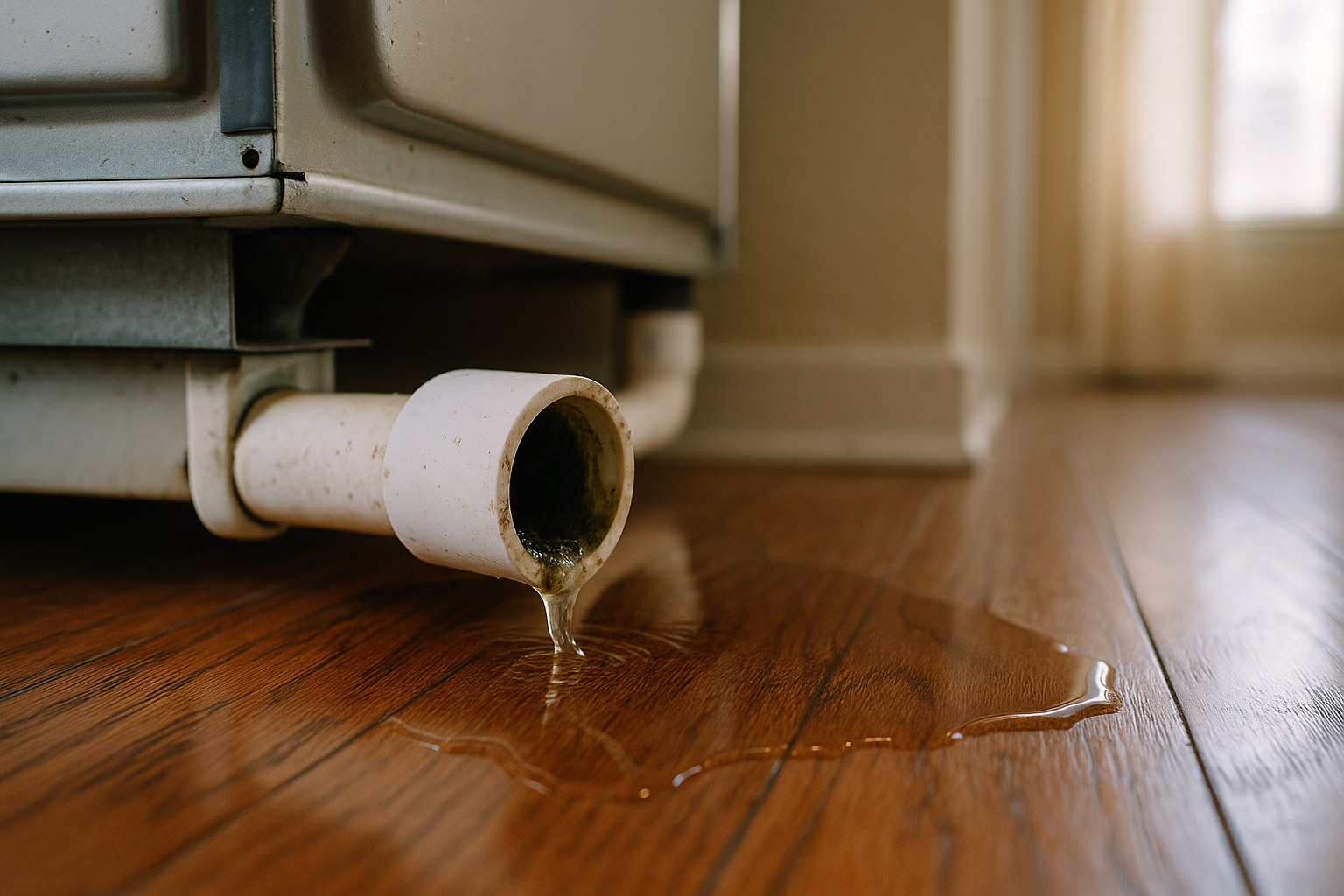
If you’ve noticed a musty smell near your hallway closet, a soft spot in the ceiling under an upstairs vent, or a little puddle by your indoor AC unit — don’t wait to see if it goes away on its own. It won’t. And in Celina’s summer heat, it can turn into a real problem faster than you’d think.
Your air conditioner isn’t just cooling your house right now — it’s working overtime, running longer cycles, and pulling more moisture out of the air than it does any other time of year. That moisture has to go somewhere. Usually, it drains away quietly through a small condensate line you never think about. But when that line gets clogged, “quietly” is exactly the problem — because the water finds somewhere else to go instead, and it’s rarely somewhere convenient.
Why Summer Heat Makes This Worse
Here’s the simple version: the harder your AC runs, the more condensation it produces. In North Texas summers, that means your system might be pulling gallons of water a day out of the air inside your home.
All of that water is supposed to drip into a pan, then drain out through a small PVC pipe — usually to the outside, or into a utility drain. Over a season (or a few), that line collects algae, dust, and gunk, the same way a shower drain does. Add the extra strain of a brutal Texas July, and a partially clogged line becomes a fully blocked one, right when your system is working its hardest.
What a Condensation Drain Backup Actually Looks Like
This isn’t usually a dramatic flood. It’s sneaky. Watch for:
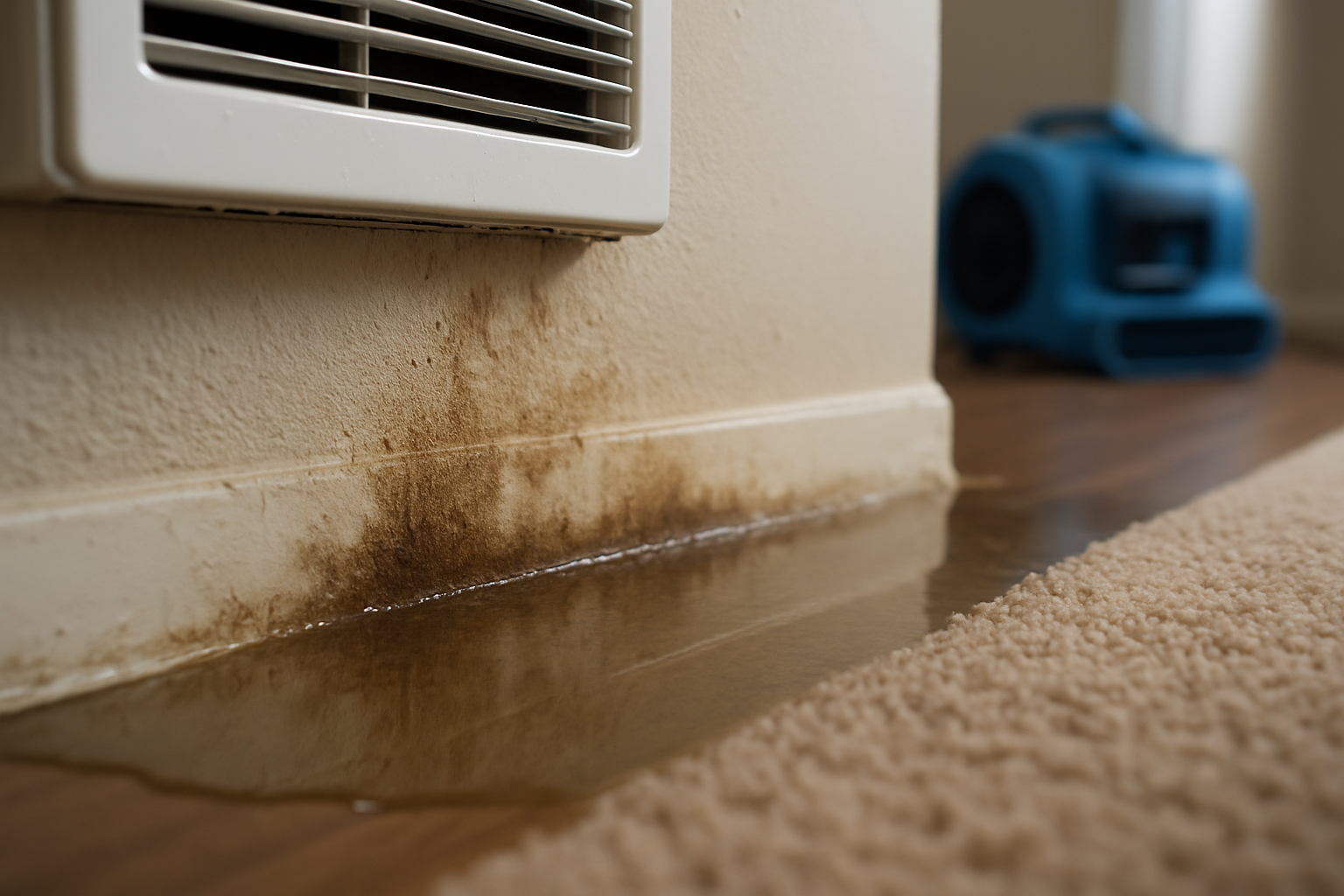
- A musty or mildew smell near a closet, attic access, or your indoor AC unit
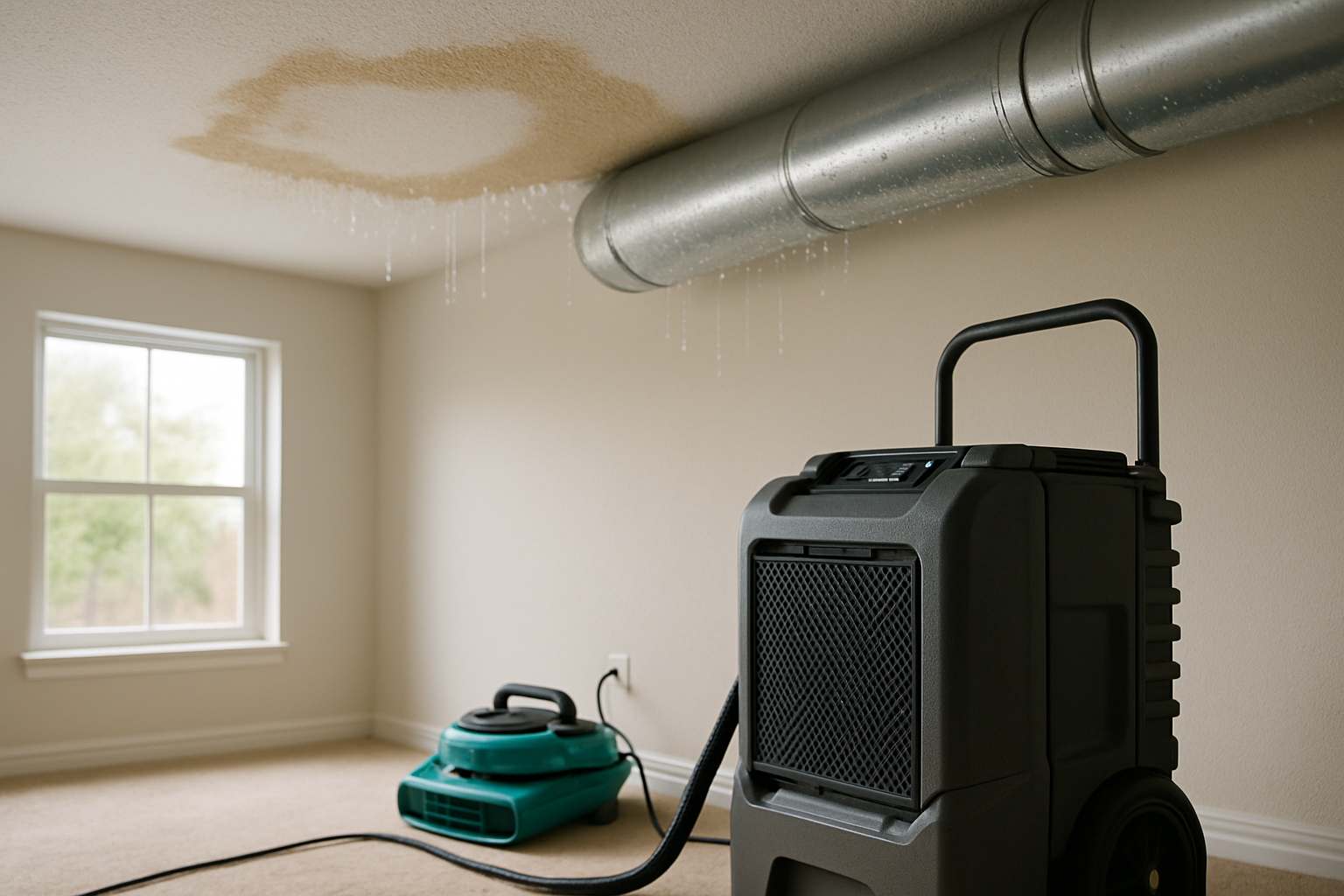
- Water stains or soft, discolored spots on ceilings — especially under a second-floor unit
- Standing water in the emergency drain pan under your unit
- Your AC randomly shutting off (many modern systems have a float switch that kills power when the pan overflows — annoying, but honestly a small mercy, since it’s trying to stop the exact damage we’re talking about)
- Warped baseboards, bubbling paint, or a soft spot in flooring near a closet system
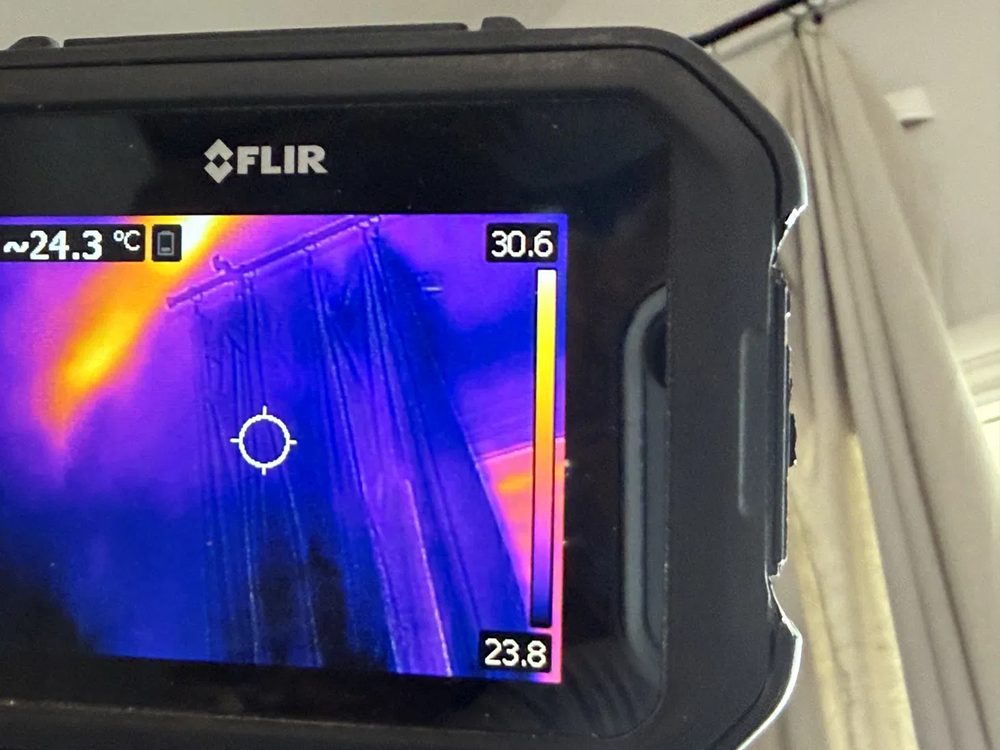
None of these look like an emergency at first glance. That’s exactly why they cause so much damage — the water is often trapped inside a wall cavity, subfloor, or ceiling long before it’s obvious from the outside.
Why “It Looks Dry” Doesn’t Mean It Is Dry
This is something I say a lot, because it matters: surfaces dry fast. Drywall, insulation, and subflooring hold onto moisture much longer, often for days, out of sight. That hidden moisture is exactly what mold needs to get started. By the time you can see or smell a problem clearly, the water’s usually been sitting for a while.
Simple Prevention Before August Hits
The good news — this is one of the more preventable causes of home water damage out there:
- Have your AC serviced annually, ideally before peak summer demand. A tech can flush the condensate line as part of routine maintenance.
- Pour a cup of distilled vinegar down the condensate line every couple of months during cooling season — it helps break down the algae buildup that causes clogs.
- Check the drain pan and float switch periodically, especially if your system is in an attic or closet above living space.
- Keep an eye (and nose) out near vents, closets, and attic access points for that musty smell — it’s often the earliest warning sign you’ll get.
None of that requires special equipment or a professional visit every time — just a little attention during the months your system works hardest.
If It’s Already Happened
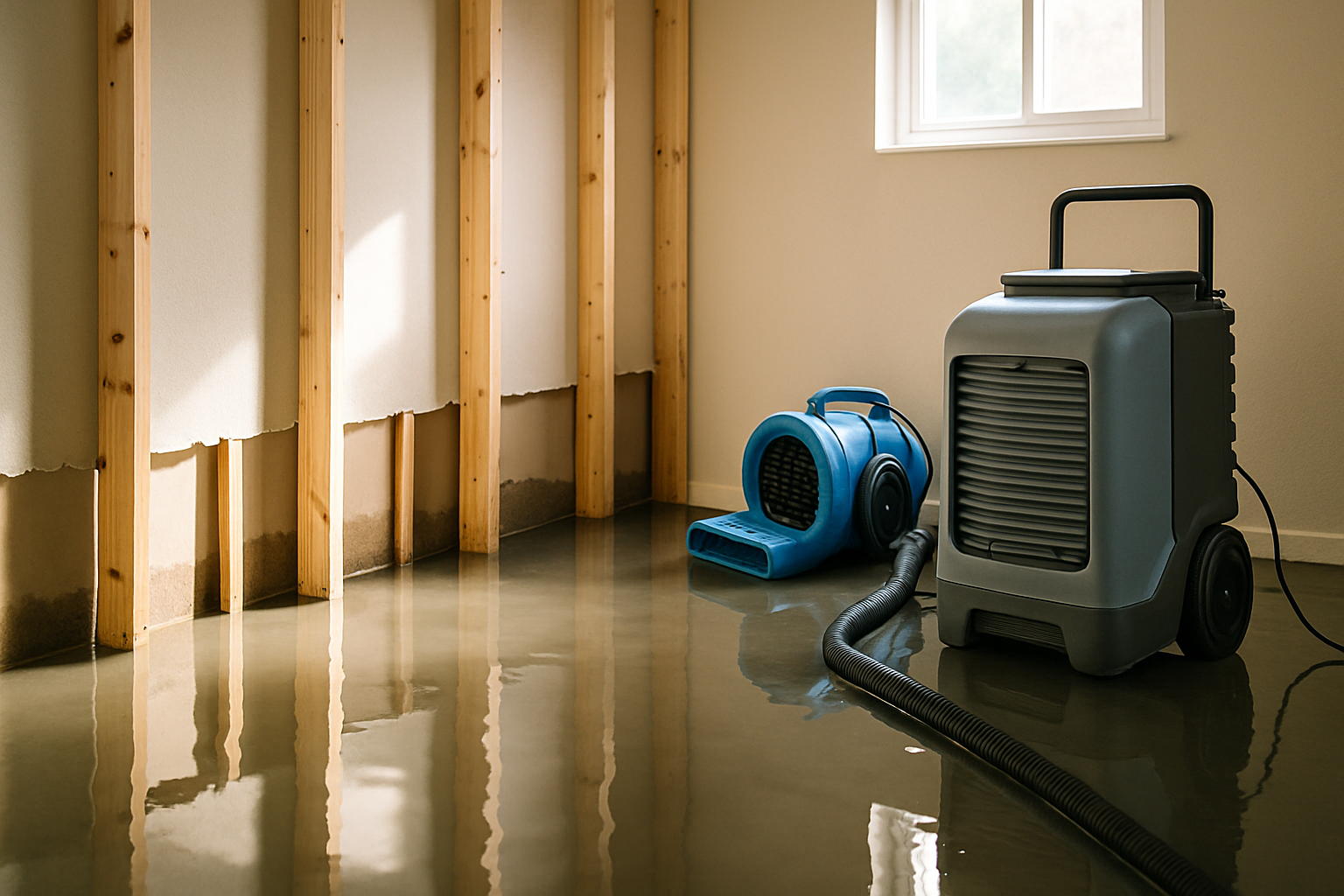
If you’ve found water damage from a backed-up AC line, don’t just towel it up and hope. Hidden moisture behind walls or under flooring needs real drying equipment and a plan — not guesswork, and not a box fan pointed at it for a weekend. Once the structure has had time to soak up water, cutting corners now usually costs a lot more later.
I can’t promise it won’t be a hassle to sort out — but I can promise to be straight with you about what’s actually going on in your home, and to make it as painless as possible to fix.
If you’re in Celina, Pilot Point, or anywhere else in North Texas and you’re staring at a stain you’re not sure about, give Merlene Mitigation a call. I’ll walk you through what to look for, what it likely means, and what — if anything — needs to happen next. No pressure, no upsell, just an honest look from someone who’ll treat your home like it’s mine.
-Ally