Author: Ally

  • Thermal Imaging Reveals Hidden Insulation Gaps Costing You Money

    Thermal Imaging Reveals Hidden Insulation Gaps Costing You Money

    If your AC has been running nonstop this summer and your electric bill still made you wince, there’s a good chance your house is telling you something — you just can’t see it. Not with your eyes, anyway.

    Heat doesn’t care about drywall. It finds every gap in insulation, every settled batt, every spot where cool air is quietly leaking out and hot attic air is leaking in. You can’t see that with a flashlight. But a thermal camera can.

    What a Thermal Scan Actually Shows

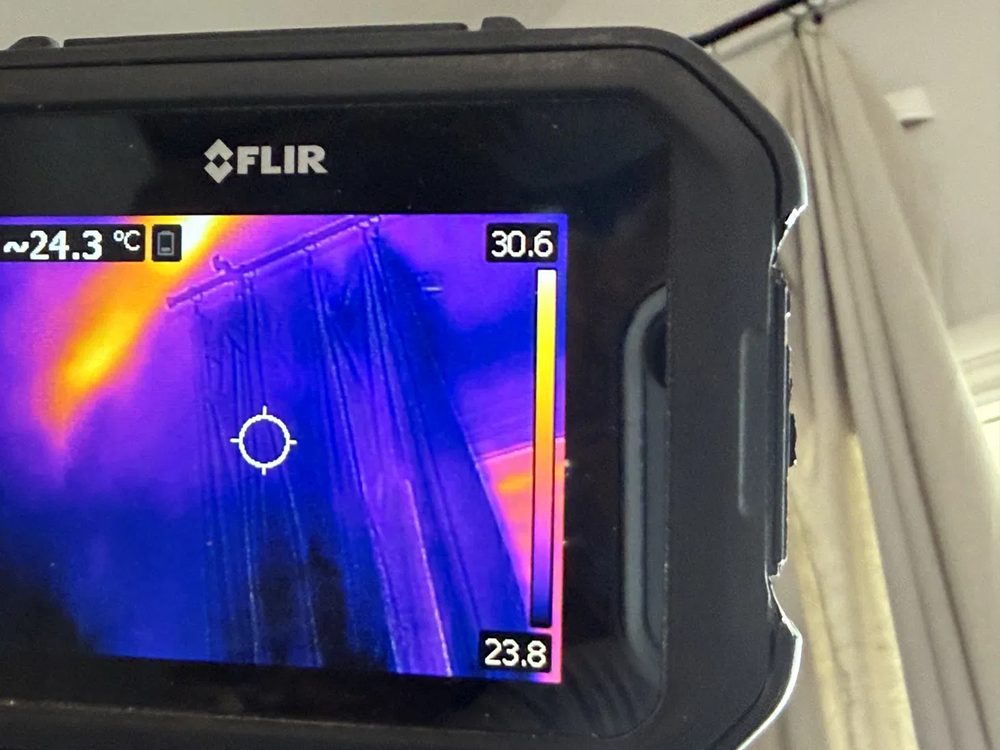
    A FLIR thermal-imaging camera reads surface temperature differences you’d never notice by touch or eye. When I walk through a home with one during a North Texas heat wave, the picture is usually pretty clear: patches of wall or ceiling running noticeably warmer than the rest, right where insulation has settled, shifted, or was never installed to full depth in the first place.

    It’s not guesswork. It’s not a “feels a little warm in here” hunch. It’s a visual, documented look at exactly where your home is losing the cool air you’re paying to make.

    Peak heat is actually the best time to catch this

    Thermal scans work by reading temperature differential — the bigger the gap between inside and outside temps, the clearer the picture. That means a 100-degree North Texas afternoon isn’t a bad time for a scan. It’s the ideal time. The heat does the work of exposing the problem areas for us.

    It’s Not Just About Insulation

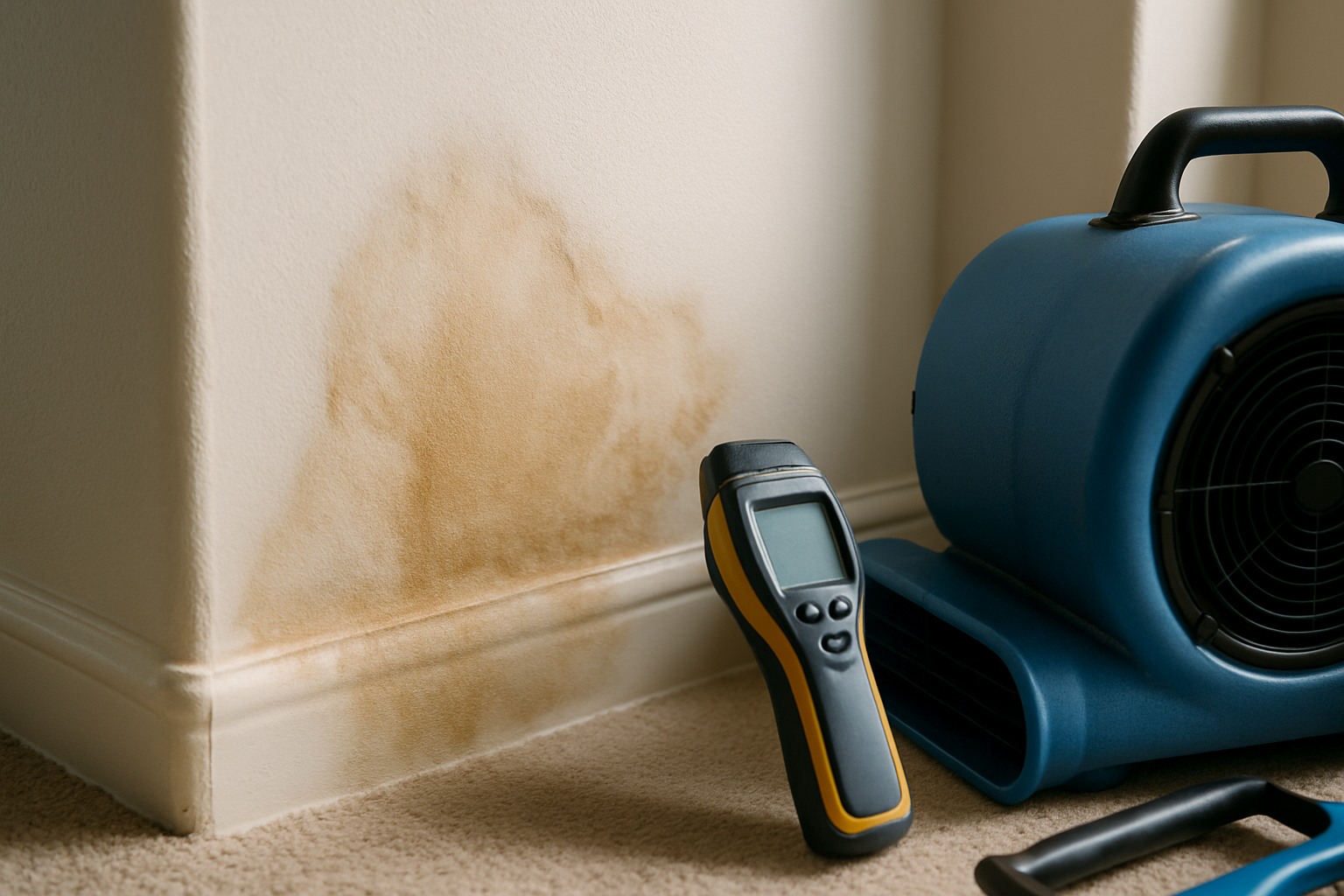
    Here’s the part that surprises people: the same scan that finds missing insulation often finds something else — hidden moisture behind a wall or ceiling that has nothing to do with the heat wave at all. A slow roof leak, a plumbing drip, condensation around a poorly sealed window. Thermal cameras pick up moisture-related temperature differences too, which means a scan booked for “why is my AC bill so high” sometimes turns into “good thing we caught that before it became a real problem.”

    That’s not me trying to find something wrong. If the scan comes back clean, I tell you it’s clean. That’s the whole point of an honest inspection.

    The Thermal Performance Inspection — What You Get

    This is a straightforward, no-pressure scan of your home, starting at $175. Here’s what’s included:

    • A full walkthrough with the FLIR thermal camera, checking attic access points, exterior walls, and ceilings
    • Moisture meter checks in any area the thermal camera flags as suspicious
    • A written report with thermal images, so you can actually see what I saw
    • A plain-English explanation of what’s going on — no jargon, no upsell pressure

    If everything looks good, you walk away with peace of mind and documentation for your files. If we find gaps, you’ll know exactly where they are and what your options look like — whether that’s a conversation with an insulation contractor, your roofer, or, if there’s active moisture involved, a chat with me about drying it out properly before it becomes a mold problem.

    Why This Matters for Your Wallet, Not Just Your Comfort

    Every gap in insulation is a place your AC is working overtime for nothing. In peak North Texas summer, that adds up fast — on your bill, and on the wear and tear on your system. Finding the gap doesn’t fix it by itself, but you can’t fix what you can’t see.

    Who’s Behind the Camera

    I run every one of these scans myself. Merlene Mitigation is a small, local, family-run operation — it’s me, out here in Pilot Point, doing the work in person. No dispatching a stranger, no corporate overhead. That keeps prices fair and keeps me accountable for exactly what I tell you about your own home.

    If your bills have you scratching your head, or you just want honest eyes on your home before the rest of summer runs its course, I’d be glad to come take a look. Give Merlene Mitigation a call or send a message, and we’ll get something on the calendar for you and your home here in Pilot Point or anywhere around North Texas.

    -Ally
  • Water Damage Restoration in Prosper, TX: Fast Recovery Guide

    Water Damage Restoration in Prosper, TX: Fast Recovery Guide

    If you’re reading this with wet carpet under your feet or rain still hammering the roof, here’s the short version: turn off the electricity to the affected area if you can do it safely, stop the water source if there is one, and start moving valuables out of the way. Everything else can wait five minutes. Come back and read the rest once you’ve done that.

    Prosper gets hit hard when North Texas summer storms roll through — fast, heavy rain, hail, straight-line winds, and sometimes a roof or window that just wasn’t built for what came down. And the tricky part about storm water isn’t the puddle you can see. It’s what happens underneath it over the next 24 to 48 hours if nobody deals with it.

    The First Few Hours Matter Most

    Water damage isn’t just about the mess. It’s about how fast that moisture gets into places you can’t see — subfloor, drywall cavities, insulation — and starts causing problems that are a lot more expensive than the original storm.

    Here’s what to do while you’re waiting on help:

    • Safety first. If water is anywhere near an outlet or panel, don’t wade in. Call an electrician or your utility company if you’re not sure it’s safe.
    • Stop the source if you can. A shut-off valve for a burst pipe, a tarp over a hole in the roof — anything that slows the water coming in.
    • Document before you touch anything. Photos and video of the standing water, the source, and anything damaged. Your insurance company will want this, and it’s much easier to get it now than to reconstruct it later.
    • Move what you can. Furniture legs, rugs, boxes on the floor — get them up and out of the water if it’s safe to do so.
    • Call a restoration company. Not next week. Today.

    That last one isn’t just me talking my own book. Mold can start establishing itself in as little as 24 to 48 hours in the right conditions, and North Texas summer humidity is exactly the right conditions.

    What Actual Restoration Looks Like

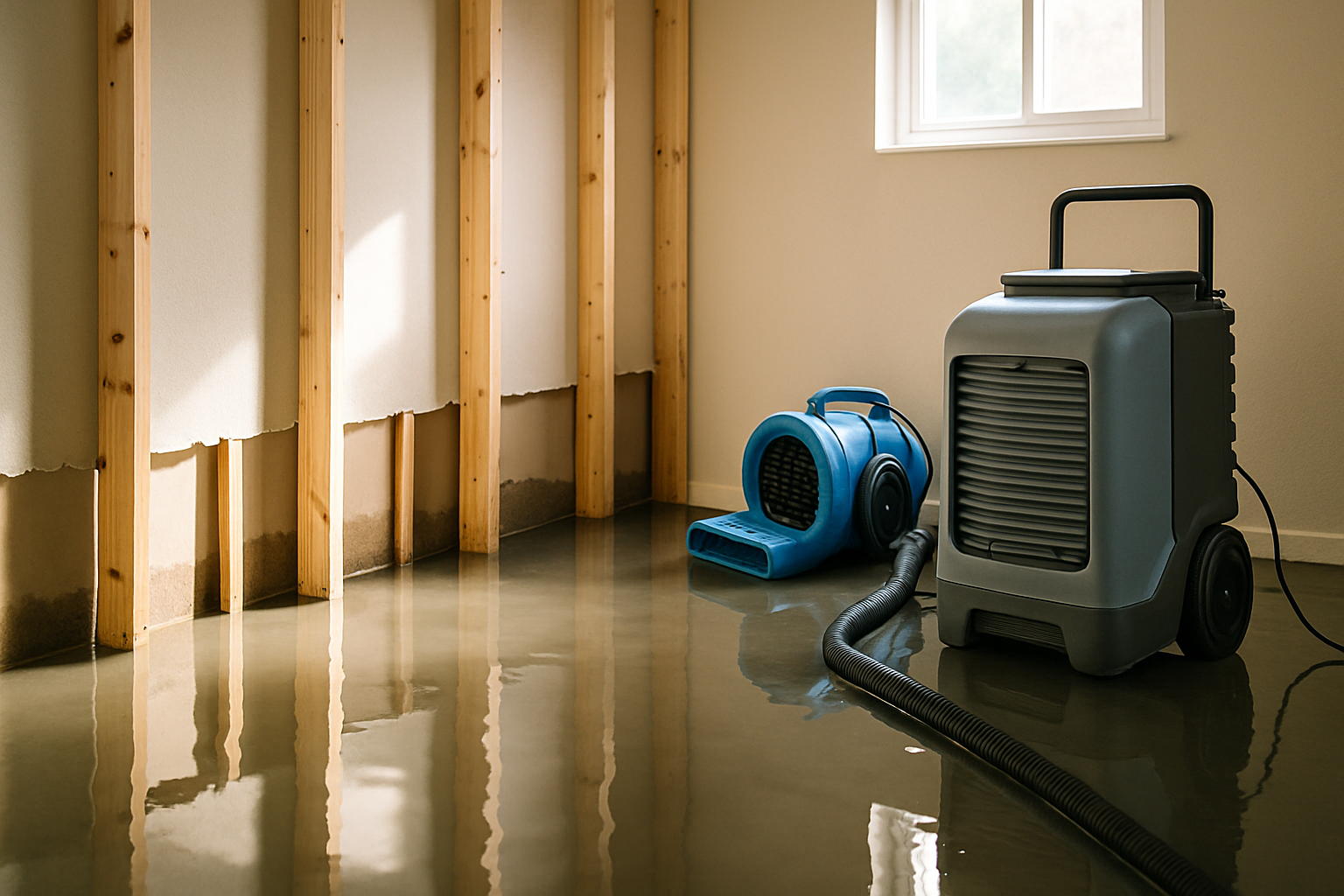
    When we get a call for storm damage cleanup in Prosper, day one is about stabilizing the situation — not making every decision at once. We get the standing water out, apply an antimicrobial treatment to slow bacterial and mold growth, and set up commercial drying equipment: real dehumidifiers and air movers, not the kind you’d find in a laundry room.

    Then we reassess in 24 to 48 hours. That gap matters. It lets the structure start drying, lets us get accurate moisture readings with a thermal camera and moisture meter, and lets everyone — you, us, your insurance adjuster — get a clear, honest picture of the real scope before big decisions get made.

    I’ll be straight with you: the drying process is loud and a little disruptive. Air movers running around the clock aren’t fun to live with. I can’t promise it won’t be a hassle — but I can promise to make it as least disruptive as possible, and I’ll never tell you it’s fine to shut the equipment off early to get some quiet. Turning it off before the structure hits a proper dry standard risks the very mold and secondary damage we’re trying to prevent. Think of it as the impromptu remodel nobody asked for — annoying now, but there’s a plan, and there’s an end to it.

    A Word on Insurance

    A lot of homeowners assume storm damage “probably isn’t covered” and don’t even file a claim. Often that’s not true — it depends on your policy and the cause of loss, and it’s worth finding out rather than guessing. Document everything, call your carrier promptly, and don’t be afraid to ask questions about what your policy actually says. A restoration company that’s scoped the damage honestly can make that conversation a lot easier.

    Why Local, Accountable Help Matters

    Merlene Mitigation is based right up the road in Pilot Point, and I handle water damage and inspections personally — not a rotating crew of strangers. If your situation needs more than mitigation — larger mold remediation, roofing, rebuild — I stay involved and bring in trusted, vetted professionals I’d use in my own home, so you’ve got one accountable person overseeing the whole job instead of getting handed off. Lower overhead means fair prices, and it means you’re never just a ticket number.

    If you’re dealing with water damage right now, or you just want a straight answer about what to do next, reach out. Storm restoration near you in Prosper shouldn’t mean waiting on hold with a call center — it should mean talking to someone who’s going to walk through it with you.

    -Ally

  • AC Condensation Overflow in Denton Heat: Prevention & Fixes

    AC Condensation Overflow in Denton Heat: Prevention & Fixes

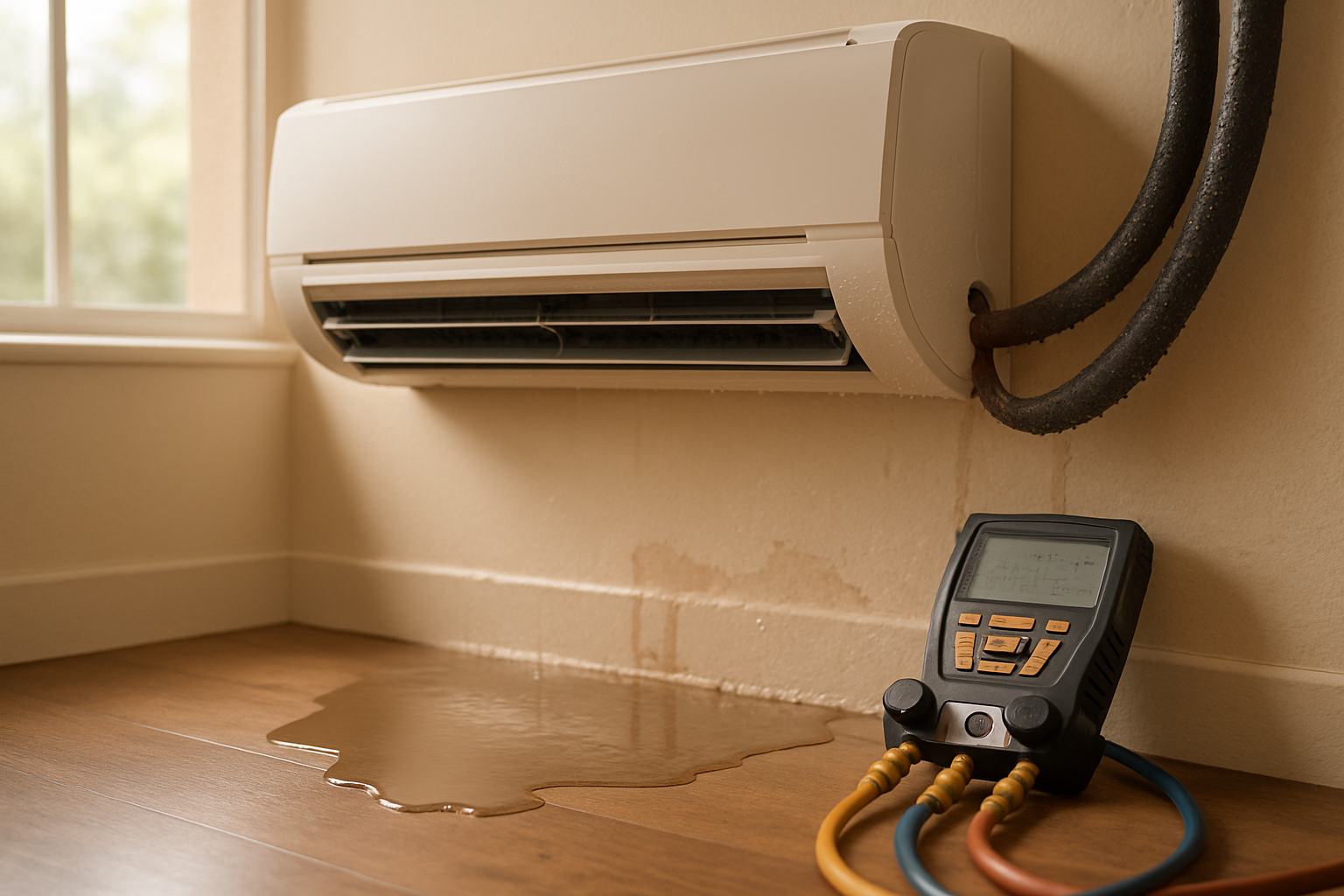
    If your AC has been running nonstop today, here’s something worth checking before you head to bed tonight: the drip pan under your indoor unit, and the drain line running out of it. With a heat index near 114°F across Denton County today, air conditioners are working harder than they’re built to work — and that extra strain is exactly what causes condensation drain lines to clog, crack, or back up. When that happens, water doesn’t stay contained. It finds your ceiling, your closet, your attic insulation, or the wall behind your unit.

    This is a quiet kind of water damage. No storm, no leak you can hear — just a slow overflow that can soak drywall and insulation for hours before anyone notices. Let’s talk about what to watch for tonight, and what to do if you catch it early.

    Why extreme heat causes AC drain line failure

    Your air conditioner pulls moisture out of the air as it cools your home — that water is supposed to drain out through a small condensate line, usually PVC pipe, into a drain or outside your house. On a normal day, that’s a manageable amount of water.

    On a day like today, your system runs longer and harder, which means it’s pulling more moisture out of the air than usual — sometimes gallons more over a 24-hour stretch. If that drain line has any buildup of algae, dirt, or debris (which most lines do, eventually), the extra volume is often what pushes it from “slow trickle” to “fully clogged.” Once it’s clogged, the water has nowhere to go but back up — into the drip pan, and eventually over the edge.

    Warning signs to check tonight

    • A water stain or soft spot on the ceiling below or near your attic AC unit.
    • Musty smell near a closet or utility room where your indoor unit lives.
    • Visible water or standing moisture in the drip pan under the unit.
    • Your AC suddenly stops cooling — many systems have a safety float switch that shuts the unit off when the pan fills, which is actually a good sign your system is protecting your house. Don’t just reset it and move on; find out why it filled up.
    • Water near the outdoor condensation drain line

    What you can safely do right now

    A few things are genuinely fine to check yourself, no plumber required:

    • Look at the drip pan and drain line for standing water or visible clogs.
    • If you know where your condensate line’s cleanout is, a wet/dry vac on the outside opening can sometimes pull a clog free.
    • Keep a towel or shallow container under the unit temporarily if you spot dripping, just to protect the floor while you sort out the cause.

    If none of that resolves it, or you’re not sure where to even look, that’s a good moment to call an HVAC tech rather than guess. I’d rather be honest with you about that than pretend every fix is a DIY job — some are, some aren’t, and a backed-up line deep in the line set usually needs the right tools.

    If water’s already gotten into drywall or insulation

    This is where I want to be straight with you: once water has soaked into drywall, insulation, or wood framing, it doesn’t matter how hot and dry the air outside is — that moisture isn’t evaporating on its own fast enough to prevent mold growth or structural damage underneath. “It looks dry” and “it is dry” are two different things, and the difference is exactly where hidden problems start.

    If you’re looking at a stained ceiling or a damp closet floor tonight, the sooner it gets properly dried — with real moisture readings, not just a guess — the smaller and cheaper the problem stays.

    We’re here if you need us

    I can’t promise a night like tonight won’t be stressful — but I can promise that if water’s gotten into your home, we’ll treat it like it’s ours: honest about what’s actually needed, nothing more. Josh handles every water damage call personally, so you’re not getting handed off to a stranger, and our lower overhead means fair pricing without cutting corners.

    If you’re in Pilot Point, Denton, or anywhere in North Texas and you’re staring at a wet ceiling tonight, give us a call. We’d rather help you catch it early than have it wait until morning.

    -Ally

  • AC Condensation Leaks During Extreme Heat: A Pilot Point Guide

    AC Condensation Leaks During Extreme Heat: A Pilot Point Guide

    If your AC has been running nonstop since sunrise — and it probably has — you’re not imagining it. With today’s heat index climbing to 113° here in North Texas, your system is working harder than it has all year. And a hardworking AC system is exactly when small drainage problems turn into a puddle in the hallway or a stain spreading across the ceiling.

    Here’s what’s actually happening, what to watch for, and what to do if you spot trouble.

    Why extreme heat causes AC leaks

    Your AC doesn’t just cool air — it pulls moisture out of it, and that moisture has to go somewhere. Normally it drips into a condensate pan and drains outside through a small line. On a mild day, that’s a slow trickle. On a 113° heat index day, your system is running longer and harder, pulling way more moisture out of the air, and that condensate line is handling a lot more volume than it was ever really tested on.

    Two things tend to go wrong:

    • The drain line clogs. Algae, dust, and gunk build up over time. Add a heavy load of condensation and a partial clog becomes a full blockage — the water backs up and finds the nearest low point, which is often your attic insulation, a ceiling, or a closet floor.
    • The coil freezes, then floods. Ironically, a system straining in extreme heat can ice over if airflow is restricted (dirty filter, low refrigerant, blocked vents). When that ice melts, it doesn’t drip — it dumps, all at once, faster than the drain pan can handle.

    Warning signs worth checking today

    None of these take more than a few minutes, and all of them are worth doing before you go to bed tonight while the system keeps grinding away:

    • A musty smell near a vent, closet, or the attic access
    • A ceiling stain that’s new or slightly bigger than it was yesterday
    • Water or dampness around the indoor AC unit or in the drain pan underneath it
    • The AC running constantly but the house not quite getting cool
    • A little puddle by the outdoor condensate line where it exits the house — actually a good sign, it means it’s draining like it should

    If you catch water pooling somewhere it shouldn’t be, that’s your cue to act — not tomorrow, tonight.

    What to do if you find water

    Turn off the AC at the thermostat if the leak is coming from the unit itself — that stops feeding the problem. Then get as much standing water up as you can with towels or a wet vac. Move anything porous (rugs, boxes, furniture) off the wet area.

    What I’d ask you not to do is assume it’s minor because the puddle looks small. Surfaces dry fast in this heat. What’s underneath — drywall, insulation, subfloor — holds moisture a lot longer, and that’s exactly the kind of hidden dampness that turns into a mold problem within 24–48 hours if it isn’t dried properly.

    Why fast, proper drying matters more in summer heat

    Heat and humidity are mold’s favorite combination. A water event that might sit “okay” for a day in cooler weather can start growing problems much faster when it’s this hot outside — and often this humid inside, if your AC is struggling. That’s why the first move after any leak is always the same: get it dry, and get it dry right, not just dry on the surface.

    If you bring in help, don’t let anyone talk you into shutting off drying equipment early because it’s noisy or inconvenient — I know those fans are a pain, and I’ll never pretend otherwise, but turning them off before the structure is actually dry is how small leaks turn into much bigger, much more expensive problems.

    When to call a pro

    A licensed HVAC tech should look at the AC itself — that’s not something I do. But if water has already gotten into your ceiling, walls, floors, or attic insulation, that’s squarely my world. I can’t promise it won’t be disruptive to have equipment running for a few days — but I can promise to make it as least disruptive as possible, and to be straight with you about what’s actually needed and what isn’t.

    If you’re in Pilot Point or anywhere nearby in North Texas and you’ve found water where it shouldn’t be, give me a call. I’ll walk through it with you, tell you honestly whether it’s a “watch it” situation or a “let’s dry this now” situation, and go from there — no pressure, no upsell, just a straight answer from someone local who’ll treat your home like it’s mine.

    -Ally

  • Water Damage After Summer Storms? Here’s What to Do First

    Water Damage After Summer Storms? Here’s What to Do First

    If you’ve lived in North Texas longer than one summer, you already know the drill: blue skies at lunch, sirens by supper. July is peak severe thunderstorm season here, and along with the hail and the wind comes the thing that quietly does the most damage — water. A roof leak you didn’t know you had, a window that let in more than it should have, a slab that took on water faster than the yard could drain it.

    The good news? What you do in the first 24 hours matters more than almost anything else. Here’s exactly what to do, in order.

    1. Make sure everyone’s safe first

    Before anything else — no wet electrical, no wading through standing water near outlets or panels, no walking under a sagging ceiling. If there’s any doubt about structural safety or electrical hazards, wait for it to be checked before you go back in.

    2. Stop the source, if you safely can

    If it’s a plumbing issue, shut off the water at the main. If it’s a roof leak, a tarp or bucket is a fine stopgap until help arrives — just don’t get on a wet roof in a storm to do it. Your job right now is damage control, not repair.

    3. Document before you touch anything

    This is the step most homeowners skip, and it’s the one insurance adjusters care about most. Before you move furniture or start mopping:

    • Take photos and short videos of every affected room, from multiple angles
    • Capture the water line on walls or baseboards if there is one
    • Photograph damaged belongings before you move them
    • Note the time and rough cause (“hail broke a window, rain came in around 3pm”)

    You can start cleanup right after — you don’t have to wait around. Just get the pictures first. It takes five minutes and it can save you real headaches later.

    4. Get the water out and start drying — fast

    This is where the clock really matters. Mitigation professionals talk about a golden window of about 24–48 hours before wet materials start growing mold and secondary damage sets in. That’s not a scare tactic — it’s just how moisture and organic material behave in Texas humidity.

    Here’s the honest sequence, the same one we use on every job: Day one is about stabilizing. Get standing water out, apply an antimicrobial to slow microbial growth, and get drying equipment running — real air movers and commercial dehumidifiers, not the little unit from the laundry room. Then, within 24–48 hours, we come back and reassess the whole area with moisture meters and a thermal camera to see what’s actually still wet underneath the surface. That second look lets everyone, including your insurance company, catch up before big decisions get made.

    I know the fans and dehumidifiers are loud and disruptive — genuinely, choose your sanity, put on a podcast, get the kids outside for a bit. But please don’t turn the equipment off early, even for a few hours. Structural drying only works if it runs uninterrupted, and shutting it down risks the mold and secondary damage it’s there to prevent.

    5. Call a professional when…

    • Water touched drywall, insulation, subfloor, or has been sitting more than a couple hours
    • You can’t tell how far the water traveled (it almost always travels farther than it looks)
    • There’s any hint of a musty smell already
    • You just want a second set of eyes before you decide anything

    Surface-dry is not the same as actually dry. That’s the single most common thing homeowners get wrong, and it’s the reason “small” water events turn into expensive ones.

    The Merlene Mitigation way

    I’m not going to promise this won’t be disruptive — it will be, for a while. What I can promise is we’ll make it as least disruptive as possible, and we’ll be honest with you every step of the way about what’s actually needed and what isn’t. Josh handles water damage and inspections personally — you’re not getting handed off to a stranger — and because Merlene Mitigation runs lean, you get personal attention and fair pricing instead of franchise overhead.

    If you’re dealing with storm damage anywhere in Pilot Point or the surrounding Denton County towns, give us a call. Even if it’s just to talk through what you’re looking at and figure out your next step, we’re glad to help.

    -Ally

  • AC Condensation Leaks: Why Extreme Heat Causes Water Damage

    AC Condensation Leaks: Why Extreme Heat Causes Water Damage

    If you’ve stepped outside today, you already know: this isn’t just “hot,” this is heat-index-112°F hot. Your AC has been running almost non-stop trying to keep up, and honestly? So has everyone else’s in North Texas. But here’s something most homeowners don’t think about until it’s too late — all that extra air conditioning means your system is producing more condensation than usual, and that condensation has to go somewhere. When it doesn’t, you can go from “my AC is working hard” to “I have water damage in my hallway” surprisingly fast.

    Let’s talk about why this happens on days like today, and what you can check right now to stay ahead of it.

    Why extreme heat makes condensation leaks more likely

    Your air conditioner doesn’t just cool the air — it pulls moisture out of it too. That moisture collects on the evaporator coil and drips down into a condensate drain line, which carries it outside or into a drain.

    On a normal day, that system handles the job just fine. But on a day like today, with your AC running for hours longer than usual, it’s producing far more condensation, far more often. That’s a lot more water asking a small drain line to keep up.

    And condensate lines are notorious for small blockages — algae, dust, a bit of debris — that don’t cause problems under normal conditions but become a real bottleneck when the volume spikes. When the line clogs, that water doesn’t just disappear. It backs up into the drain pan, and if the pan’s overflow safety switch isn’t working (or doesn’t exist, on some older systems), it spills over — often right into your attic, ceiling, or a closet near the air handler.

    What to check right now

    You don’t need any special tools for this — just a few minutes and a flashlight.

    • Find your indoor air handler (often in a closet, attic, or utility room) and look at the drain pan underneath it. Is there standing water?
    • Check the condensate drain line — usually a white PVC pipe running outside your house near the unit. Water should be dripping from it steadily on a hot day like today. If it’s bone dry and your AC has been running for hours, that can be a sign of a clog upstream.
    • Look for a shutoff switch or float switch near the pan — if the pan fills too high, this is supposed to shut the AC off before it overflows. Worth knowing whether yours has one.
    • Check the ceiling below or around the air handler for any soft spots, discoloration, or a musty smell — early signs of a slow leak that’s already begun.

    If you find standing water or a soft ceiling spot, that’s your sign to call an HVAC tech and start looking into the water damage before it spreads further.

    Why this matters more than it seems

    A condensate overflow is quiet. It doesn’t sound dramatic like a burst pipe, and it usually starts as a slow drip rather than a flood. That’s exactly what makes it dangerous — by the time you notice a stain on the ceiling, there’s a real chance the insulation, drywall, or framing above it has been wet for days. And where there’s been trapped moisture for a while, mold risk goes up fast, especially in this heat and humidity.

    If you’re already dealing with a wet ceiling, soaked insulation, or that telltale musty smell, the same rule applies as any other water event: the sooner it’s dried out properly, the smaller and cheaper the problem stays.

    If it’s already happened

    Turn off the AC unit at the breaker if you see active water coming from the air handler — better safe than sorry — and call an HVAC technician to address the actual clog or mechanical issue. Once the water source is handled, don’t just let the area air dry on its own. Trapped moisture in insulation, drywall, and framing needs real moisture mapping and proper drying equipment, not just an open window and a fan.

    I can’t promise it won’t be a hassle — a soggy ceiling never is — but I can promise to help you understand exactly what’s going on and make the process as painless as it can be.

    If you’re in Pilot Point or anywhere in North Texas and you’re staring at a wet ceiling or a mysterious puddle today, give us a call. I’m happy to talk you through what you’re seeing, no pressure, no upsell — just genuinely trying to help you figure out your next step in this heat.

    -Ally

  • Hidden Water Leaks in North Texas Homes: 5 Signs to Catch

    Hidden Water Leaks in North Texas Homes: 5 Signs to Catch

    Your water bill just went up $40 and you have no idea why. Nobody took extra-long showers. Nobody left a hose running. But the number doesn’t lie, and somewhere in your house, water is going somewhere it shouldn’t be.

    This is the season for it. Between the AC running nonstop, condensation lines working overtime, and pipes expanding and contracting with the heat, summer in North Texas creates ideal conditions for slow, quiet leaks — the kind that don’t announce themselves with a flood. They just sit there, day after day, doing damage you can’t see until it’s a real problem.

    Here’s what I want you to know: hidden water leaks in North Texas homes are more common in summer than almost any other time of year. And the good news is, they almost always leave clues. You just have to know what you’re looking for.

    Why Summer Is Prime Time for Slow Leaks

    A few things stack up against your house this time of year:

    • AC condensate lines clog. That little drain line carrying moisture away from your air handler can back up with algae and gunk, sending water into your attic or a closet instead of outside where it belongs.
    • Supply lines and fittings work harder. Heat makes pipes and connections expand. A fitting that was fine in March can start weeping in July.
    • Foundations shift. Texas clay soil moves with the heat and drought, and that movement can stress slab plumbing in ways you’d never notice from the sitting room.

    None of these show up as a burst pipe or water pouring through the ceiling. They show up slowly — which is exactly why they’re dangerous. Slow leak detection in Pilot Point and everywhere across North Texas really comes down to paying attention to a handful of quiet signals.

    The Signs Worth Taking Seriously

    1. A water bill that doesn’t match your habits

    This is usually the first honest clue you get. If nothing in your routine changed but your bill did, don’t shrug it off. Compare a few months side by side. A steady, unexplained climb is worth investigating.

    2. Soft or discolored drywall

    Press gently on drywall near bathrooms, under windows, or around the kitchen. If it gives more than it should, or you notice a yellowish-brown stain creeping across it, water has been sitting behind it — probably for a while.

    3. A musty smell that won’t go away

    You can clean a room top to bottom and still catch that faint, damp smell. That’s often moisture trapped somewhere you can’t see — inside a wall cavity, under flooring, in the attic. Trust your nose here. It’s usually right.

    4. Warped flooring or peeling paint

    Laminate that’s started to bubble, tile that feels slightly loose, or paint that’s bubbling or peeling near baseboards — all classic signs of water damage that Dallas-area homeowners often miss because they assume it’s just age or wear.

    5. Cool or damp spots on the floor or wall

    Water moving through a wall or slab can create a spot that feels noticeably cooler or slightly damp to the touch, even with no visible staining yet.

    What to Do If You Notice Any of These

    You don’t need special equipment to start checking — just your eyes, your nose, and a look at your last few water bills. But if something seems off, don’t wait it out. Slow leaks don’t fix themselves, and the space between “small, cheap problem” and “big, expensive one” can close faster than people expect, especially with summer heat helping mold and rot along.

    If you’re searching for water leak repair near me and trying to decide whether it’s worth a call, here’s my honest answer: if you’re already wondering, it’s worth a look. A quick moisture check with a thermal camera and moisture meter can usually tell us — often before any real damage is visible on the surface — whether there’s water where there shouldn’t be.

    I’ll be straight with you either way. If it’s nothing, I’ll tell you it’s nothing. If it’s something, we’ll talk through exactly what’s going on and what it’ll take to fix it — no scare tactics, no upsell, just an honest answer from someone who’ll treat your home like it matters, because it does.

    If you’re in Pilot Point or anywhere around North Texas and something’s nagging at you about your water bill, a smell, or a spot on the wall, give Merlene Mitigation a call. We’d rather check it out and find nothing than have you wait and find out the hard way.

    -Ally

  • Why Your AC Leaks in Summer and How to Stop It

    Why Your AC Leaks in Summer and How to Stop It

    If you’ve noticed a damp spot on the ceiling under an upstairs closet, or a mystery stain spreading across the drywall near a vent — and it’s the middle of a 100°F July — there’s a good chance your AC is the culprit. Not a roof leak. Not plumbing. Your air conditioner.

    It’s one of the most common causes of water damage we see in Denton County every summer, and one of the easiest to catch early if you know what to look for. Let’s talk about why it happens and what you can do about it before it turns into something expensive.

    Why AC units leak in the first place

    Your air conditioner doesn’t just cool the air — it pulls moisture out of it. That’s condensation, and on a brutal North Texas summer day with the system running nearly nonstop, your unit can produce several gallons of water a day. All of that water is supposed to travel down a small condensate drain line and out of the house.

    The trouble starts when that drain line gets blocked, disconnected, or overwhelmed. A few common reasons:

    • Algae and gunk in the drain line. Warm, wet, dark — condensate lines are basically a perfect environment for slime buildup, and it doesn’t take much to clog a line that’s often less than an inch wide.
    • A full or clogged drain pan. Especially in older systems, the backup pan under the unit can crack, rust, or simply overflow once the primary line is blocked.
    • A frozen evaporator coil. Low refrigerant or poor airflow can cause the coil to ice over. When it thaws, all that ice becomes water — more than the drain system is built to handle at once.
    • Running 24/7 in extreme heat. When your AC almost never shuts off, there’s more condensation, more strain, and less time for anything to dry out between cycles.

    Why this leads to hidden damage

    Here’s the part that catches people off guard: most AC units — especially in attics or upstairs closets — leak somewhere you can’t easily see. Water follows gravity and gaps, not straight lines. It can travel along a joist, soak insulation, and show up on your ceiling several feet from where the actual leak started.

    By the time you see a stain, the wet insulation and framing behind it may have been holding moisture for days. And where there’s trapped moisture in a hot, humid Texas attic, mold isn’t far behind.

    Red flags worth checking today

    • A musty smell near a vent, closet, or upstairs room
    • Ceiling stains, especially directly under an attic AC unit
    • Visible water in or around your indoor unit’s drain pan
    • Your AC blowing warm air (can indicate a frozen coil)
    • A PVC drain line with slow or no visible drip outside

    Simple prevention that actually works

    You don’t need to be an HVAC expert to cut your risk significantly:

    • Flush the condensate line once a season with a cup of distilled vinegar to keep algae from building up.
    • Check the drain pan periodically for standing water or rust.
    • Replace your air filter regularly — a dirty filter restricts airflow and is a leading cause of frozen coils.
    • Get an annual HVAC tune-up. This one’s genuinely worth the money before peak summer hits — a technician can catch a slow clog long before it becomes standing water in your ceiling.
    • Install a float switch (many newer systems have one) that shuts the AC off automatically if the pan gets too full — cheap insurance against a major leak.

    Most of this you can absolutely handle yourself, and honestly, you should — it’ll save you money and headaches. I’d rather you catch this early with a bottle of vinegar than call us for a ceiling repair.

    When it’s more than a DIY fix

    If you’ve already got a stained ceiling, soft drywall, a musty smell that won’t quit, or you’re just not sure how far the water traveled, that’s where things get harder to judge on your own. Surface damage almost never tells the whole story — the moisture underneath is what causes real problems, and it doesn’t show up to the naked eye.

    That’s the part we’re built for. We come out, use a thermal camera and moisture meter to actually map where the water went — not just guess — and give you a straight answer on what needs to dry out and what doesn’t. No upselling, no scare tactics. Just what’s true about your house.

    If you’re in Pilot Point or anywhere else in North Texas and you’re staring at a stain wondering if it’s your AC, give us a call. We’ll help you figure out what you’re dealing with, honestly and without the runaround.

    -Ally