
Tag: north texas

  • AC Condensation Leaks: Why Extreme Heat Could Flood Your Home

    AC Condensation Leaks: Why Extreme Heat Could Flood Your Home

    If you live in Little Elm and your AC has barely shut off in the last 48 hours, you’re not imagining it. With a 114° heat index warning active today, every air conditioner in North Texas is working harder than it was built to run comfortably for this long — and that means one quiet, easy-to-miss problem is popping up all over the metroplex right now: AC condensation lines backing up and overflowing.

    It sounds small. It isn’t. A backed-up drain line can dump gallons of water into your attic, behind a wall, or under your flooring before you ever notice a drop on the ceiling. So today, before you do anything else, I want you to go check on your unit. It’ll take five minutes.

    Why extreme heat causes this specific problem

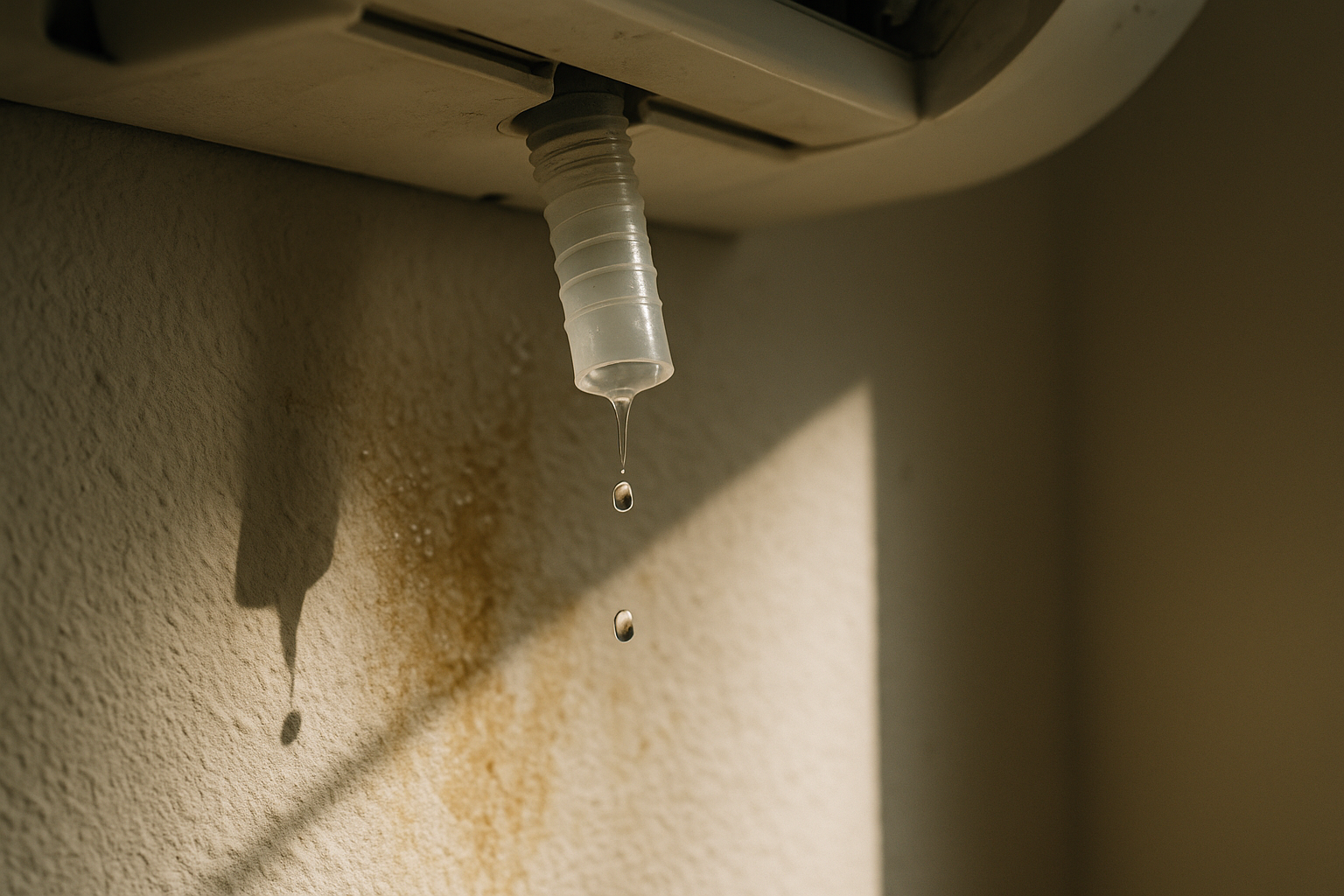
    Your AC doesn’t just cool air — it pulls moisture out of it too. That water collects in a drain pan and runs out through a condensate line, usually a PVC pipe near your outdoor unit or a small drain near your indoor air handler.

    When it’s 114° outside, your system runs almost nonstop to keep up. More runtime means more condensation, more volume moving through that little line, and more pressure on any weak point — a clog of algae, a kink in the line, a drain pan that’s already cracked or full. Under normal conditions, a slow drain might never cause trouble. Under today’s kind of extreme heat AC failure conditions, it overflows fast.

    What to check right now

    • The drain pan under your indoor unit (usually in a closet, attic, or utility room) — is there standing water, or has it overflowed onto the floor?
    • The PVC drain line outside — is water actively dripping from it? A steady drip is normal when the AC is running hard. No drip at all, when you know the unit’s been running, can mean it’s clogged and backing up somewhere else instead.
    • Ceiling stains, soft spots, or a musty smell near where your air handler sits, especially if it’s in an attic above living space.
    • The float switch, if your system has one — it’s designed to shut the AC off before an overflow happens, but it can fail or get stuck.

    If you find standing water or active dripping somewhere it shouldn’t be, turn the AC off at the thermostat and call an HVAC tech today — not next week. That part’s outside our lane, and I’ll always point you to the right pro for it.

    Where this turns into water damage

    Here’s the part that worries me most: condensation leaks are quiet. They don’t flood a room in one dramatic afternoon — they drip steadily into an attic, a wall cavity, or subfloor for days before anyone notices a stain or a soft spot. By the time it’s visible, the moisture has often already soaked insulation, drywall, or wood framing underneath.

    And in this heat, warm, wet, dark spaces are exactly where mold gets a head start. Moisture is always the root of that problem — heat just speeds up the clock.

    If you find water damage today

    Day one is about stabilizing, not about having every answer. Get the water source stopped, get the standing water out, get air moving and drying equipment on the affected area, and reassess in 24–48 hours once things have had a chance to respond. That rhythm gives you — and your insurance company, if it comes to that — real information instead of guesswork.

    One honest note: once drying equipment is running, it needs to keep running until the structure actually reads dry, not just looks dry. I know the fans are loud and disruptive. I can’t promise it won’t be — but I can promise to make it as least disruptive as possible, and turning equipment off early just invites the same problem back later, worse.

    We’re local, and we’re keeping an eye on this heat wave

    Merlene Mitigation is based right up the road in Pilot Point, and we’re watching this heat event closely because we know what it does to AC systems across Denton County and Little Elm. No crew, no call center — when you call, you’re talking to the person who’ll actually show up.

    If you’ve found water where you shouldn’t have, or you’re just not sure whether what you’re looking at is a real problem, give us a call. No pressure, no upsell — just an honest look at what’s going on.

    -Ally
  • Hidden Water Leaks in North Texas Homes: 5 Signs to Catch

    Hidden Water Leaks in North Texas Homes: 5 Signs to Catch

    Your water bill just went up $40 and you have no idea why. Nobody took extra-long showers. Nobody left a hose running. But the number doesn’t lie, and somewhere in your house, water is going somewhere it shouldn’t be.

    This is the season for it. Between the AC running nonstop, condensation lines working overtime, and pipes expanding and contracting with the heat, summer in North Texas creates ideal conditions for slow, quiet leaks — the kind that don’t announce themselves with a flood. They just sit there, day after day, doing damage you can’t see until it’s a real problem.

    Here’s what I want you to know: hidden water leaks in North Texas homes are more common in summer than almost any other time of year. And the good news is, they almost always leave clues. You just have to know what you’re looking for.

    Why Summer Is Prime Time for Slow Leaks

    A few things stack up against your house this time of year:

    • AC condensate lines clog. That little drain line carrying moisture away from your air handler can back up with algae and gunk, sending water into your attic or a closet instead of outside where it belongs.
    • Supply lines and fittings work harder. Heat makes pipes and connections expand. A fitting that was fine in March can start weeping in July.
    • Foundations shift. Texas clay soil moves with the heat and drought, and that movement can stress slab plumbing in ways you’d never notice from the sitting room.

    None of these show up as a burst pipe or water pouring through the ceiling. They show up slowly — which is exactly why they’re dangerous. Slow leak detection in Pilot Point and everywhere across North Texas really comes down to paying attention to a handful of quiet signals.

    The Signs Worth Taking Seriously

    1. A water bill that doesn’t match your habits

    This is usually the first honest clue you get. If nothing in your routine changed but your bill did, don’t shrug it off. Compare a few months side by side. A steady, unexplained climb is worth investigating.

    2. Soft or discolored drywall

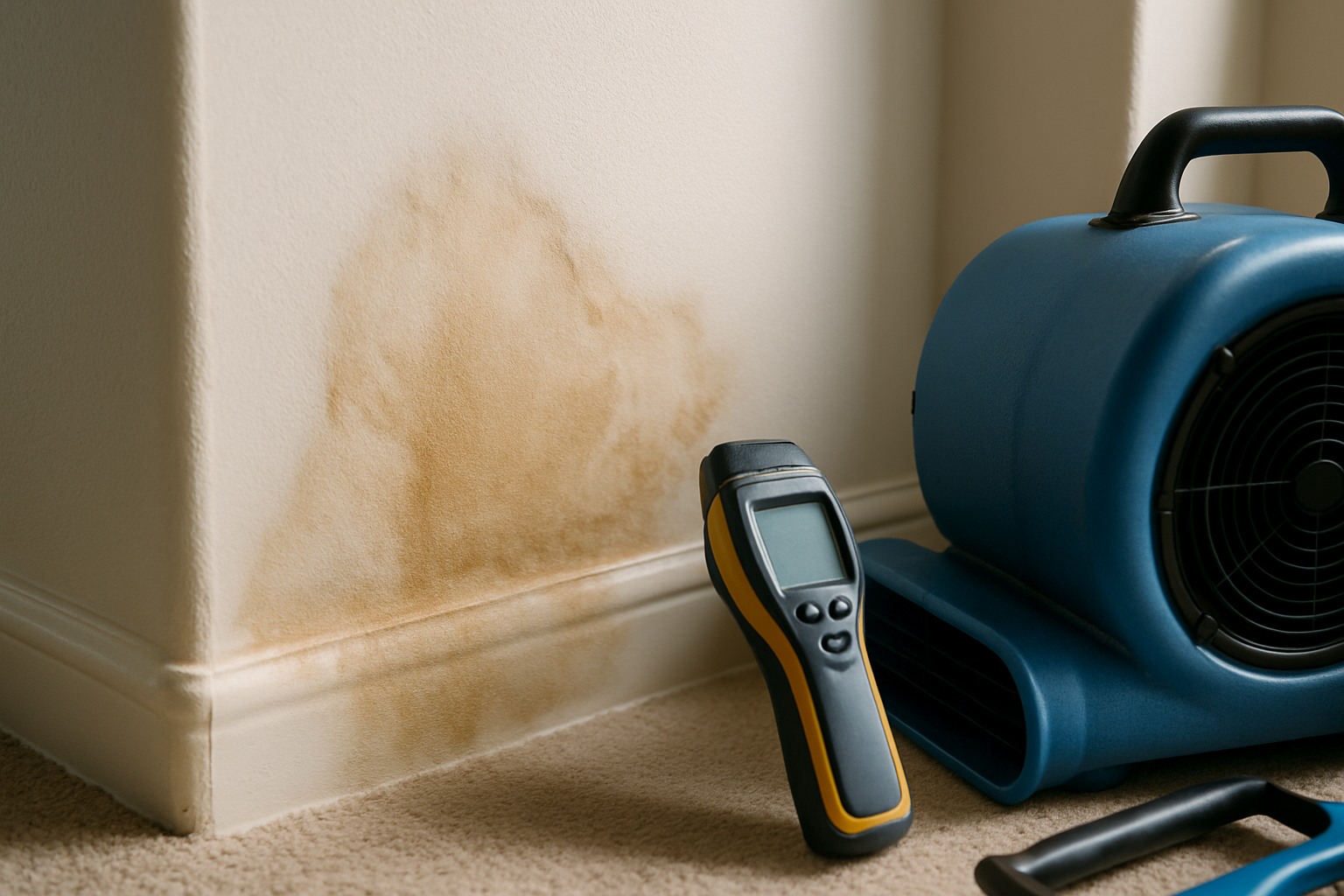
    Press gently on drywall near bathrooms, under windows, or around the kitchen. If it gives more than it should, or you notice a yellowish-brown stain creeping across it, water has been sitting behind it — probably for a while.

    3. A musty smell that won’t go away

    You can clean a room top to bottom and still catch that faint, damp smell. That’s often moisture trapped somewhere you can’t see — inside a wall cavity, under flooring, in the attic. Trust your nose here. It’s usually right.

    4. Warped flooring or peeling paint

    Laminate that’s started to bubble, tile that feels slightly loose, or paint that’s bubbling or peeling near baseboards — all classic signs of water damage that Dallas-area homeowners often miss because they assume it’s just age or wear.

    5. Cool or damp spots on the floor or wall

    Water moving through a wall or slab can create a spot that feels noticeably cooler or slightly damp to the touch, even with no visible staining yet.

    What to Do If You Notice Any of These

    You don’t need special equipment to start checking — just your eyes, your nose, and a look at your last few water bills. But if something seems off, don’t wait it out. Slow leaks don’t fix themselves, and the space between “small, cheap problem” and “big, expensive one” can close faster than people expect, especially with summer heat helping mold and rot along.

    If you’re searching for water leak repair near me and trying to decide whether it’s worth a call, here’s my honest answer: if you’re already wondering, it’s worth a look. A quick moisture check with a thermal camera and moisture meter can usually tell us — often before any real damage is visible on the surface — whether there’s water where there shouldn’t be.

    I’ll be straight with you either way. If it’s nothing, I’ll tell you it’s nothing. If it’s something, we’ll talk through exactly what’s going on and what it’ll take to fix it — no scare tactics, no upsell, just an honest answer from someone who’ll treat your home like it matters, because it does.

    If you’re in Pilot Point or anywhere around North Texas and something’s nagging at you about your water bill, a smell, or a spot on the wall, give Merlene Mitigation a call. We’d rather check it out and find nothing than have you wait and find out the hard way.

    -Ally