
Your water bill just went up $40 and you have no idea why. Nobody took extra-long showers. Nobody left a hose running. But the number doesn’t lie, and somewhere in your house, water is going somewhere it shouldn’t be.
This is the season for it. Between the AC running nonstop, condensation lines working overtime, and pipes expanding and contracting with the heat, summer in North Texas creates ideal conditions for slow, quiet leaks — the kind that don’t announce themselves with a flood. They just sit there, day after day, doing damage you can’t see until it’s a real problem.
Here’s what I want you to know: hidden water leaks in North Texas homes are more common in summer than almost any other time of year. And the good news is, they almost always leave clues. You just have to know what you’re looking for.
Why Summer Is Prime Time for Slow Leaks
A few things stack up against your house this time of year:
- AC condensate lines clog. That little drain line carrying moisture away from your air handler can back up with algae and gunk, sending water into your attic or a closet instead of outside where it belongs.
- Supply lines and fittings work harder. Heat makes pipes and connections expand. A fitting that was fine in March can start weeping in July.
- Foundations shift. Texas clay soil moves with the heat and drought, and that movement can stress slab plumbing in ways you’d never notice from the sitting room.
None of these show up as a burst pipe or water pouring through the ceiling. They show up slowly — which is exactly why they’re dangerous. Slow leak detection in Pilot Point and everywhere across North Texas really comes down to paying attention to a handful of quiet signals.
The Signs Worth Taking Seriously
1. A water bill that doesn’t match your habits
This is usually the first honest clue you get. If nothing in your routine changed but your bill did, don’t shrug it off. Compare a few months side by side. A steady, unexplained climb is worth investigating.
2. Soft or discolored drywall
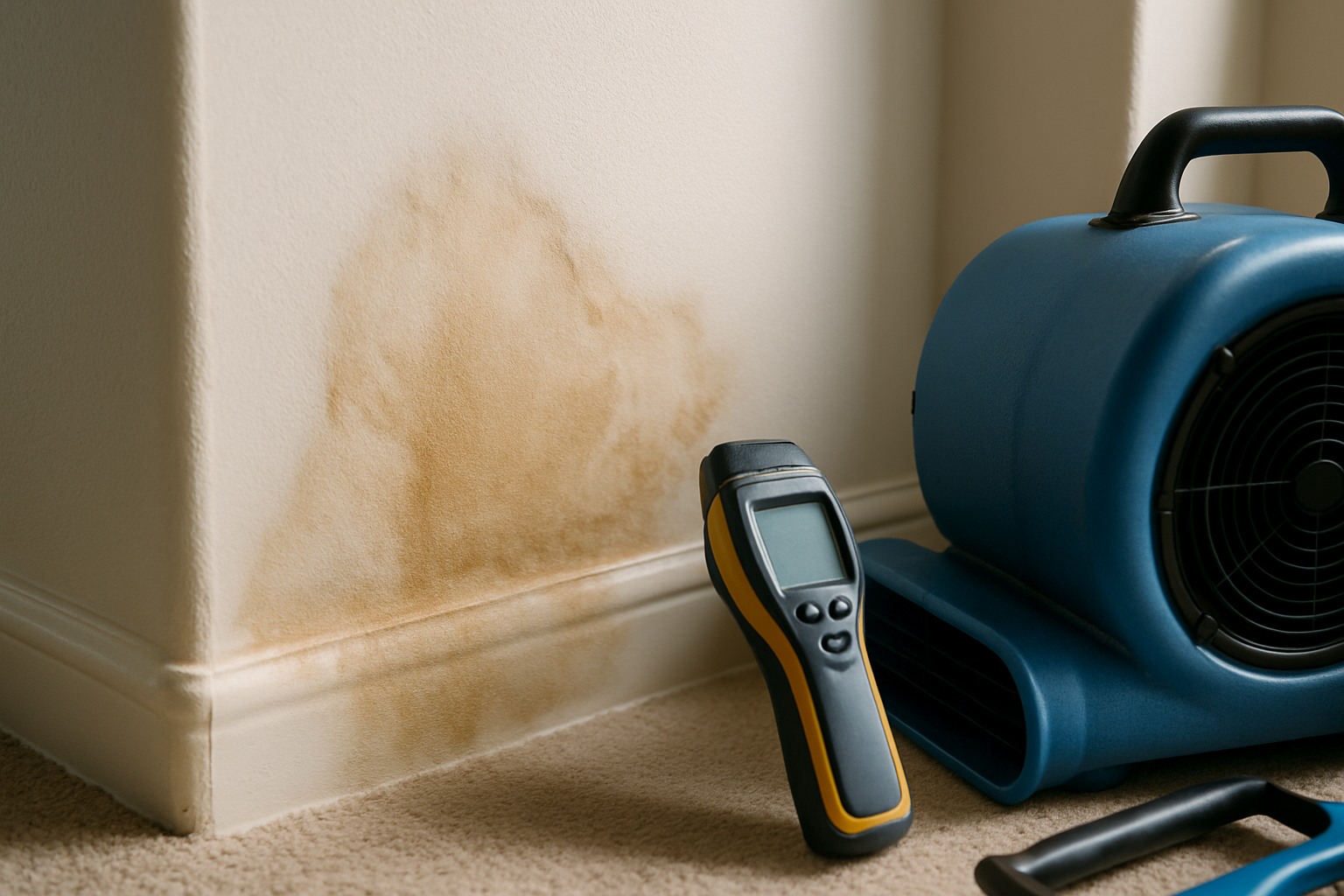
Press gently on drywall near bathrooms, under windows, or around the kitchen. If it gives more than it should, or you notice a yellowish-brown stain creeping across it, water has been sitting behind it — probably for a while.
3. A musty smell that won’t go away
You can clean a room top to bottom and still catch that faint, damp smell. That’s often moisture trapped somewhere you can’t see — inside a wall cavity, under flooring, in the attic. Trust your nose here. It’s usually right.
4. Warped flooring or peeling paint
Laminate that’s started to bubble, tile that feels slightly loose, or paint that’s bubbling or peeling near baseboards — all classic signs of water damage that Dallas-area homeowners often miss because they assume it’s just age or wear.
5. Cool or damp spots on the floor or wall
Water moving through a wall or slab can create a spot that feels noticeably cooler or slightly damp to the touch, even with no visible staining yet.
What to Do If You Notice Any of These
You don’t need special equipment to start checking — just your eyes, your nose, and a look at your last few water bills. But if something seems off, don’t wait it out. Slow leaks don’t fix themselves, and the space between “small, cheap problem” and “big, expensive one” can close faster than people expect, especially with summer heat helping mold and rot along.
If you’re searching for water leak repair near me and trying to decide whether it’s worth a call, here’s my honest answer: if you’re already wondering, it’s worth a look. A quick moisture check with a thermal camera and moisture meter can usually tell us — often before any real damage is visible on the surface — whether there’s water where there shouldn’t be.
I’ll be straight with you either way. If it’s nothing, I’ll tell you it’s nothing. If it’s something, we’ll talk through exactly what’s going on and what it’ll take to fix it — no scare tactics, no upsell, just an honest answer from someone who’ll treat your home like it matters, because it does.
If you’re in Pilot Point or anywhere around North Texas and something’s nagging at you about your water bill, a smell, or a spot on the wall, give Merlene Mitigation a call. We’d rather check it out and find nothing than have you wait and find out the hard way.
-Ally