
Tag: prosper tx

  • AC Condensation Leaks in Prosper, TX: 107° Heat Guide

    If you’ve stepped outside in Prosper this week, you already know: this heat is no joke. With heat index values climbing to 109° and the AC running nearly nonstop just to keep up, there’s a quieter problem brewing in a lot of homes right now — and it doesn’t announce itself with a loud noise or a spike in your electric bill. It shows up as a small drip, a musty smell, or a stain on the ceiling that wasn’t there last week.

    That’s a condensation leak, and this kind of extreme heat is exactly when they happen most.

    Why 107° Weather Is Hard on Your AC’s Drain Line

    Your air conditioner doesn’t just cool the air — it pulls moisture out of it too. That water has to go somewhere, and normally it drains out quietly through a small condensate line you never think about.

    When your system runs constantly, like it has been this week, it’s pulling more moisture out of the air than usual, for longer stretches, day after day. That means more water moving through that drain line, more often. If there’s already a little buildup in there — algae, dust, debris — extreme heat is what turns a slow trickle into a real clog.

    And a clogged condensate line doesn’t just stop draining. The water has to go somewhere, and “somewhere” is usually your attic, your ceiling, or the wall around your indoor unit.

    Early Warning Signs Worth Checking This Week

    You don’t need any special tools to catch this early. A few minutes of looking is often enough:

    • A musty or mildew smell near a vent, closet, or the room where your indoor unit lives
    • A ceiling stain — even a faint yellow-brown ring — especially under an attic unit
    • Water or moisture around the base of your indoor AC unit or the outdoor drain line termination
    • Higher humidity indoors than usual, even with the AC running hard
    • The drain pan’s safety switch tripping, which some systems use to shut the unit off before it overflows — if your AC randomly stops cooling, this could be why

    If you catch any of these early, you’re usually looking at a simple clog — not a disaster. That’s the good news. The bad news is that a clog left alone during a stretch of 100°-plus days can go from “small drip” to “soaked insulation and a stained ceiling” faster than people expect, simply because the system is running so much more than normal.

    What Happens If It’s Ignored

    Here’s the honest answer to “what’s the worst that happens if I just wait it out”: the water doesn’t stop while you’re deciding what to do. It keeps finding the path of least resistance — through drywall, insulation, subfloor — and moisture that sits in a hot, humid Texas attic for even a few days is exactly the kind of environment that invites mold growth. What starts as a $150 drain line clean-out can turn into a much bigger repair if it’s left to soak into your structure.

    That’s not scare talk — it’s just how water behaves. The earlier it’s caught, the smaller the fix.

    What Actually Helps

    A little summer maintenance goes a long way in North Texas heat:

    • Have your HVAC tech flush the condensate line during your seasonal service visit
    • Keep an eye on the drain pan and line termination point outside for any dripping or standing water
    • If you notice a musty smell or ceiling discoloration, don’t wait to see if it gets worse — it usually does

    If you’re already seeing signs of water damage — a stained ceiling, wet insulation, or a musty smell that won’t quit — that’s outside AC repair and into water damage territory, and that’s where we come in. I can’t promise it won’t be a little disruptive to sort out, but I can promise to make it as painless as possible, and to be straight with you about what’s actually going on before anything gets torn into.

    Merlene Mitigation is Josh, and it’s Josh you’ll talk to — not a call center, not a rotating crew. That means one accountable person handling your home from the first phone call to the last piece of equipment picked up, without the overhead (or the price tag) of a big franchise.

    If you’re in Prosper or anywhere in North Texas and you’re not sure whether what you’re seeing is a simple fix or something more, give us a call or shoot a text — texting works great if that’s easier for you. We’re happy to talk you through it.

    And if things are fine at your place today, that’s the best time to get ready for the day they might not be. Our free guide, The First 24 Hours After Water Damage, walks through exactly what to do the moment you find water where it shouldn’t be — worth five minutes now so you’re not scrambling later.

    -Ally

  • AC Condensation Leaks in Prosper, TX: What to Check Now

    AC Condensation Leaks in Prosper, TX: What to Check Now

    If your AC has been running nonstop this week, it’s not your imagination — and it’s not just your electric bill you need to worry about. With a heat advisory in effect and heat index values expected to hit 108° by Monday, air conditioners across Prosper are working harder than they’re built to work for very long. And when AC systems get pushed to their limit, condensation drain lines are usually the first thing to fail.

    Here’s the part most homeowners don’t know: a clogged or failing condensation line doesn’t announce itself. It doesn’t smell bad. It doesn’t make noise. It just quietly drips, usually somewhere you can’t see — inside a wall cavity, under the unit in the attic, behind drywall in a closet — until the damage is already done.

    Why extreme heat makes this worse

    Every AC system pulls moisture out of the air as it cools your home. That moisture has to go somewhere, and normally it drains harmlessly outside through a condensation line. But when your unit is running nearly around the clock to keep up with 108° heat index days, it’s pulling more moisture than usual, more often than usual — and that means more opportunity for a clog, a cracked line, or an overwhelmed drain pan to turn into a real problem.

    This is one of the most common hidden water leaks we see in North Texas during extreme heat stretches, and it’s almost always preventable if it’s caught early.

    Your quick inspection checklist

    You don’t need any special tools for this — just ten minutes and a flashlight. Here’s what to check today:

    • Look under your indoor unit or in the attic near your air handler. Any staining, warping, or a musty smell nearby is a sign moisture has already been sitting for a while.
    • Check the drain pan. If there’s standing water in it, the primary drain line is clogged and the pan is doing a job it was never meant to do long-term.
    • Find the PVC pipe running outside your home near the unit. It should be dripping steadily when the AC runs. If it’s bone dry while your AC is working hard, that water may be going somewhere else instead.
    • Check ceilings below any upstairs unit or attic-mounted system. A soft spot, a faint yellow ring, or bubbling paint is often the first visible sign of a leak that’s been going on for days or weeks.
    • Notice any musty smell in a closet, hallway, or room you don’t spend much time in. Smell often shows up before you can see anything.

    If you catch any of these signs, don’t wait it out. A drain line issue that’s caught in the first day is usually a simple fix. Left alone through a heat wave like this one, it becomes a soaked subfloor, damaged drywall, or the start of mold growth — and mold loves exactly the warm, damp, dark conditions a hidden AC leak creates.

    What we can’t do — and what we can

    I want to be straight with you here: we’re not licensed HVAC technicians, and if your AC unit itself needs repair, that’s a call to a good HVAC company. What we do is water damage mitigation — finding hidden moisture, drying it out properly, and stopping small leaks from turning into big structural or mold problems. If you find water damage from a leak like this, that’s exactly where we come in.

    And if it turns out there’s more moisture behind that wall than meets the eye, we won’t guess. We’ll show you what we find, in plain terms, before any decisions get made.

    If you already see damage

    If you’re looking at a wet ceiling or a soaked closet right now, don’t wait on it hoping it dries on its own — hidden moisture behind drywall rarely does, even in Texas heat. Give us a call or shoot a text. Josh handles every inspection personally, and he’s typically on-site within the hour for emergencies in Pilot Point and the surrounding North Texas area, including Prosper.

    And if nothing’s wrong today but you want to be ready in case it ever is, we put together a free guide called The First 24 Hours After Water Damage. It walks through exactly what to do in that first critical window — worth five minutes now, so you’re not scrambling to figure it out later.

    Stay cool out there, Prosper. We’re keeping an eye on the heat right alongside you.

    -Ally

  • AC Condensation Leaks in Prosper, TX: August Heat Risk

    AC Condensation Leaks in Prosper, TX: August Heat Risk

    If your air conditioner has run almost nonstop this week, you’re not imagining it. With heat index values pushing 104° across North Texas, AC systems in Prosper are working harder than they have all year — and that extra strain is exactly when condensation drain lines start to fail. Here’s the part most homeowners don’t know: an AC leak rarely announces itself. It just quietly drips into a ceiling, a closet, or a subfloor until the damage is already done.

    I want to walk you through what’s actually happening inside your system right now, and what to check today, while it’s still a small problem.

    Why extreme heat makes drain lines fail

    Your AC doesn’t just cool the air — it pulls moisture out of it, and all that water has to go somewhere. Normally, it drains through a small PVC line to the outside or into a drain pan. When your system runs longer and harder, like it has been this week, it produces more condensation than usual, and a line that was “mostly fine” can suddenly can’t keep up.

    A few things tend to go wrong at once in weather like this:

    • Algae and sediment build up faster in a line that’s constantly wet, eventually clogging it completely.
    • Drain pans overflow when the float switch (if there even is one) is old, corroded, or was never installed correctly.
    • Attic units — common in a lot of Prosper homes — leak straight down into insulation and ceiling drywall, where you won’t see it until there’s a stain or a sag.

    None of this is dramatic. That’s the problem. It’s a slow drip, not a burst pipe, which means it can go on for days or weeks before anyone notices.

    What to check today

    This takes about five minutes and doesn’t require any tools:

    • Look at the drain line outside — is water actively dripping from it? A little is normal on a hot day. A steady stream isn’t.
    • Check under and around your indoor unit — closet units, garage units, and utility room units are easy to peek at. Look for water stains, warping, or a musty smell.
    • Look at ceilings below or near attic units — a yellowish stain, a soft spot, or peeling paint is often the first visible sign of a leak that’s been going on for a while.
    • Feel the wall or baseboard near your unit — if it’s damp or cool to the touch and shouldn’t be, that’s worth investigating.

    If you find standing water or an active drip, don’t just wipe it up and hope it stops — that’s treating the symptom, not the source. And please don’t turn off your AC to “give it a break.” In this heat, that just trades one problem for a bigger one.

    Why this matters more than it looks like it should

    Water that sits in a wall cavity or subfloor in 100°+ heat and humidity is close to ideal conditions for mold growth — often within 24 to 48 hours. What starts as a $150 drain line clear-out can turn into cutting out drywall, replacing insulation, and dealing with mold if it’s left too long. The heat doesn’t cause the leak, but it absolutely accelerates what happens after one starts.

    If you find water damage

    The first move is always the same: stop the source, then start drying. If it’s a small, fresh spot you caught early, a fan and a dehumidifier from the closet can sometimes be enough — I’ll always tell you honestly if that’s the case. But if the water’s been sitting a while, soaked into flooring, or you’re not sure how long it’s been there, that’s when it’s worth having someone actually check what’s happening underneath, not just what you can see on the surface.

    That’s really the whole philosophy behind how I work: I’m not going to recommend anything I wouldn’t do in my own home, and I’d rather tell you it’s a quick fix than talk you into more than you need.

    Here if you need me

    If you’re in Prosper, Pilot Point, or anywhere in North Texas and you’ve found a leak, a stain, or just want a second set of eyes before it becomes a bigger issue, give me a call or send a text — whichever’s easier for you. I’m typically on-site within the hour for anything urgent, and if I’m already with another customer, I’ll call you back with a real ETA.

    And if things are fine today but you’d rather be prepared than caught off guard later, I put together a free guide called “The First 24 Hours After Water Damage” — worth five minutes now so you’re not scrambling to figure it out later.

    -Ally

  • Hidden Water Leaks in Prosper, TX: Peak Detection Season

    Hidden Water Leaks in Prosper, TX: Peak Detection Season

    If your house has felt a little “off” this summer — a musty smell that wasn’t there in spring, a spot on the ceiling that seems to be spreading, a crack in the slab you don’t remember — trust that instinct. Summer in Prosper doesn’t just turn up the thermostat. It turns up the evidence of leaks that have been quietly working on your home for months.

    Here’s the part most people don’t know: summer doesn’t cause hidden leaks. It exposes them.

    Why Summer Is Peak Leak-Detection Season

    North Texas clay soil expands and contracts hard with moisture swings, and our summer heat accelerates evaporation everywhere — including inside your walls and under your slab. A slow leak that stayed hidden all winter, when humidity was higher and evaporation was slower, suddenly has nowhere to hide. The water’s still leaving evidence. It’s just leaving it faster and more visibly.

    Add in foundation movement from our clay soil drying and shifting in the heat, and you get a perfect window in July, August, and September where small problems — a pinhole in a supply line, a slow seep around a tub, a hairline crack that’s letting moisture in — finally show themselves on the surface.

    That’s actually good news, if you catch it now. The alternative is catching it in October, after months more of hidden damage.

    What to Actually Look For

    You don’t need special equipment to do a first pass on your own home. Walk through with these in mind:

    • Foundation leak signs: new or widening cracks in the slab, especially near plumbing walls (kitchen, bathrooms, laundry); doors or windows that suddenly stick; a crack that’s wet or darker than the surrounding concrete.
    • Wall and ceiling staining: yellow-brown rings, especially below bathrooms or near exterior walls; paint that’s bubbling, peeling, or looks slightly “wavy.”
    • Soft or spongy drywall: press gently near a stain or a baseboard. Drywall should feel solid. If it gives a little, or feels cool and damp, water’s already behind it.
    • Musty odor with no obvious source — often the first sign, before you ever see a mark.
    • Unexplained rise in your water bill — one of the most reliable early clues of a slab or supply line leak.
    • Warped flooring or baseboards that weren’t like that before.

    None of these guarantee a serious problem. But any one of them is worth a closer look, because the cost of checking is nothing compared to the cost of finding out in September that it’s been active since April.

    Why Waiting Gets Expensive Fast

    Here’s the honest math on early water damage prevention. A slow leak caught in week one might mean drying out a small section of wall and maybe replacing a bit of drywall. The same leak, ignored for two or three months, can mean subfloor replacement, mold remediation, and in worse cases, damage to framing or the slab itself.

    It’s never about scaring anyone into action. It’s just true: moisture problems don’t stay small. They compound, quietly, in the places you’re not looking.

    What to Do If You Spot Something

    If you find a damp spot, a soft patch, or a smell that won’t quit, don’t wait to see if it dries out on its own. “It looks dry” is not the same as “it is dry” — surfaces dry first, while the structure underneath can hold moisture for weeks, quietly feeding mold growth you can’t see yet.

    A real inspection uses tools that go beyond a visual check — thermal imaging and moisture meters can find water hiding behind a wall or under a floor long before it becomes obvious. That’s the kind of thing worth having a professional set of eyes on, even if it turns out to be nothing. Better a false alarm than a surprise in September.

    We’re Here, Prosper

    Merlene Mitigation is based just up the road in Pilot Point, and we serve Prosper and the surrounding North Texas communities. Right now, through August 6th, we’re offering free water damage inspections — no pressure, no obligation, just an honest look and honest answers about what you’re seeing.

    When you call, you’re talking directly to Josh, the owner — not a call center, not a rotating crew. One accountable person who’ll tell you straight whether it’s something to watch or something to act on. Call or text anytime; a lot of folks find texting easier, and that’s perfectly fine with us.

    And if nothing’s wrong right now but you’d rather be ready before something is, grab our free guide, The First 24 Hours After Water Damage. It’s the kind of thing that’s a lot more useful to read on a calm afternoon than in the middle of an emergency.

    -Ally

  • AC Condensation Leaks in Prosper, TX: Why 110° Heat Demands Action

    AC Condensation Leaks in Prosper, TX: Why 110° Heat Demands Action

    If you’ve stepped outside in Prosper this week, you already know: the heat index is sitting at 110° through Wednesday, and your AC is working harder than it has all year. What you might not know is that your air conditioner isn’t just fighting to keep your house cool right now — it’s also producing more condensation than usual, and that condensation has to go somewhere.

    Usually, it goes exactly where it’s supposed to: down a drain line and out of your house without you ever thinking about it. But when a system runs nonstop for days in extreme heat, that drain line is under more stress than normal, and it’s exactly the kind of week these lines decide to clog, crack, or back up.

    Why extreme heat makes AC leaks more likely

    Your air conditioner pulls moisture out of the air as it cools your home. That moisture collects in a drain pan and exits through a small condensate line, usually a thin PVC pipe running out to the side of your house or into a drain.

    When it’s 95° out, that system might run for a few hours a day. When the heat index hits 110°, it can run almost continuously — which means far more condensation moving through that same small line, day after day, with barely a break for it to catch up.

    Add in the algae, dust, and debris that build up in most drain lines over a Texas summer, and you’ve got the perfect setup for a clog. Once that line backs up, the water has nowhere to go but back into the drain pan — and eventually, over the edge of it.

    Where to look before it becomes a bigger problem

    You don’t need any special tools to catch this early. A few minutes of checking can save you from a much bigger headache:

    • The ceiling below or near your attic unit. A brown stain, a soft spot, or fresh discoloration is often the first visible sign of a slow leak that’s been happening for a while.
    • Around your indoor air handler. If it’s in a closet or utility room, check the floor and baseboards for dampness.
    • The condensate drain line itself. If you can see it, look for standing water backed up near the unit, or water dripping from the emergency overflow pan.
    • Musty smell in a room you don’t use often. Sometimes your nose catches it before your eyes do.

    None of these signs mean disaster. But all of them mean the water has already found somewhere it shouldn’t be — and that’s worth taking seriously, especially with days more of this heat ahead.

    Why “it looks dry” doesn’t mean it’s fine

    This is the part that catches people off guard. A ceiling stain can dry to the touch within a day, and it’s tempting to assume the problem solved itself. It didn’t. The surface dries first. What’s underneath — drywall, insulation, framing — can hold moisture for much longer, and that’s exactly where mold gets its start.

    I’d rather you catch this early and it turns out to be nothing than wait it out and find out the hard way that it wasn’t.

    What to do if you find something

    First, get your AC serviced — a technician can clear the drain line and get your system draining properly again. That’s step one, and it’s usually a quick, affordable fix.

    If there’s already visible water damage, staining, or that musty smell, that’s a separate conversation, and it’s the one I’d rather have with you before it turns into a bigger repair than it needs to be. A quick inspection can tell you exactly what’s happening behind that ceiling or wall, and whether it’s something to watch or something to address now.

    We’re offering free water damage inspections this week

    Given how many homes across North Texas are dealing with this exact issue right now, we’re offering free water damage inspections through July 29th for Prosper and the surrounding area. No pressure, no obligation — just an honest look and straight answers about what you’re dealing with, if anything at all.

    If you’re in Prosper, Pilot Point, or anywhere nearby and you’ve spotted a stain, a damp spot, or just want peace of mind during this heat wave, give us a call. I’d rather look at ten ceilings that turn out fine than have one homeowner wait too long on the one that wasn’t.

    And if nothing’s wrong today but you want to be ready in case it ever is, grab our free guide, The First 24 Hours After Water Damage. It walks through exactly what to do in that first day — before we ever get there.

    -Ally

  • Water Damage Restoration in Prosper, TX: Fast Recovery Guide

    Water Damage Restoration in Prosper, TX: Fast Recovery Guide

    If you’re reading this with wet carpet under your feet or rain still hammering the roof, here’s the short version: turn off the electricity to the affected area if you can do it safely, stop the water source if there is one, and start moving valuables out of the way. Everything else can wait five minutes. Come back and read the rest once you’ve done that.

    Prosper gets hit hard when North Texas summer storms roll through — fast, heavy rain, hail, straight-line winds, and sometimes a roof or window that just wasn’t built for what came down. And the tricky part about storm water isn’t the puddle you can see. It’s what happens underneath it over the next 24 to 48 hours if nobody deals with it.

    The First Few Hours Matter Most

    Water damage isn’t just about the mess. It’s about how fast that moisture gets into places you can’t see — subfloor, drywall cavities, insulation — and starts causing problems that are a lot more expensive than the original storm.

    Here’s what to do while you’re waiting on help:

    • Safety first. If water is anywhere near an outlet or panel, don’t wade in. Call an electrician or your utility company if you’re not sure it’s safe.
    • Stop the source if you can. A shut-off valve for a burst pipe, a tarp over a hole in the roof — anything that slows the water coming in.
    • Document before you touch anything. Photos and video of the standing water, the source, and anything damaged. Your insurance company will want this, and it’s much easier to get it now than to reconstruct it later.
    • Move what you can. Furniture legs, rugs, boxes on the floor — get them up and out of the water if it’s safe to do so.
    • Call a restoration company. Not next week. Today.

    That last one isn’t just me talking my own book. Mold can start establishing itself in as little as 24 to 48 hours in the right conditions, and North Texas summer humidity is exactly the right conditions.

    What Actual Restoration Looks Like

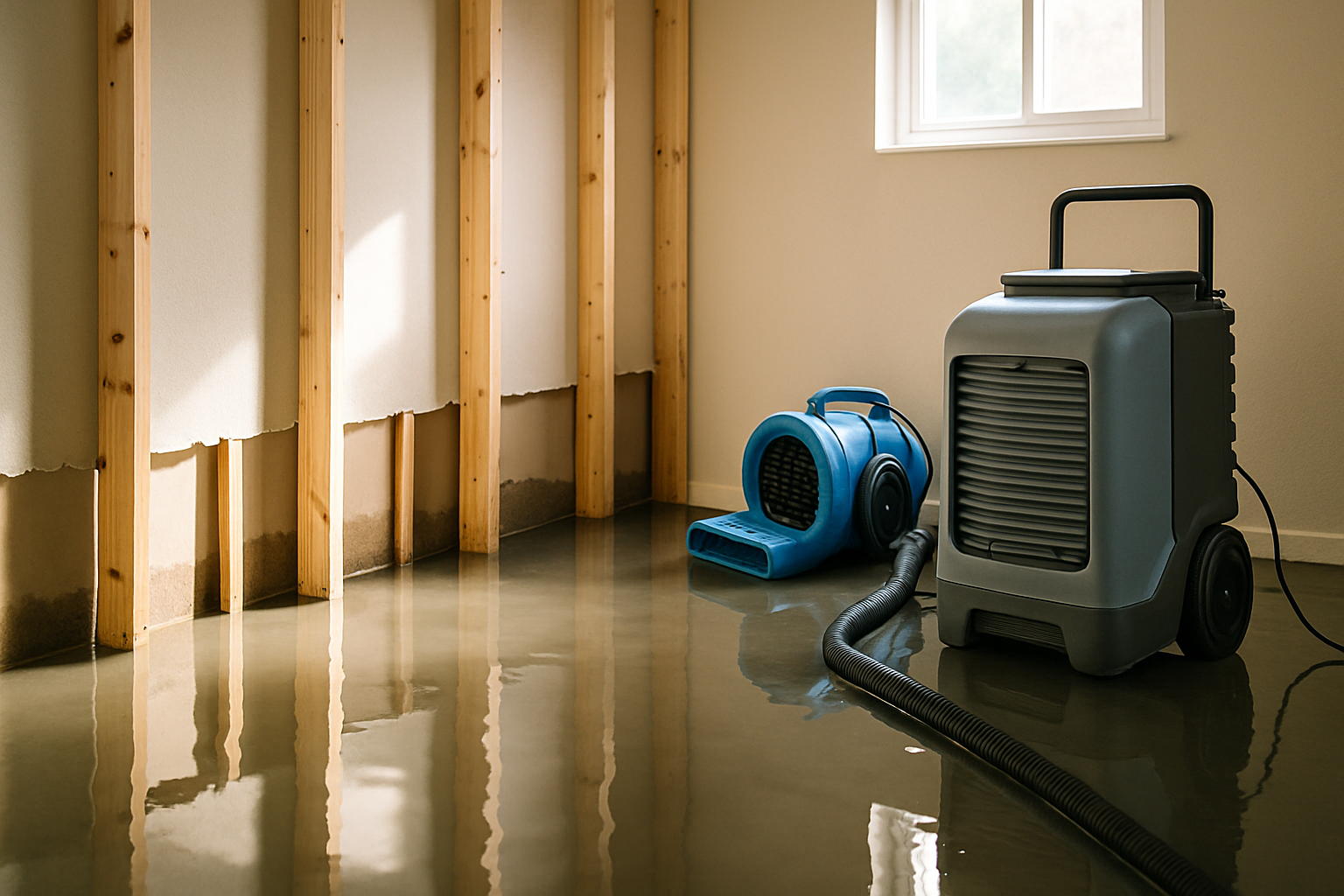
    When we get a call for storm damage cleanup in Prosper, day one is about stabilizing the situation — not making every decision at once. We get the standing water out, apply an antimicrobial treatment to slow bacterial and mold growth, and set up commercial drying equipment: real dehumidifiers and air movers, not the kind you’d find in a laundry room.

    Then we reassess in 24 to 48 hours. That gap matters. It lets the structure start drying, lets us get accurate moisture readings with a thermal camera and moisture meter, and lets everyone — you, us, your insurance adjuster — get a clear, honest picture of the real scope before big decisions get made.

    I’ll be straight with you: the drying process is loud and a little disruptive. Air movers running around the clock aren’t fun to live with. I can’t promise it won’t be a hassle — but I can promise to make it as least disruptive as possible, and I’ll never tell you it’s fine to shut the equipment off early to get some quiet. Turning it off before the structure hits a proper dry standard risks the very mold and secondary damage we’re trying to prevent. Think of it as the impromptu remodel nobody asked for — annoying now, but there’s a plan, and there’s an end to it.

    A Word on Insurance

    A lot of homeowners assume storm damage “probably isn’t covered” and don’t even file a claim. Often that’s not true — it depends on your policy and the cause of loss, and it’s worth finding out rather than guessing. Document everything, call your carrier promptly, and don’t be afraid to ask questions about what your policy actually says. A restoration company that’s scoped the damage honestly can make that conversation a lot easier.

    Why Local, Accountable Help Matters

    Merlene Mitigation is based right up the road in Pilot Point, and I handle water damage and inspections personally — not a rotating crew of strangers. If your situation needs more than mitigation — larger mold remediation, roofing, rebuild — I stay involved and bring in trusted, vetted professionals I’d use in my own home, so you’ve got one accountable person overseeing the whole job instead of getting handed off. Lower overhead means fair prices, and it means you’re never just a ticket number.

    If you’re dealing with water damage right now, or you just want a straight answer about what to do next, reach out. Storm restoration near you in Prosper shouldn’t mean waiting on hold with a call center — it should mean talking to someone who’s going to walk through it with you.

    -Ally