
Tag: plumbing

  • Hidden Water Leaks in Providence Village, TX: Spot Them Early

    Here’s a scenario I hear more than you’d think: a Providence Village homeowner notices their water bill crept up $40 this month. No leaks visible, no puddles, nothing dripping. They shrug it off. Three months later, there’s a soft spot in the drywall behind the couch, and what would’ve been a quick fix is now a much bigger job.

    Summer heat in North Texas doesn’t just stress your AC — it stresses your plumbing too. Shifting soil, expanding and contracting pipes, and higher water pressure from irrigation systems all make this the season when slow, hidden leaks tend to show themselves. The tricky part is they rarely show themselves loudly. They whisper first.

    Here’s what to watch for this week, before a whisper turns into a shout.

    Why Summer Is Prime Time for Hidden Leaks

    North Texas clay soil expands and contracts with moisture changes more than almost anywhere else in the country. As the ground dries out and shifts under summer heat, it can put stress on slab plumbing and supply lines you’ll never lay eyes on. Add in sprinkler systems running overtime and water heaters working harder, and you’ve got a season where slow leak detection really matters — because these leaks don’t announce themselves the way a burst pipe does.

    A slow leak behind a wall or under a floor can run for weeks, sometimes months, before it becomes obvious. And by the time it’s obvious, you’re usually not just dealing with water anymore — you’re dealing with mold risk and materials that have to be replaced, not dried.

    Early Signs of Water Damage You Can Catch This Week

    • A higher water bill with no clear reason. This is often the very first clue, and the easiest one to miss. If your bill jumps and nothing about your household use has changed, it’s worth a second look.
    • Soft or slightly bulging drywall. Press gently on baseboards and lower wall sections, especially in bathrooms, kitchens, and utility rooms. Healthy drywall feels firm. Water-damaged drywall gives a little, almost spongy.
    • A musty smell that comes and goes. You don’t have to see mold to have a moisture problem. Often you’ll smell it in a closet, under a sink, or near an exterior wall before you ever see it.
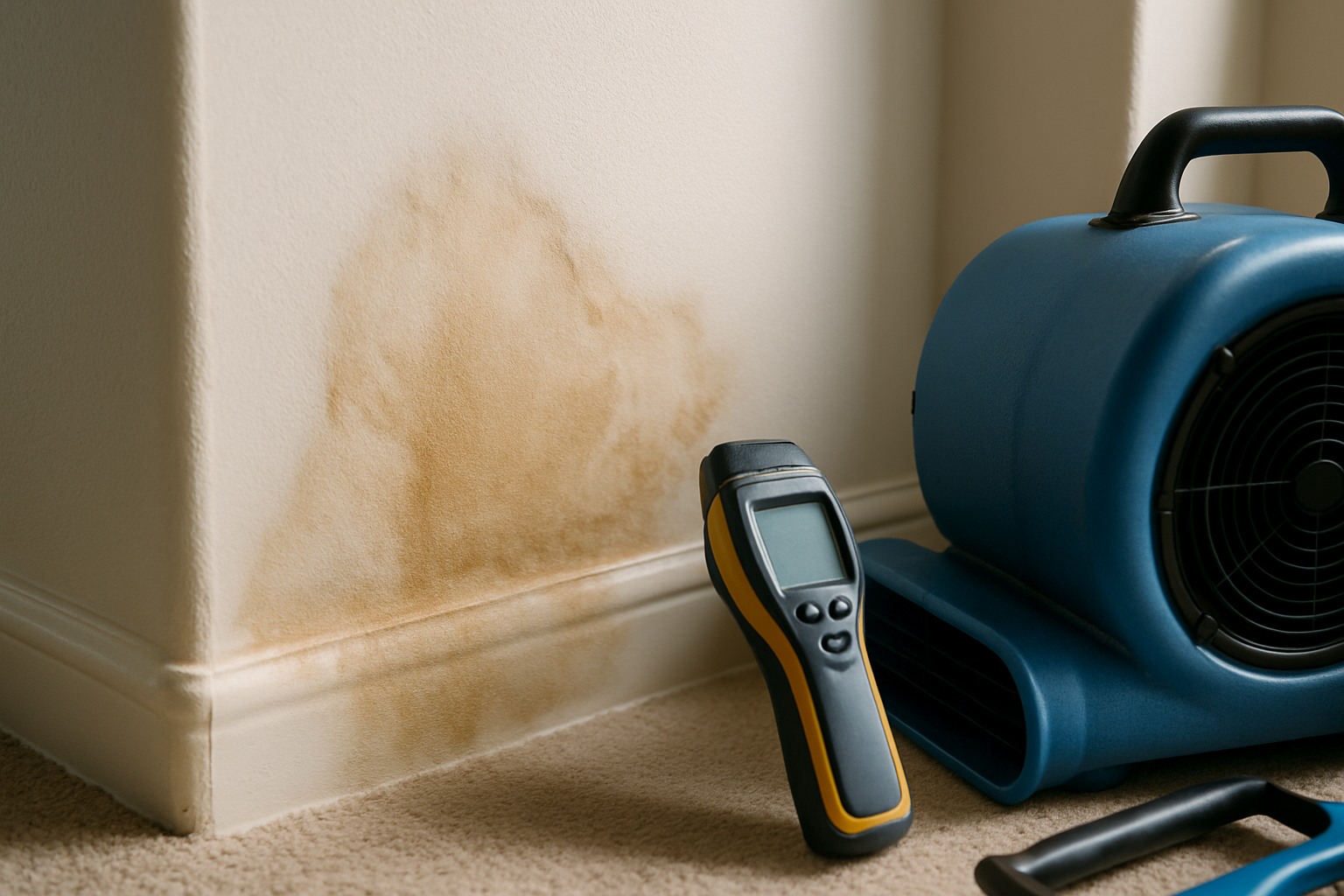
    • Discoloration or a faint yellow-brown stain on ceilings, baseboards, or flooring, even a small one.
    • Warped or cupping flooring — wood floors lifting slightly at the seams, or laminate that feels uneven underfoot.
    • Cooler or damp spots on flooring or walls that don’t match the rest of the room.

    Any one of these on its own might be nothing. But if you notice two or more together, that’s worth taking seriously.

    Water Damage Before It Spreads: Why Catching It Early Matters

    Here’s the honest truth: a leak caught early is usually a plumbing fix and maybe a little drying. A leak caught late is often drywall replacement, flooring replacement, and a mold conversation on top of it. The moisture itself is rarely the expensive part — it’s what moisture left unchecked turns into.

    This is really the whole idea behind good water damage restoration: the goal isn’t just drying out what you can see, it’s finding what you can’t. That’s where tools like thermal imaging and moisture meters earn their keep — they find the moisture hiding inside a wall or under a floor long before it becomes a visible problem.

    What To Do If You Spot Something

    If you notice any of these signs, don’t wait it out to see if it gets worse. A quick inspection now is a lot cheaper — in both money and hassle — than a restoration project later. And if it does turn out to be something more, catching it early gives everyone, including your insurance company, more options and less to untangle.

    I’ll be straight with you: I can’t promise every leak is a quick fix. But I can promise that finding it early gives you the best shot at it staying that way.

    Providence Village Water Damage Restoration, Done Right

    Merlene Mitigation is local to Pilot Point, and we serve Providence Village and the surrounding North Texas communities. When Josh comes out for an inspection, it’s Josh — not a call center, not a rotating crew. One person, accountable from the first phone call to the last piece of equipment picked up. That’s how a small, local business keeps prices fair and keeps things simple for you.

    If something on this list sounds familiar, or you just want a second set of eyes before summer really turns up the heat, give us a call or shoot Josh a text — whichever’s easier for you. We’re happy to take a look before it becomes a bigger problem.

    And if you’d rather just be prepared for whatever comes, whether that’s today or two years from now, grab our free guide, The First 24 Hours After Water Damage. It walks through exactly what to do the moment you find water where it shouldn’t be — no pressure, just something good to have on hand.

    -Ally

  • Hidden Water Leaks in Sanger, TX: Why August Heat Makes Them Worse

    Hidden Water Leaks in Sanger, TX: Why August Heat Makes Them Worse

    If your water bill crept up last month and you shrugged it off as “probably just the sprinklers,” August might be the month that quietly proves you wrong.

    Here in Sanger and across North Texas, summer heat doesn’t just make you miserable outside. It changes what happens to water leaking inside your walls, under your slab, or behind your appliances. And the changes it makes are exactly the kind that let a small leak hide a lot longer than it should.

    Why August makes hidden leaks harder to catch

    A slow leak in January often announces itself. Cooler air holds less moisture, so water tends to sit, pool, and eventually show up as a stain, a soft spot, or a musty smell.

    Heat changes the math. When temperatures climb into the upper 90s and beyond, several things happen at once:

    • Evaporation speeds up. Water that would normally pool and show itself instead evaporates before it ever reaches a visible surface, especially in attics, slab foundations, and behind drywall.
    • Pipes expand and contract more. The heat cycles North Texas plumbing goes through in summer, hot attic air by day, cooler nights, stress fittings and joints in ways that can turn a tiny weep into a real leak over time.
    • Foundations shift. Our clay-heavy soil swells and contracts hard with heat and drought, which is one of the more common (and more overlooked) causes of slab leaks in this area.
    • AC condensation lines work overtime. Your air conditioner is fighting harder in August, and a clogged or cracked condensate line can leak steadily for weeks without anyone noticing, since it’s usually hidden above a ceiling or behind a closet wall.

    Put it together and you get the exact scenario that makes hidden water leaks in Sanger, TX so sneaky in summer: the moisture disappears into the air before it ever becomes an obvious puddle, but the damage underneath keeps building.

    The early warning signs worth checking for

    You don’t need special equipment to catch most of these early. You just need to know what to look for, and to actually look once in a while.

    • A water bill that’s noticeably higher than the same month last year, without an obvious reason (new pool, extra watering, guests staying over).
    • A spot on the ceiling or wall that looks slightly darker or discolored, even if it’s dry to the touch.
    • A musty or “earthy” smell in one room or closet that wasn’t there before, especially near plumbing walls.
    • Warped baseboards, slightly bubbled paint, or flooring that feels different underfoot in one specific spot.
    • The sound of running water when nothing is turned on.
    • A warm spot on the slab floor (can point to a hot water line leak underneath).

    Any one of these alone might be nothing. But if you notice one, it’s worth a closer look before the North Texas heat finishes the job of hiding it from you.

    Why “it looks dry” doesn’t mean it is dry

    This is one I tell people all the time: surfaces dry first. Drywall, flooring, and paint will often look and feel fine long before the structure underneath actually is. That gap between “looks fine” and “is fine” is exactly where mold gets its foothold, and it’s why slow leak detection matters so much more than most homeowners realize until it’s already a bigger job.

    The good news is that catching it early is almost always cheaper, faster, and far less disruptive than catching it late. A small, honest inspection now beats an insurance claim and a demo crew later.

    What real water restoration looks like when it’s needed

    If a leak has already done some damage, water damage restoration in Sanger and North Texas generally follows the same sequence no matter who you call: get the water out, stabilize the area, start drying, and reassess within 24 to 48 hours once the situation is fully visible. That reassessment period matters. It gives everyone, including your insurance company, time to catch up before big decisions get made.

    I can’t promise a leak or the drying process that follows won’t be disruptive. I can promise to make it as least disruptive as possible, and to be straight with you about what’s actually going on under the surface, not just what’s convenient to say.

    If you’re in Sanger or nearby

    Merlene Mitigation is a small, local, owner-operated company based just down the road in Pilot Point. When you call, you get Josh, the person who actually shows up, scopes the damage, and stands behind the work, not a call center or a rotating crew of strangers. That kind of accountability, paired with low overhead, is what lets us keep prices fair.

    If something on this list has you wondering, a quick inspection is a lot cheaper than peace of mind lost to guessing. Feel free to call or text anytime.

    And if nothing’s wrong today but you’d rather be ready than sorry, grab our free guide, The First 24 Hours After Water Damage. It’s the kind of thing you hope you never need, but you’ll be glad to have if you do.

    -Ally

  • Hidden Water Leaks in North Texas Homes: 5 Signs to Catch

    Hidden Water Leaks in North Texas Homes: 5 Signs to Catch

    Your water bill just went up $40 and you have no idea why. Nobody took extra-long showers. Nobody left a hose running. But the number doesn’t lie, and somewhere in your house, water is going somewhere it shouldn’t be.

    This is the season for it. Between the AC running nonstop, condensation lines working overtime, and pipes expanding and contracting with the heat, summer in North Texas creates ideal conditions for slow, quiet leaks — the kind that don’t announce themselves with a flood. They just sit there, day after day, doing damage you can’t see until it’s a real problem.

    Here’s what I want you to know: hidden water leaks in North Texas homes are more common in summer than almost any other time of year. And the good news is, they almost always leave clues. You just have to know what you’re looking for.

    Why Summer Is Prime Time for Slow Leaks

    A few things stack up against your house this time of year:

    • AC condensate lines clog. That little drain line carrying moisture away from your air handler can back up with algae and gunk, sending water into your attic or a closet instead of outside where it belongs.
    • Supply lines and fittings work harder. Heat makes pipes and connections expand. A fitting that was fine in March can start weeping in July.
    • Foundations shift. Texas clay soil moves with the heat and drought, and that movement can stress slab plumbing in ways you’d never notice from the sitting room.

    None of these show up as a burst pipe or water pouring through the ceiling. They show up slowly — which is exactly why they’re dangerous. Slow leak detection in Pilot Point and everywhere across North Texas really comes down to paying attention to a handful of quiet signals.

    The Signs Worth Taking Seriously

    1. A water bill that doesn’t match your habits

    This is usually the first honest clue you get. If nothing in your routine changed but your bill did, don’t shrug it off. Compare a few months side by side. A steady, unexplained climb is worth investigating.

    2. Soft or discolored drywall

    Press gently on drywall near bathrooms, under windows, or around the kitchen. If it gives more than it should, or you notice a yellowish-brown stain creeping across it, water has been sitting behind it — probably for a while.

    3. A musty smell that won’t go away

    You can clean a room top to bottom and still catch that faint, damp smell. That’s often moisture trapped somewhere you can’t see — inside a wall cavity, under flooring, in the attic. Trust your nose here. It’s usually right.

    4. Warped flooring or peeling paint

    Laminate that’s started to bubble, tile that feels slightly loose, or paint that’s bubbling or peeling near baseboards — all classic signs of water damage that Dallas-area homeowners often miss because they assume it’s just age or wear.

    5. Cool or damp spots on the floor or wall

    Water moving through a wall or slab can create a spot that feels noticeably cooler or slightly damp to the touch, even with no visible staining yet.

    What to Do If You Notice Any of These

    You don’t need special equipment to start checking — just your eyes, your nose, and a look at your last few water bills. But if something seems off, don’t wait it out. Slow leaks don’t fix themselves, and the space between “small, cheap problem” and “big, expensive one” can close faster than people expect, especially with summer heat helping mold and rot along.

    If you’re searching for water leak repair near me and trying to decide whether it’s worth a call, here’s my honest answer: if you’re already wondering, it’s worth a look. A quick moisture check with a thermal camera and moisture meter can usually tell us — often before any real damage is visible on the surface — whether there’s water where there shouldn’t be.

    I’ll be straight with you either way. If it’s nothing, I’ll tell you it’s nothing. If it’s something, we’ll talk through exactly what’s going on and what it’ll take to fix it — no scare tactics, no upsell, just an honest answer from someone who’ll treat your home like it matters, because it does.

    If you’re in Pilot Point or anywhere around North Texas and something’s nagging at you about your water bill, a smell, or a spot on the wall, give Merlene Mitigation a call. We’d rather check it out and find nothing than have you wait and find out the hard way.

    -Ally