Tag: mold prevention

  • Water Damage from Summer Storms in Celina, TX: First 24 Hours

    The sky over Celina turns that particular shade of green, the wind picks up, and twenty minutes later you’re standing in your living room looking at water coming in somewhere it has no business being. If that’s you right now — welcome, I’m glad you found this. If you’re reading ahead of time, even better. Either way, let’s talk about what actually matters in the first 24 hours after summer storm water gets into your home.

    August is peak severe weather season here in North Texas. Between the pop-up thunderstorms, the hail, and the occasional roof leak that only shows up once the rain really starts coming down sideways, this is the time of year Celina homeowners deal with water damage they never saw coming. The good news: what you do in the first day matters more than almost anything else that happens after.

    Why the First 24 Hours Matter So Much

    Water damage doesn’t wait politely for your insurance adjuster’s schedule. Drywall wicks moisture upward within hours. Wood floors start cupping. And mold — which needs surprisingly little time to get established once materials stay wet — can begin developing in as little as 24 to 48 hours in our summer humidity.

    Here’s the honest truth: it’s not the visible puddle that causes the real damage. It’s the water that soaks into the structure underneath — the subfloor, the wall cavities, the insulation — that you can’t see just by looking. That hidden moisture is where mold risk and long-term structural problems actually come from.

    What to Actually Do, Step by Step

    1. Get everyone safe first

    If there’s any chance the water is near electrical outlets, panels, or appliances, stay clear and shut off power to that area if you can do so safely. No amount of carpet is worth an electrical shock.

    2. Stop the source if you can

    If it’s a roof leak, a burst pipe, or a window that gave way in the wind, do what’s safely possible to slow the intrusion — a tarp, a bucket, shutting off a water valve. If it’s storm water you can’t control, that’s okay. Move to the next step.

    3. Move what you can, document what you can’t

    Get furniture and valuables off wet flooring if it’s safe to do so. Before you start cleaning anything up, take photos and a short video walking through the affected area. Insurance will want to see the damage as it happened, not after it’s been tidied.

    4. Start extraction and drying — fast

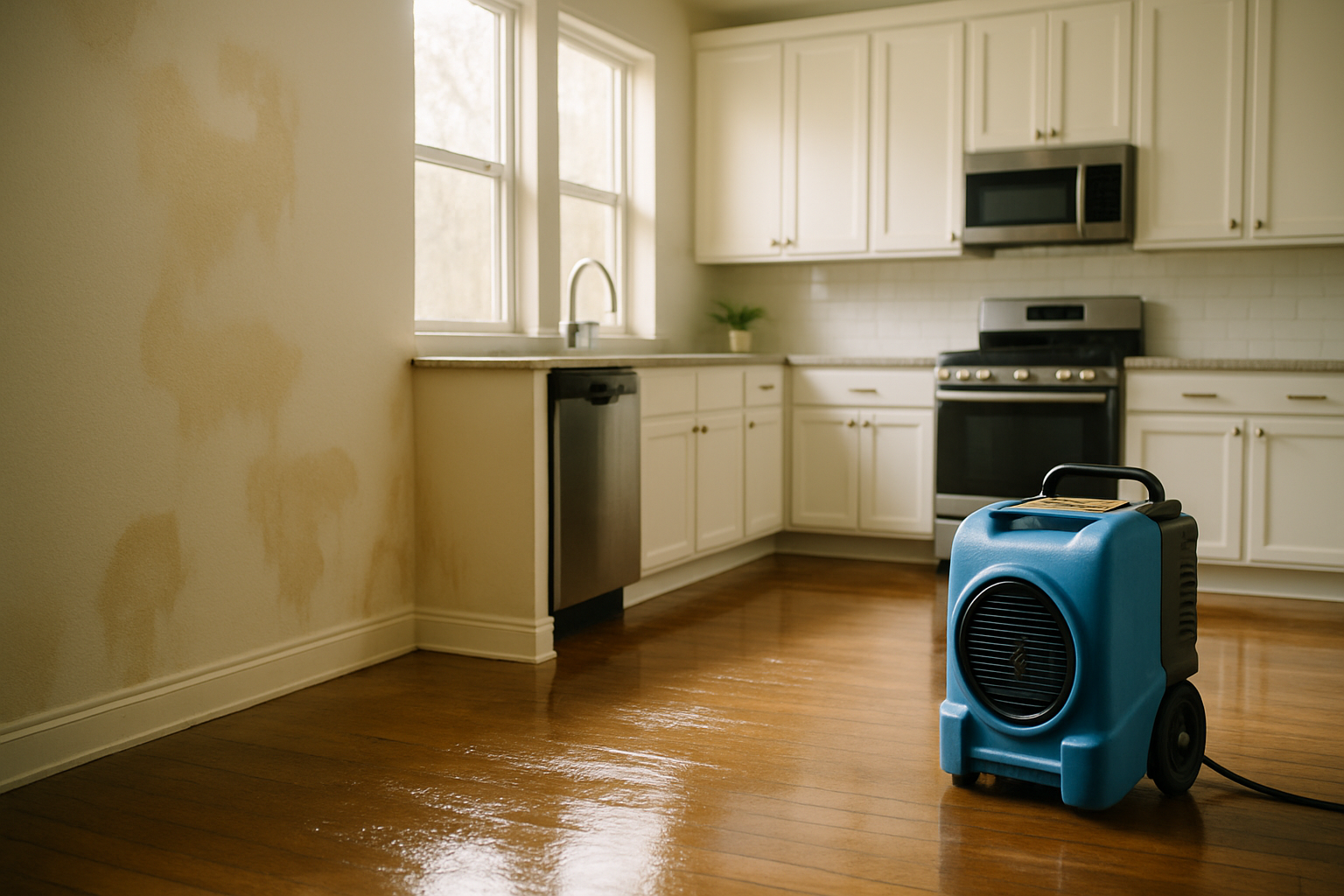
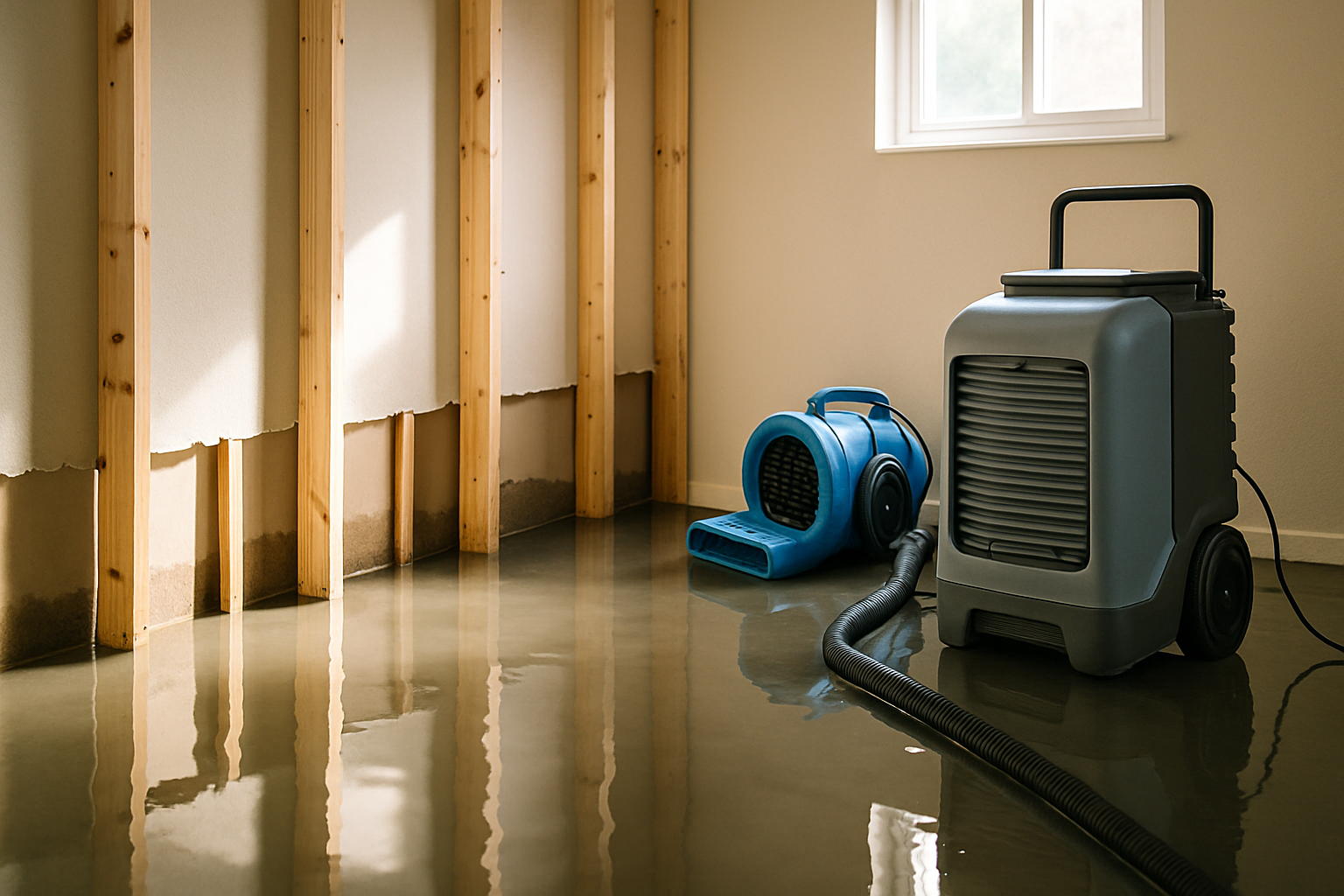
    This is the part where professional response really earns its keep. On day one, the job is simple: get the standing water out, apply an antimicrobial to slow bacterial and mold growth, and set drying equipment to start pulling moisture out of the structure — not just the surface. Then, within 24 to 48 hours, a full reassessment tells us exactly what’s still wet and what the real scope of the job is. That rhythm isn’t a stall tactic — it’s what actually lets everyone, including your insurance company, catch up before big decisions get made.

    5. Don’t turn off the equipment early

    I know the fans are loud and the whole thing feels disruptive — because it is. I can’t promise it won’t be. But I can promise to make it as least disruptive as possible, and part of that promise means being straight with you: turning off drying equipment early, even for a night, risks secondary damage that’s a lot more expensive than the noise is annoying. If you need to get out of the house for a few hours and put the radio on somewhere else, that’s a completely reasonable way to protect your sanity. Just leave the equipment running.

    Should You Call Your Insurance First, or a Restoration Company First?

    Either order works, honestly — but don’t wait on one to start the other. Most policies expect you to take reasonable steps to prevent further damage, and starting extraction and drying quickly is part of that. A good restoration response documents everything as it goes, which makes your claim easier, not harder.

    You’re Not Alone in This

    Merlene Mitigation is based right here in Pilot Point, serving Celina and the surrounding North Texas communities. When you call, you’re not getting routed to a call center or a rotating cast of subcontractors — you’re getting Josh, the owner, who shows up, assesses the damage honestly, and stays involved from the first hour through the last. Lower overhead means fair pricing, and one accountable person means nothing gets lost between “who do I even call about this” and “it’s actually fixed.”

    If you’re dealing with storm damage in Celina or anywhere in North Texas right now, don’t wait it out. Call or text Josh directly — texting works great if picking up the phone isn’t easy in the moment.

    And if today isn’t your emergency but you want to be ready before it is, grab our free guide, The First 24 Hours After Water Damage. It walks through exactly what to do, step by step, so you’re not trying to remember any of this while you’re standing in a puddle.

    -Ally

  • AC Condensation Leaks During Heat Advisories: Krugerville Checklist

    AC Condensation Leaks During Heat Advisories: Krugerville Checklist

    If your AC has been running nearly nonstop the last couple of days, you’re not imagining it. With a Heat Advisory in effect for Krugerville and the surrounding area through tomorrow evening and heat index values climbing to 106°, your system is working about as hard as it ever will this year. And that’s exactly when condensation drain problems show up — quietly, usually in a closet or attic you don’t check every day.

    Here’s the good news: a five-minute check right now can catch a leak before it turns into a mold problem. Let’s walk through it.

    Why heat advisories are prime time for AC leaks

    When your AC runs longer and harder, it pulls more moisture out of the air — that’s just how it works. All that condensation has to go somewhere, and normally it drains out through a small line to the outside. But a few days of heavy runtime is enough to expose a weak spot: a clogged drain line, a cracked pan, a slow leak that never mattered much until the system doubled its workload.

    That’s why AC drain pan overflow tends to spike right alongside a heat advisory. It’s not bad luck — it’s just physics catching up with an AC system that’s already stretched thin.

    Your 5-minute heat advisory checklist

    • Check the indoor unit closet or utility space. Look at the floor around the air handler. Any dampness, discoloration, or a musty smell means water has already found its way out.
    • Look at the drain pan (secondary pan) under the unit. Standing water here means the primary drain line is clogged and the backup is catching the overflow — for now.
    • Find the condensate drain line outside. It’s usually a white PVC pipe near your outdoor unit. Water should be dripping steadily. If it’s bone dry while your AC is clearly running, that’s often a sign the water is backing up and going somewhere else instead.
    • Check the ceiling below any attic-mounted AC unit. A small brown stain or soft spot in the drywall is often the first visible sign of a leak that’s been going on longer than you’d think.
    • Check the float switch, if your system has one. If your AC has shut itself off and won’t turn back on, that switch may have tripped because the pan is full — it’s actually doing its job to protect your home.

    What to do if you find water

    If you find standing water or a damp spot, don’t just wipe it up and move on. Drywall, insulation, and subfloor hold moisture far longer than they show it, and that hidden dampness is exactly where mold gets its start — often within 24 to 48 hours in this heat and humidity. “It looks dry” and “it is dry” are two very different things.

    A small amount of surface water you caught early might be something you can dry out yourself with fans and a dehumidifier running for a day or two, keeping a close eye on it. But if the water has been sitting for a while, if it’s reached drywall or flooring, or if you’re smelling that musty odor, that’s worth a second set of eyes before it becomes a bigger, more expensive problem.

    When to call for an inspection

    I’d rather you call and have it turn out to be nothing than wait and have it turn into something. If you’re seeing any of the following, it’s time for an AC leak inspection:

    • Water damage restoration Krugerville homeowners have needed before with recurring drips or stains
    • A ceiling stain that’s growing or reappearing
    • A musty smell that won’t go away
    • Standing water anywhere near the unit

    Josh personally handles these inspections — no call center, no stranger showing up in a branded truck you’ve never heard of. Just one accountable local guy who’ll tell you honestly what he sees, what it means, and what it’ll take to fix it. If it’s a simple fix, he’ll say so. That honesty is the whole point.

    If you’re in Krugerville, Pilot Point, or anywhere in North Texas and want a set of trained eyes on it before this heat advisory does any more damage, call or text Josh directly. Texting works great if you’re mid-workday and can’t talk. He’s typically on-site within the hour for anything urgent, and if he’s out on another job, he’ll call back with a real ETA — you won’t be left guessing.

    And if today isn’t an emergency day but you want to be ready in case one ever comes — an AC leak, a burst pipe, a bad storm — grab our free guide, The First 24 Hours After Water Damage. It walks through exactly what to do first, and it’s the kind of thing that’s a lot more useful before you need it than after.

    Stay cool out there.

    -Ally

  • Hidden Water Leaks in Celina, TX: Why August Heat Makes Them Worse

    Hidden Water Leaks in Celina, TX: Why August Heat Makes Them Worse

    Here’s something that catches a lot of Celina homeowners off guard: the leak that was “barely a drip” in April can turn into a mold problem by late August, and you may never see a puddle to warn you it happened.

    That’s not bad luck. That’s Texas summer doing exactly what Texas summer does.

    Why August makes leaks harder to catch

    Once temperatures climb into the upper 90s and 100s, a few things happen inside your walls and attic that make hidden leaks sneakier, not more obvious:

    • Faster evaporation. A slow drip that used to leave a damp spot now dries between visits, so you never see the stain that would normally tip you off.
    • Attic temperatures spike. North Texas attics can hit 140°F or more in August. That heat pulls moisture upward and outward, hiding the source while still feeding mold underneath insulation and in wall cavities.
    • Pressure changes from AC cycling. Your air conditioner is working overtime, and the constant on-off cycling changes air pressure inside walls just enough to push humid air into small gaps, condensation forms, and a slow leak gets mistaken for “just humidity.”
    • Everyone’s guard is down. Homeowners are watching for storm damage in the spring and freeze damage in the winter. August feels like the “safe” season, and that’s exactly when slow leak detection in North Texas homes tends to lapse.

    The frustrating part: the moisture is still doing damage. It’s just doing it quietly, behind drywall, under flooring, above ceilings, while the surface looks bone dry.

    Early warning signs worth checking this week

    You don’t need special equipment to catch most of these early. A slow walk through your house with a flashlight is enough:

    • A musty smell in one room that wasn’t there before, even if nothing looks wet
    • Slightly discolored or “shadowed” drywall, especially near ceilings, baseboards, or around windows
    • Paint or wallpaper that looks bubbled, wavy, or slightly raised
    • A spike in your water bill with no obvious explanation
    • Floors that feel soft, cupped, or slightly uneven near bathrooms, kitchens, or laundry areas
    • AC condensation lines or attic access points that look damp or rusted

    Any one of these alone might be nothing. A couple of them together, especially paired with that musty smell, is worth taking seriously. That’s usually the structure holding water long after the surface has dried, which is exactly the kind of hidden water leak Celina homes are prone to this time of year.

    Why “it looks dry” isn’t the same as “it is dry”

    This is one I explain to almost every homeowner I meet: surfaces dry first. Drywall, wood trim, and flooring can look completely normal while the structure underneath is still saturated. That gap between looking dry and being dry is where mold gets its foothold, and it’s why a slow leak that goes unnoticed for a few weeks in August can turn into a real water damage Celina Texas homeowners weren’t expecting to deal with.

    If you catch it early, it’s usually a manageable fix. If it sits through a few more weeks of heat and humidity, it can turn into torn-out drywall, subfloor replacement, and a mold conversation nobody wanted to have.

    If you find something, here’s the honest next step

    I won’t tell you every damp spot needs a professional. Sometimes it really is condensation from a cold drink glass or a one-time spill. But if you’re seeing a pattern, a smell that keeps coming back, a stain that keeps reappearing, or a water bill that doesn’t add up, it’s worth having someone actually check with a moisture meter and thermal camera rather than guessing.

    That’s the whole point of water restoration in Celina, TX being about more than mopping up a mess. It’s finding where the water actually is, not just where it showed up.

    When you call Merlene Mitigation, you’re talking to Josh directly. There’s no call center, no dispatched stranger. Just one accountable person who’ll tell you straight whether it’s something to worry about or something to keep an eye on. That’s also why the pricing stays fair. Low overhead means you’re not paying for a layer of management you’ll never actually meet.

    If you’re in Celina, Pilot Point, or anywhere in North Texas and something’s nagging at you about a smell or a spot on the ceiling, give us a call or shoot a text at (940) 224-2861. We’ll help you figure out whether it’s nothing or something.

    And if things are fine today but you just want to be ready in case they aren’t someday, our free guide, The First 24 Hours After Water Damage, walks through exactly what to do in that first critical window. Worth five minutes now so you’re not scrambling later.

    -Ally

  • AC Condensation Leaks in Sanger, TX: Act Now Before Mold Starts

    AC Condensation Leaks in Sanger, TX: Act Now Before Mold Starts

    If you’re in Sanger today and the heat index is pushing past 102°, your AC isn’t just working hard — it’s working at the edge of what it was built for. And when a system runs that hard for that long, the part most people never think about is the one most likely to fail first: the condensation drain.

    Here’s why that matters more this week than it did last month, and what to check before you head to bed tonight.

    Why extreme heat makes condensation leaks worse

    Your AC doesn’t just cool air — it pulls moisture out of it. That moisture has to go somewhere, usually down a small drain line into a pan or out to your yard. On a normal day, that system keeps up fine.

    On a 102° heat index day, your unit runs longer and harder to keep your house comfortable, which means it’s pulling more moisture out of the air for more hours at a time. More condensation, more strain on that little drain line, and a much smaller margin for error if it’s even slightly clogged or tilted the wrong way.

    A drain line that’s been “fine” all spring can back up in a single brutal week like this one. And once it backs up, that water has to go somewhere — usually straight down into your ceiling, closet, or wall.

    What to check right now

    This takes about ten minutes and doesn’t require any tools:

    • The drain pan under your indoor unit (attic or closet) — any standing water or rust stains?
    • The ceiling below your attic unit — any new soft spots, discoloration, or a faint musty smell?
    • The drain line itself — is it dripping steadily outside, or has it gone bone dry? Both can be a sign something’s off.
    • Around vents and the AC closet — any new bubbling paint or soft drywall?

    If you catch any of that today, that’s genuinely good news — it means you caught it early, while it’s still a small, cheap problem instead of a big, expensive one.

    Why the next 24 hours matter

    This is the part people underestimate. A slow AC leak doesn’t look dramatic. A little water behind drywall, a damp patch of insulation — it doesn’t scream for attention the way a burst pipe does. So it gets ignored.

    But moisture trapped in warm, humid North Texas air is exactly the environment mold needs to get established, and it doesn’t need days to start — it can begin within 24 to 48 hours. The surface might look dry to the touch while the material underneath is still holding water. That’s the trap: “it looks dry” is not the same thing as “it is dry.”

    If you find active moisture today, the right first move is simple: get the AC leak stopped (a technician can usually clear or repair a drain line quickly), and get the wet area drying — not just wiped up. Genuine structural drying uses commercial dehumidifiers and air movers working together, not the same appliance you’d run in a laundry room. That distinction is the difference between a problem that’s really gone and one that quietly comes back as mold in a few weeks.

    If it’s already gotten ahead of you

    Sometimes you don’t catch it until there’s a stain on the ceiling or a smell that won’t go away. If that’s where you’re at, don’t panic — but don’t wait on it either. The first 24 hours are about stabilizing: getting the water out, drying the area properly, and figuring out how far it traveled before it’s decided by guesswork.

    I can’t promise it won’t be a little disruptive to sort out — but I can promise to make it as least disruptive as possible, and to be straight with you about what’s actually needed versus what isn’t.

    Sanger homeowners, I’m nearby

    Merlene Mitigation is based just down the road in Pilot Point, and I cover Sanger and the surrounding North Texas area. If you’ve found something concerning today, call or text and I’ll help you figure out what you’re actually looking at — no guessing, no upsell, just an honest read on what’s happening in your home. Because MM is a small, owner-run operation, you’re talking directly to the person doing the work, not a call center — and that keeps things both faster and fair on price.

    If nothing’s wrong today but you’d rather be ready before it is, I put together a free guide called The First 24 Hours After Water Damage — it walks through exactly what to do in that first critical window, AC leak or otherwise. Worth five minutes now so you’re not scrambling later.

    Stay cool out there, Sanger.

    -Ally

  • Water Damage Restoration in Gunter, TX: August Heat Accelerates Mold

    Water Damage Restoration in Gunter, TX: August Heat Accelerates Mold

    If you’ve stepped outside in Gunter this week, you already know: this isn’t just hot, it’s the kind of heat that makes the air itself feel thick. When the heat index climbs past 104°, it doesn’t just make you miserable on the porch. It changes how water damage behaves inside your home, and usually not in your favor.

    Here’s what a lot of homeowners don’t realize: August heat and humidity don’t slow water damage down. They speed it up.

    Why Heat Makes Water Damage Worse, Not Better

    It seems like it should work the other way. Hot weather, things dry out faster, right?

    Not quite. Here’s the actual mechanism:

    • Mold loves heat. Mold can start colonizing in as little as 24-48 hours under the right conditions, and warm, humid air is exactly the right conditions. In a Texas August, your attic and wall cavities are already running hot. Add moisture from a leak, and you’ve built a greenhouse for mold.
    • Humidity fights your drying. North Texas summer air is often already saturated with moisture. That makes it harder for water trapped in your walls, floors, and subfloor to evaporate on its own, even though the sun outside is baking everything.
    • Materials trap heat and moisture together. Drywall, insulation, and wood flooring that get wet in August hold onto that combination of warmth and dampness longer than they would in cooler months. That’s the exact environment mold and bacteria need to take off.

    So while it feels like “it’s so hot, surely everything’s drying out,” what’s actually happening underneath the surface is often the opposite. The surface dries. The structure underneath doesn’t. And that’s where the real trouble grows.

    The First 24 Hours Matter More in August

    Any time of year, the first day after a leak, an overflow, or storm intrusion is critical. In summer heat, it’s even more so. Here’s the rhythm we follow on every water loss, and why it exists:

    Day one is about stabilizing. Get the standing water out, apply an antimicrobial treatment to slow bacterial and mold growth, and set professional drying equipment to start pulling moisture out of the structure itself, not just the surface.

    Then we reassess in 24-48 hours. That gives us a full, honest picture of what’s actually going on, and it gives insurance time to catch up before big decisions get made. It’s not about rushing. It’s about not letting the clock run against you while Texas humidity works against your walls.

    What You Can Do Right Now, Before Help Arrives

    • Stop the water source if it’s safe to do so (shut off the valve, move furniture, etc.)
    • Turn on the AC if it’s running, cooler, drier indoor air helps more than it hurts
    • Avoid running box fans alone as your only drying strategy, they move air but don’t remove moisture
    • Take photos before you move or discard anything, for insurance purposes
    • Call for help sooner rather than later, especially in August

    Why “I’ll Just Run a Fan and See” Doesn’t Work in Summer

    I get it, running the AC and a couple of fans feels like a reasonable first move. And it’s not wrong to do that while you’re waiting. But a household fan and a laundry room dehumidifier are built for comfort, not extraction. Professional drying equipment (commercial dehumidifiers and air movers working together) is doing a fundamentally different job: pulling moisture out of the structure itself, not just cooling the room.

    I can’t promise a water loss in August won’t be disruptive. The equipment runs, it’s loud, it’s a few days of your normal routine getting interrupted. But I can promise to make it as least disruptive as possible, and to be straight with you about why every step matters, especially when the heat outside is working against the drying happening inside.

    Gunter Homeowners: You’re Not Overreacting

    If you’re dealing with water damage right now and feeling like maybe you’re being too cautious calling for help in this heat, you’re not. August in North Texas is exactly the season where fast action makes the biggest difference between a manageable repair and a much bigger mold problem down the road.

    Merlene Mitigation is local to Pilot Point and serves Gunter and the surrounding North Texas communities. I’m Josh’s assistant, and when you call, you’re not getting a call center, you’re getting Josh himself, one accountable person who scopes the job, does the work, and stays involved start to finish. Low overhead means fair prices, and no job gets handed off to a stranger.

    If you’re dealing with water damage today, call or text Josh directly, he’s usually on-site within the hour for emergencies. If you’re reading this on a calm day and just want to be ready before an emergency hits, grab our free guide, The First 24 Hours After Water Damage. It walks through exactly what to do, in order, before help arrives.

    -Ally

  • Water Damage Restoration in Celina, TX: Summer Heat & Mold

    Water Damage Restoration in Celina, TX: Summer Heat & Mold

    If you’ve had a water leak in the last day or two here in Celina, I want you to read this before you do anything else: the clock is working against you, and it’s working faster than you think.

    In most parts of the country, you’ve got a few days before wet materials become a mold problem. In North Texas, in the middle of summer, that window can shrink to 24-48 hours. That’s not a scare tactic. It’s just what happens when you combine standing moisture with 100-degree heat and the humidity we carry around all summer long.

    Why summer heat makes everything happen faster

    Mold needs three things to take hold: moisture, a food source (drywall, wood, carpet backing all qualify), and warmth. Our summers hand it two out of three on a silver platter.

    When your AC is fighting 100-degree heat outside, your attic and wall cavities often sit warmer and more humid than you’d expect, even with the AC running. Add a leak, whether it’s from a burst supply line, a storm-driven roof leak, or a condensate line that finally gave out, and you’ve built a small greenhouse for mold spores that are already floating around in every home, waiting for the right conditions.

    In cooler months, that same leak might take 3-5 days to turn into a real mold concern. In July or August, I’ve seen it start in a day and a half.

    The AC leak nobody notices right away

    This is the one I want Celina homeowners especially tuned into. A clogged or cracked condensate line is one of the sneakiest sources of water damage we see all summer, because it doesn’t flood your house, it drips. Quietly. Behind a wall, above a ceiling, inside a closet where nobody looks twice.

    By the time you notice a stain on the ceiling or a musty smell, that moisture has often been sitting there for days, doing exactly the damage I described above. If your system has been running non-stop trying to keep up with the heat (and whose hasn’t this summer), it’s worth a quick peek at your attic access and any AC closets every so often. Catching it early is the cheapest version of this problem you’ll ever face.

    What actually matters in the first hours

    If you’re dealing with water damage right now, here’s the honest rundown of what needs to happen, in order:

    • Stop the source. Shut off the water or address the leak if you safely can.
    • Get the standing water out. The faster it’s extracted, the less time it has to soak into subfloor, drywall, and framing.
    • Apply antimicrobial treatment to the affected materials, which slows colonization while everything else gets underway.
    • Set drying equipment and start pulling moisture out of the structure, not just the surface.
    • Reassess within 24-48 hours once things are stabilized, so a full, accurate scope can be built, for you and for insurance.

    That sequence exists for a reason. It gets the dangerous part handled immediately, and it gives everyone, including your insurance adjuster, time to catch up before bigger decisions get made.

    A word about the fans and dehumidifiers

    I’ll be straight with you: the drying equipment is loud, and it runs for days, and it is genuinely annoying to live around. I’m not going to pretend otherwise. Put the TV on, take the kids to grandma’s for the evening, whatever gets you through it.

    What I won’t ever tell you is that it’s okay to turn it off early to get some peace and quiet. In our heat and humidity, cutting drying time short is exactly how a manageable leak turns into a real mold remediation project. I can’t promise the process won’t be disruptive, but I can promise to make it as least disruptive as possible, and shutting off equipment early works against both of us.

    When to call someone

    If it’s a small spill you caught within the hour and dried yourself, you’re probably fine. If water sat for more than a few hours, soaked into carpet or drywall, or you’re not sure how long it’s been there, that’s when it’s worth a professional look, especially in summer.

    This is exactly why I offer a free water damage inspection right now (through 8/6/2026) for homeowners in Celina and the surrounding area. No pressure, no obligation. I’ll come out, take a real look with a thermal camera and moisture meter, and tell you honestly what you’re dealing with.

    Merlene Mitigation is a small, local operation. It’s just me on the tools and my wife handling the business side, no call center, no big franchise overhead, which means fair prices and one accountable person seeing your job through from start to finish. If you’d rather text than call, that works too, I know not everyone wants to make a phone call when they’re already stressed.

    And if nothing’s actively wrong at your place today but you want to be ready just in case, I put together a free guide called The First 24 Hours After Water Damage. It walks through exactly what to do the moment you find water, before help arrives. Worth five minutes now so you’re not scrambling later.

    -Ally

  • Summer Heat & Hidden Water Damage in Krugersville, TX

    Summer Heat & Hidden Water Damage in Krugersville, TX

    Here’s something that catches a lot of Krugersville homeowners off guard: the same summer heat that runs up your electric bill is also working against your house in a quieter way. It speeds up hidden water damage. A slow drip that would take weeks to become a problem in cooler months can turn into a mold issue in days once the temperature and humidity climb.

    If you’ve never thought about that connection before, you’re not alone. Most people associate summer with AC bills and cookouts, not water damage. But heat and humidity are exactly the conditions that turn a small, invisible leak into a real problem — fast.

    Why summer heat speeds everything up

    Water damage isn’t just about how much water is present. It’s about moisture, temperature, and time. Mold spores that are dormant and harmless in cooler weather become active and start colonizing damp material in as little as 24 to 48 hours once conditions are warm and humid enough — and a North Texas summer delivers exactly that, day after day.

    So a leak that might sit quietly for a couple of weeks in January can cause real, hidden damage in a matter of days in July. The clock runs faster in summer. That’s the whole point of this post — knowing where to look, so you catch it while it’s still small.

    Where hidden summer leaks actually come from

    These are the culprits I see most often once the heat sets in around Denton County:

    • AC condensate overflow. Your air conditioner produces a surprising amount of condensation on a hot day, and it’s supposed to drain outside through a small line. When that line clogs (which happens more in summer, from algae and debris), the water backs up and overflows — often into a ceiling, closet, or attic space you don’t check every day.
    • Attic condensation. Ductwork running through a scorching attic can sweat just like a cold glass of tea on a summer porch. That moisture drips onto insulation and drywall, slowly, without anyone noticing until there’s a stain.
    • Slow supply line drips. Heat causes pipes and fittings to expand and contract more than usual. A fitting that was fine in spring can start a tiny, steady drip once summer heat gets into the walls.
    • Water heater strain. Water heaters work harder in summer to keep up with demand, and small tank or fitting leaks tend to show up this time of year.

    Signs worth walking around your house to check for

    • A musty smell in one room that wasn’t there before, especially near closets, ceilings, or the AC vents
    • A soft or slightly discolored ceiling spot, even a small one
    • Peeling paint or a faint yellow-brown stain anywhere near ductwork or the attic access
    • Higher-than-usual humidity in one room compared to the rest of the house
    • Water pooling near your outdoor AC unit’s drain line

    None of these mean disaster. Most of the time they mean “catch it now, before it becomes a bigger job.” That’s really the whole goal of summer water damage prevention in Krugersville — early eyes, not panic.

    What to do if you find something

    If you find active moisture, the priority is simple: stop the source if you safely can, and get the area drying as soon as possible. Surface-dry doesn’t mean structure-dry — drywall and framing can hold moisture well after the surface looks fine, and that’s exactly where mold gets its foothold.

    I won’t tell you it’s no big deal to just let it sit and dry on its own with the AC running. Sometimes that’s genuinely enough for something tiny and caught early. But if there’s any question — a stain that’s spreading, a smell that’s not going away, or water you can’t clearly explain — it’s worth a second set of eyes before it becomes a bigger, more expensive fix.

    That’s exactly what an inspection is for, and it’s why we’re currently offering free water damage inspections through August 6th for homeowners in Krugersville and the surrounding area. No pressure, no upsell — just an honest look and a clear answer about what you’re dealing with.

    Emergency water damage in Denton County doesn’t wait for convenient timing, and neither do I. If something’s actively leaking or you’re standing in water right now, call or text and I’ll walk you through what to do first, before I even get there.

    And if today isn’t an emergency day — if you’re just the kind of person who likes to be ready before something happens — grab our free guide, The First 24 Hours After Water Damage. It’s the same steps I’d walk you through myself, just ready and waiting on your phone whenever you need it.

    Reach out anytime. I’m always glad to help.

    -Ally

  • Storm Water Damage in Sanger, TX: Why Fast Cleanup Stops Mold

    Storm Water Damage in Sanger, TX: Why Fast Cleanup Stops Mold

    You hear it before you see it — that low rumble rolling in from the west, the kind every Sanger homeowner knows means business. Ten minutes later, your street has an inch of standing water and your gutters are working overtime. An hour after that, the sun might even be back out. But inside your walls, under your flooring, behind your baseboards? The clock just started ticking, and it’s not on your side.

    North Texas summer storms are fast and they’re heavy. It doesn’t take a hurricane to cause real damage — a good hard thunderstorm can push water into places you’d never expect: around window seals, through a roof vent, up under a door threshold during a hard rain with wind behind it. And once water’s inside, waiting even 24 hours to deal with it changes everything.

    Why 24 hours matters so much

    Mold isn’t picky and it isn’t slow. Under the right conditions — and a warm, humid North Texas summer is exactly the right conditions — mold can start colonizing wet building materials in as little as 24 to 48 hours. That’s not a scare tactic, it’s just biology. Drywall, insulation, subfloor, wood framing — all of it holds moisture a lot longer than the surface tells you.

    That’s the tricky part. A wet spot on your carpet or ceiling might look dry to the touch by the next afternoon. But “looks dry” and “is dry” are two very different things. The surface dries first. What’s underneath — the stuff you can’t see — is often still holding water, quietly setting the stage for mold, warping, and rot days or weeks later.

    What to do in the first few hours after a storm

    If your Sanger home takes on water from a storm, here’s the sequence that actually helps:

    • Stop the source if you can safely do so. Move furniture off wet flooring, throw a tarp over an obvious roof leak, shut off water to a burst line.
    • Get air moving. Open windows if the humidity outside is lower than inside, and run fans if you have them.
    • Take photos before you touch anything else. Your insurance adjuster will want to see the damage as it happened, not after it’s been cleaned up.
    • Call for a professional inspection — same day if possible. This is the step people skip, usually because the damage doesn’t look “bad enough” yet. That’s exactly the window that matters most.

    Day one isn’t about a full renovation plan. It’s about stabilizing: get the standing water out, apply an antimicrobial treatment to slow microbial growth, and set drying equipment to start pulling moisture out of the structure itself, not just the surface. A full, honest scope of the damage usually comes 24 to 48 hours later, once the drying is underway and everyone — you, and your insurance company — can see the real picture.

    About that drying equipment

    I’ll be straight with you: the fans and dehumidifiers are loud, and running them for days can feel like a lot. It’s a real disruption, and I’m not going to pretend otherwise. But here’s the honest truth — that equipment is doing the invisible part of the job, pulling moisture out of framing and subfloor that would otherwise sit there and turn into a mold problem down the road. It’s not something to shut off early to get a quieter night’s sleep, even though I understand the temptation. My advice is always the same: put the radio on, maybe get out of the house for a bit if you can, and let the equipment finish the job it’s there to do.

    A local, honest option for Sanger

    Merlene Mitigation is based just down the road in Pilot Point, and storm response for Sanger and the surrounding area is exactly what we’re built for. I’m Josh’s assistant Ally, and I write this stuff because I want your family as informed and calm as possible if a storm ever does more than rattle your windows.

    Josh handles every inspection and mitigation job personally — no call center, no rotating crew of strangers, just one accountable person who treats your home like it’s his own. That low overhead also means fair, honest pricing, and if something’s outside his scope, he’ll bring in a trusted, vetted professional and stay involved to make sure it’s done right.

    Right now, Merlene Mitigation is offering free water damage inspections through July 29th. If a recent storm left you wondering whether something’s wrong behind the walls, that’s a good reason to have someone take a real look, no cost, no pressure.

    If you’re dealing with water damage today, don’t wait — give us a call. And if you’re not in an emergency right now but want to be ready before one happens, grab our free guide, The First 24 Hours After Water Damage. It walks through exactly what to do, in what order, so you’re not figuring it out for the first time in the middle of a storm.

    -Ally

  • Hidden Water Damage in Little Elm: Why Summer Heat Speeds Leaks

    Hidden Water Damage in Little Elm: Why Summer Heat Speeds Leaks

    If you’ve lived in Little Elm through a Texas summer, you know the heat doesn’t just make you miserable. It works on your house too. And one of the things it works on fastest is a small leak you don’t even know you have.

    Here’s the part that surprises people: a slow leak that would take months to cause real damage in cooler weather can turn into a serious problem in a matter of weeks once triple-digit heat sets in. The combination of heat and humidity is exactly the environment mold and structural damage love. It’s not your imagination — summer really does speed things up.

    Why heat accelerates a slow leak

    A little water behind a wall or under a floor doesn’t sit still. Heat raises the moisture-carrying capacity of the air around it, which pulls dampness up into insulation, drywall, and subfloor faster than it would in mild weather. Warmer temperatures also happen to be ideal for mold growth — most species take off once things get warm and damp, and Texas summers hand them both.

    So a pinhole leak in a supply line, a slow drip from an AC condensate line, or a small gap around a shower pan that might’ve taken all winter to cause a problem can turn into swollen baseboards, a musty smell, or soft flooring in a fraction of the time. This is one of the quieter risks of hidden water damage in Little Elm homes during summer — it’s not that leaks are more common, it’s that they cause damage faster once they start.

    Where to actually look

    You don’t need special equipment to catch most of these early. You just need to know where to check every so often, especially during the hottest stretch of the year:

    • Around and under AC units. Condensate lines clog constantly in summer, and a backed-up line can drip for weeks before anyone notices.
    • Ceiling corners and around light fixtures. A faint yellow-brown ring or a soft spot in the drywall is often the first visible sign of a leak that’s been running for a while.
    • Under sinks and around toilets. Check for soft or discolored flooring, not just visible puddles — by the time you see standing water, it’s usually been going on longer than you’d think.
    • Baseboards that feel soft or look swollen. This is one of the most reliable early signs of moisture working its way up from below.
    • Any musty smell that wasn’t there before. Your nose is a genuinely good detector. Trust it.

    None of these mean you’re guaranteed a disaster. But they’re worth a second look, especially in July and August.

    Why “it looks dry” isn’t the same as “it is dry”

    This is something I say a lot, because it trips up even careful homeowners: the surface dries first. Drywall and flooring can look and feel completely normal while the structure underneath — the studs, the subfloor, the insulation — is still holding moisture. That’s where slow leak detection really matters in North Texas, because that hidden moisture is exactly what feeds mold and, eventually, real structural damage. Moisture meters and thermal imaging exist because eyeballing it just isn’t reliable once water gets past the surface.

    What to do if you find something

    If you catch a spot that seems damp, discolored, or musty, the honest answer is: don’t wait to see if it gets worse. Fix the source of the leak first — plumber, AC tech, whoever it takes — and then get the affected area properly checked and dried out. A small area caught early is a fraction of the cost, time, and disruption of a wall that’s been wicking up water for two months.

    This is exactly the kind of thing I’d want a neighbor to call about before it becomes a bigger job. I’m currently offering free water damage inspections through July 29th for folks in the area — no pressure, no obligation, just an honest look and straight answers about what you’re dealing with.

    If you’re in Little Elm, Pilot Point, or anywhere else in North Texas and something’s got you wondering, reach out. I’d rather look at ten spots that turn out to be nothing than have one homeowner ignore something that mattered.

    And if today isn’t an emergency but you’d just like to be ready in case one ever comes — worth having on hand either way — grab our free guide, The First 24 Hours After Water Damage. It walks through exactly what to do first, so you’re not figuring it out in a panic.

    -Ally