
Tag: insurance claims

  • Water Damage Restoration in Prosper, TX: Fast Recovery Guide

    Water Damage Restoration in Prosper, TX: Fast Recovery Guide

    If you’re reading this with wet carpet under your feet or rain still hammering the roof, here’s the short version: turn off the electricity to the affected area if you can do it safely, stop the water source if there is one, and start moving valuables out of the way. Everything else can wait five minutes. Come back and read the rest once you’ve done that.

    Prosper gets hit hard when North Texas summer storms roll through — fast, heavy rain, hail, straight-line winds, and sometimes a roof or window that just wasn’t built for what came down. And the tricky part about storm water isn’t the puddle you can see. It’s what happens underneath it over the next 24 to 48 hours if nobody deals with it.

    The First Few Hours Matter Most

    Water damage isn’t just about the mess. It’s about how fast that moisture gets into places you can’t see — subfloor, drywall cavities, insulation — and starts causing problems that are a lot more expensive than the original storm.

    Here’s what to do while you’re waiting on help:

    • Safety first. If water is anywhere near an outlet or panel, don’t wade in. Call an electrician or your utility company if you’re not sure it’s safe.
    • Stop the source if you can. A shut-off valve for a burst pipe, a tarp over a hole in the roof — anything that slows the water coming in.
    • Document before you touch anything. Photos and video of the standing water, the source, and anything damaged. Your insurance company will want this, and it’s much easier to get it now than to reconstruct it later.
    • Move what you can. Furniture legs, rugs, boxes on the floor — get them up and out of the water if it’s safe to do so.
    • Call a restoration company. Not next week. Today.

    That last one isn’t just me talking my own book. Mold can start establishing itself in as little as 24 to 48 hours in the right conditions, and North Texas summer humidity is exactly the right conditions.

    What Actual Restoration Looks Like

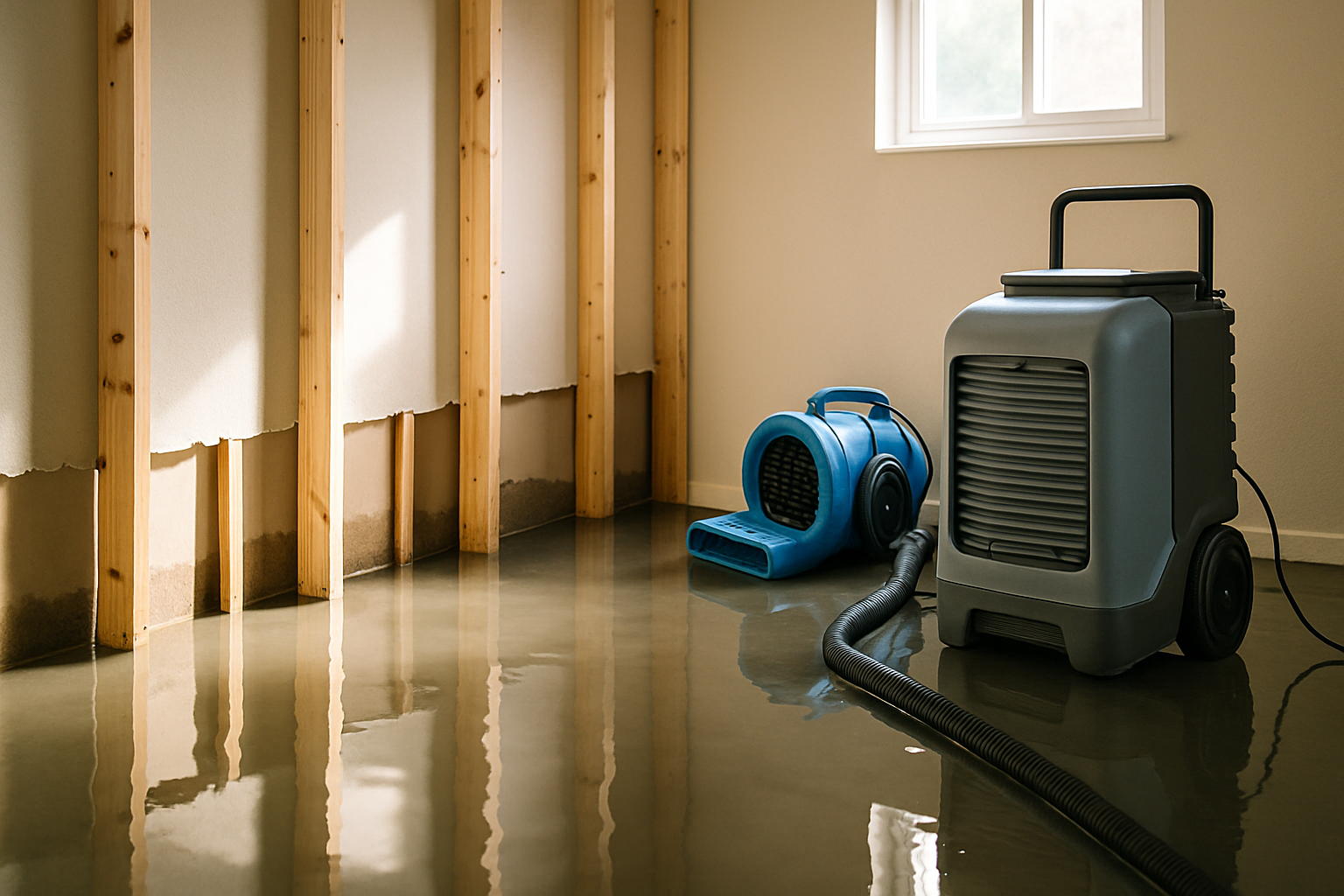
    When we get a call for storm damage cleanup in Prosper, day one is about stabilizing the situation — not making every decision at once. We get the standing water out, apply an antimicrobial treatment to slow bacterial and mold growth, and set up commercial drying equipment: real dehumidifiers and air movers, not the kind you’d find in a laundry room.

    Then we reassess in 24 to 48 hours. That gap matters. It lets the structure start drying, lets us get accurate moisture readings with a thermal camera and moisture meter, and lets everyone — you, us, your insurance adjuster — get a clear, honest picture of the real scope before big decisions get made.

    I’ll be straight with you: the drying process is loud and a little disruptive. Air movers running around the clock aren’t fun to live with. I can’t promise it won’t be a hassle — but I can promise to make it as least disruptive as possible, and I’ll never tell you it’s fine to shut the equipment off early to get some quiet. Turning it off before the structure hits a proper dry standard risks the very mold and secondary damage we’re trying to prevent. Think of it as the impromptu remodel nobody asked for — annoying now, but there’s a plan, and there’s an end to it.

    A Word on Insurance

    A lot of homeowners assume storm damage “probably isn’t covered” and don’t even file a claim. Often that’s not true — it depends on your policy and the cause of loss, and it’s worth finding out rather than guessing. Document everything, call your carrier promptly, and don’t be afraid to ask questions about what your policy actually says. A restoration company that’s scoped the damage honestly can make that conversation a lot easier.

    Why Local, Accountable Help Matters

    Merlene Mitigation is based right up the road in Pilot Point, and I handle water damage and inspections personally — not a rotating crew of strangers. If your situation needs more than mitigation — larger mold remediation, roofing, rebuild — I stay involved and bring in trusted, vetted professionals I’d use in my own home, so you’ve got one accountable person overseeing the whole job instead of getting handed off. Lower overhead means fair prices, and it means you’re never just a ticket number.

    If you’re dealing with water damage right now, or you just want a straight answer about what to do next, reach out. Storm restoration near you in Prosper shouldn’t mean waiting on hold with a call center — it should mean talking to someone who’s going to walk through it with you.

    -Ally
  • Water Damage After Summer Storms? Here’s What to Do First

    Water Damage After Summer Storms? Here’s What to Do First

    If you’ve lived in North Texas longer than one summer, you already know the drill: blue skies at lunch, sirens by supper. July is peak severe thunderstorm season here, and along with the hail and the wind comes the thing that quietly does the most damage — water. A roof leak you didn’t know you had, a window that let in more than it should have, a slab that took on water faster than the yard could drain it.

    The good news? What you do in the first 24 hours matters more than almost anything else. Here’s exactly what to do, in order.

    1. Make sure everyone’s safe first

    Before anything else — no wet electrical, no wading through standing water near outlets or panels, no walking under a sagging ceiling. If there’s any doubt about structural safety or electrical hazards, wait for it to be checked before you go back in.

    2. Stop the source, if you safely can

    If it’s a plumbing issue, shut off the water at the main. If it’s a roof leak, a tarp or bucket is a fine stopgap until help arrives — just don’t get on a wet roof in a storm to do it. Your job right now is damage control, not repair.

    3. Document before you touch anything

    This is the step most homeowners skip, and it’s the one insurance adjusters care about most. Before you move furniture or start mopping:

    • Take photos and short videos of every affected room, from multiple angles
    • Capture the water line on walls or baseboards if there is one
    • Photograph damaged belongings before you move them
    • Note the time and rough cause (“hail broke a window, rain came in around 3pm”)

    You can start cleanup right after — you don’t have to wait around. Just get the pictures first. It takes five minutes and it can save you real headaches later.

    4. Get the water out and start drying — fast

    This is where the clock really matters. Mitigation professionals talk about a golden window of about 24–48 hours before wet materials start growing mold and secondary damage sets in. That’s not a scare tactic — it’s just how moisture and organic material behave in Texas humidity.

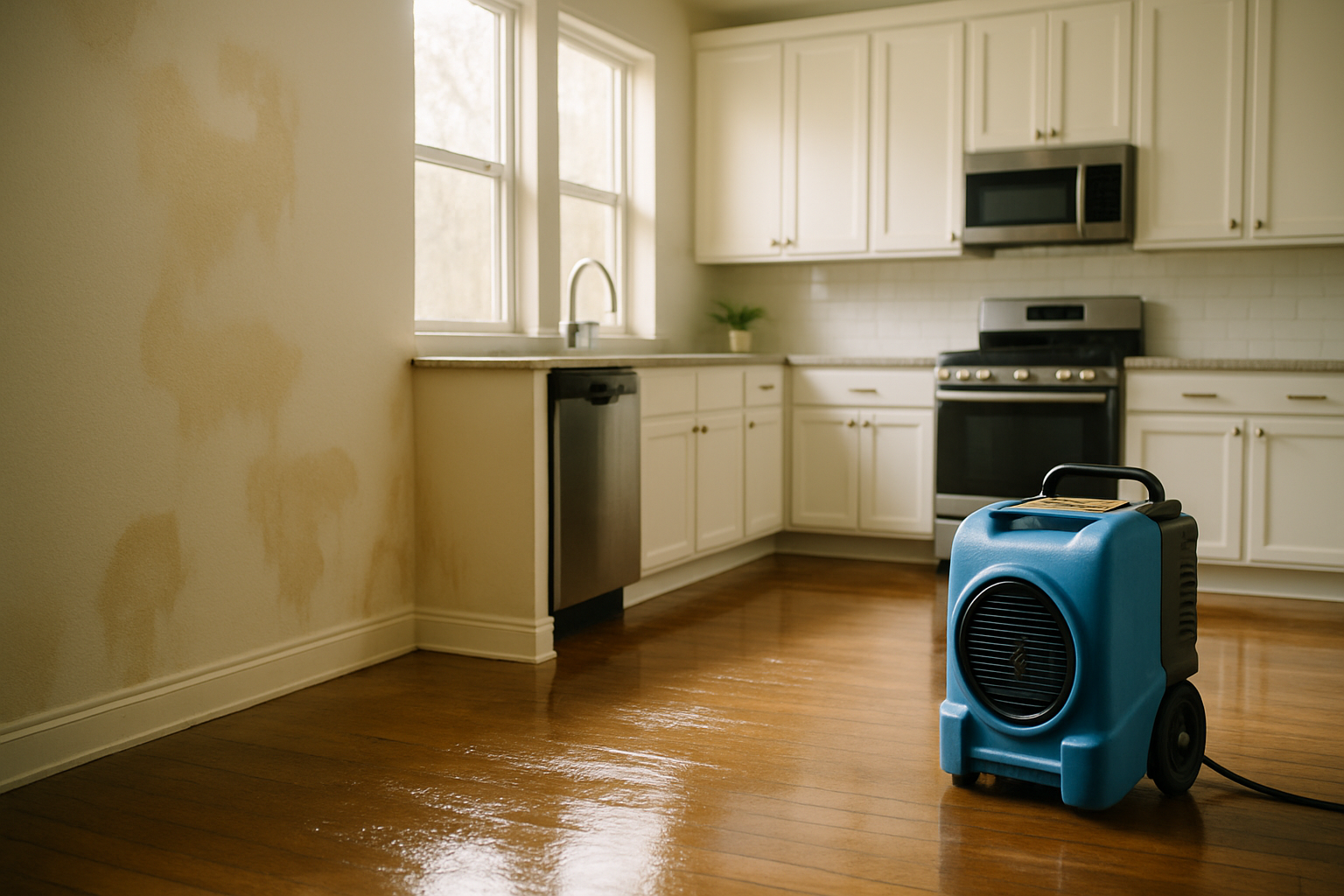
    Here’s the honest sequence, the same one we use on every job: Day one is about stabilizing. Get standing water out, apply an antimicrobial to slow microbial growth, and get drying equipment running — real air movers and commercial dehumidifiers, not the little unit from the laundry room. Then, within 24–48 hours, we come back and reassess the whole area with moisture meters and a thermal camera to see what’s actually still wet underneath the surface. That second look lets everyone, including your insurance company, catch up before big decisions get made.

    I know the fans and dehumidifiers are loud and disruptive — genuinely, choose your sanity, put on a podcast, get the kids outside for a bit. But please don’t turn the equipment off early, even for a few hours. Structural drying only works if it runs uninterrupted, and shutting it down risks the mold and secondary damage it’s there to prevent.

    5. Call a professional when…

    • Water touched drywall, insulation, subfloor, or has been sitting more than a couple hours
    • You can’t tell how far the water traveled (it almost always travels farther than it looks)
    • There’s any hint of a musty smell already
    • You just want a second set of eyes before you decide anything

    Surface-dry is not the same as actually dry. That’s the single most common thing homeowners get wrong, and it’s the reason “small” water events turn into expensive ones.

    The Merlene Mitigation way

    I’m not going to promise this won’t be disruptive — it will be, for a while. What I can promise is we’ll make it as least disruptive as possible, and we’ll be honest with you every step of the way about what’s actually needed and what isn’t. Josh handles water damage and inspections personally — you’re not getting handed off to a stranger — and because Merlene Mitigation runs lean, you get personal attention and fair pricing instead of franchise overhead.

    If you’re dealing with storm damage anywhere in Pilot Point or the surrounding Denton County towns, give us a call. Even if it’s just to talk through what you’re looking at and figure out your next step, we’re glad to help.

    -Ally