
Tag: humidity control

  • AC Condensation Leaks in Krugerville During Heat Advisories

    AC Condensation Leaks in Krugerville During Heat Advisories

    Heat index of 111° today. If you’re in Krugerville and your AC has been running nearly nonstop since this morning, I want you to do one thing before you keep reading: go look at the ceiling around your air handler, and check the floor near your indoor unit for any dampness. I’ll explain why in a second, but that quick look could save you a very expensive week.

    Why heat advisories are hard on more than just your electric bill

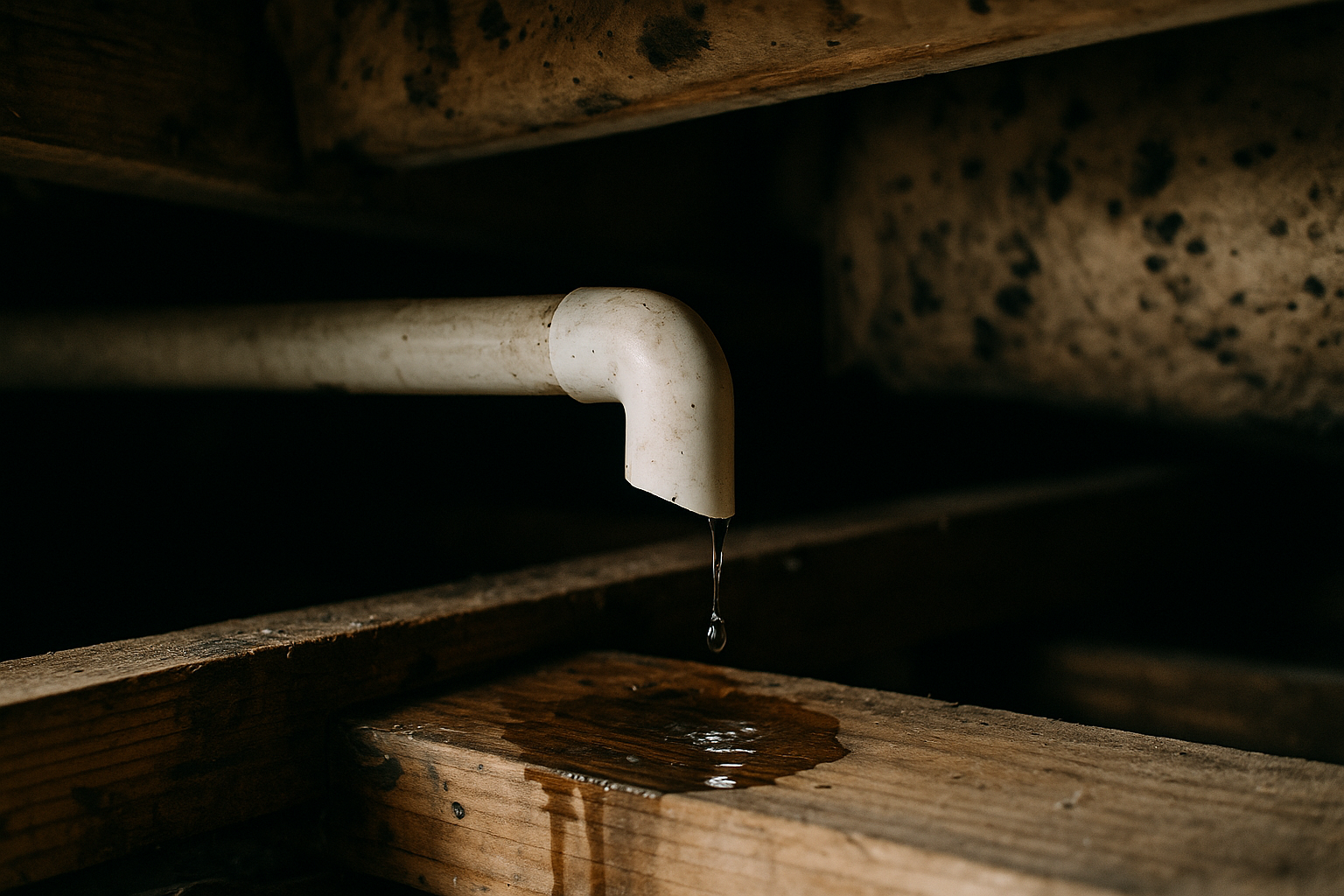
    When the heat index climbs into the low 100s, your AC doesn’t just run longer, it runs harder. More runtime means more condensation. That’s simply how the system works: humid air passes over a cold evaporator coil, and water collects. On a normal day, that water drains away quietly through a small PVC line and you never think about it.

    But on days like today, when the system barely gets a break, that condensate line is working overtime too. And here’s the part that catches people off guard: a condensation drain doesn’t fail loudly. It clogs with a little algae or dust, or a joint loosens just enough, and instead of draining outside, the water backs up into the drain pan, then over the edge of the pan, then into your ceiling, your wall cavity, or the subfloor under a closet unit. Nobody hears a pipe burst. Nobody sees a puddle in the driveway. The first sign is often a stain on the ceiling, or a musty smell, days after the actual leak started.

    What to check today, without any tools

    • The ceiling or wall around your indoor unit or air handler. Look for a discolored spot, a soft patch of drywall, or peeling paint.
    • The drain line itself, usually a white PVC pipe running from the unit to the outside of the house. Is water actively dripping from the end of it? That’s normal. Is it dry when the AC is clearly running? That could mean a clog upstream.
    • The floor near a closet or attic unit. Carpet or laminate that feels slightly spongy or cool to the touch is worth a second look.
    • The secondary drain pan, if your unit is in the attic. Many systems have a backup pan with its own overflow switch. If that pan has water sitting in it, the primary line is already struggling.

    None of this requires taking anything apart. It’s a two-minute walk-through, and on a day with a heat advisory in effect, it’s worth doing before you go to bed tonight.

    Why “it’s just a little water” is the trap

    A condensation leak is almost never dramatic, and that’s exactly what makes it dangerous. Water doesn’t need to flood a room to cause real damage. It just needs time and a place to sit. Drywall, insulation, and subfloor all hold moisture quietly, and by the time it’s visible or smells musty, it’s usually been sitting long enough to invite mold growth into the mix.

    This is the same myth I talk about a lot: surfaces dry first, and what’s underneath can stay wet far longer than you’d expect. A slow drain leak behind a wall can go unnoticed for a week or more during peak AC season, and that’s plenty of time for a small problem to become a real one.

    If you find water, here’s the honest first move

    If you find active water or a soft spot today, the priority is simple: get the moisture stopped and get air moving on it as soon as you reasonably can. Don’t wait to see if it dries on its own, and don’t assume a fan from the closet will handle it if it’s been sitting a while. Hidden moisture behind drywall needs real assessment, not a guess.

    I’m not going to tell you it’s no big deal if it’s small, because sometimes it genuinely isn’t. But I’d rather you have someone look at it and hear “you’re fine” than find out in three weeks that it wasn’t.

    We’re right here in Krugerville’s backyard

    Merlene Mitigation is based just down the road in Pilot Point, and North Texas heat waves like this one are exactly why I keep an eye on drain lines and hidden moisture for folks in Krugerville and the surrounding area. Right now, through August 6th, 2026, I’m offering a free water damage inspection — no pressure, no obligation, just an honest look so you know where you stand.

    If you found something today, or you just want a second set of eyes before this heat lets up, call or text me directly. I answer my own phone, I’ll walk you through exactly what I find, and you’ll never get handed off to a stranger.

    And if nothing’s wrong today but you want to be ready in case it ever is, I put together a free guide called “The First 24 Hours After Water Damage”. It’s the kind of thing worth reading on a calm day, not a panicked one.

    -Ally

  • AC Condensation Leaks in Tioga, TX: Hidden Water Damage Risk

    AC Condensation Leaks in Tioga, TX: Hidden Water Damage Risk

    If your AC has been running nearly nonstop this week, you’re not imagining it. With the heat index hitting 110° across North Texas, every system in Tioga is working harder than it was built to handle for weeks at a time. That’s tough on your unit, and it’s tough on something people rarely think about: the condensation drain line quietly carrying water away from your indoor coil, every single hour, all day long.

    Here’s the part that catches folks off guard. When that line clogs or backs up, you often don’t see it happening. No dramatic leak, no puddle in the middle of the floor. Just water finding its way into a wall cavity, a ceiling void, or a crawl space, day after day, while your house looks completely normal from the inside.

    Why This Happens So Much More in Extreme Heat

    Your AC’s job is to pull humidity out of the air, and that moisture has to go somewhere. Normally it drips into a pan and drains outside through a small condensate line. But when a system runs longer and harder, like it has to in a 110° heat index, it pulls more moisture than usual, and the drain works overtime right along with it.

    Algae, dust, and debris build up inside that line over time no matter what, but heavy runtime speeds the whole process up. A line that’s been fine for months can back up in a matter of days when the system barely gets a break.

    Where the Water Actually Goes

    This is the part that turns an AC hiccup into real water damage. Depending on how your ductwork and lines are routed, a backed-up drain can send water into:

    • The wall cavity behind or below your indoor air handler
    • Ceiling drywall, if your unit is in an attic
    • Crawl space framing and insulation
    • Subfloor around a closet or utility space

    None of those places are somewhere you look every day. That’s exactly why this kind of water damage in Tioga homes tends to get discovered late, usually when a stain finally shows up on a ceiling or a musty smell starts creeping into a room.

    Early Signs Worth Checking This Week

    You don’t need any special equipment to catch this early. A few minutes of looking is usually enough:

    • A musty smell near a closet, utility room, or hallway that wasn’t there before
    • Soft or discolored drywall near your indoor unit
    • Visible water or standing moisture in the drain pan itself
    • Your AC’s overflow safety switch shutting the system off (that switch is doing its job, so don’t just reset it and ignore it)
    • A ceiling stain that seems to appear out of nowhere

    If you catch any of these now, while the heat index is still up, you’ve got a real chance to deal with it before it turns into something bigger. Wet wood and wet drywall don’t dry on their own in a Texas summer with the humidity we’ve got, and the longer that moisture sits inside a wall or under a house, the more it invites the kind of hidden damage that’s expensive to fix and even harder to catch after the fact.

    Why “It Looks Dry” Isn’t the Same as “It Is Dry”

    This is something I say a lot, and it’s worth repeating here. Surfaces dry fast. The structure underneath, the framing, the subfloor, the insulation, holds onto moisture a lot longer than you’d guess just by touching drywall or looking at a stain. That’s where real damage and mold risk actually live, and it’s why a quick visual check is a good first step, not a final answer.

    If You Find Something

    If you spot any of this, the honest first move is to shut off your AC’s power at the breaker or thermostat and get eyes on it, rather than let it keep draining into the same spot. Beyond that, this is exactly the kind of thing worth having a second set of eyes on, especially with how much moisture North Texas air holds onto right now.

    Right now, through July 29th, we’re offering free water damage inspections for homeowners in Tioga and the surrounding area. No pressure, no sales pitch, just an honest look at what’s actually going on so you know where you stand.

    And if nothing’s going on today but you’d rather be ready than caught off guard, I put together a free guide called The First 24 Hours After Water Damage. It walks through exactly what to do first if you ever do find water where it shouldn’t be.

    Merlene Mitigation is based right here in Pilot Point, and Josh personally handles every inspection and every job, no crew of strangers, no big franchise overhead. That keeps things honest and keeps prices fair. If you’re in Tioga or anywhere nearby and want a second opinion on what you’re seeing, give us a call. We’re glad to help, heat wave or not.

    -Ally