
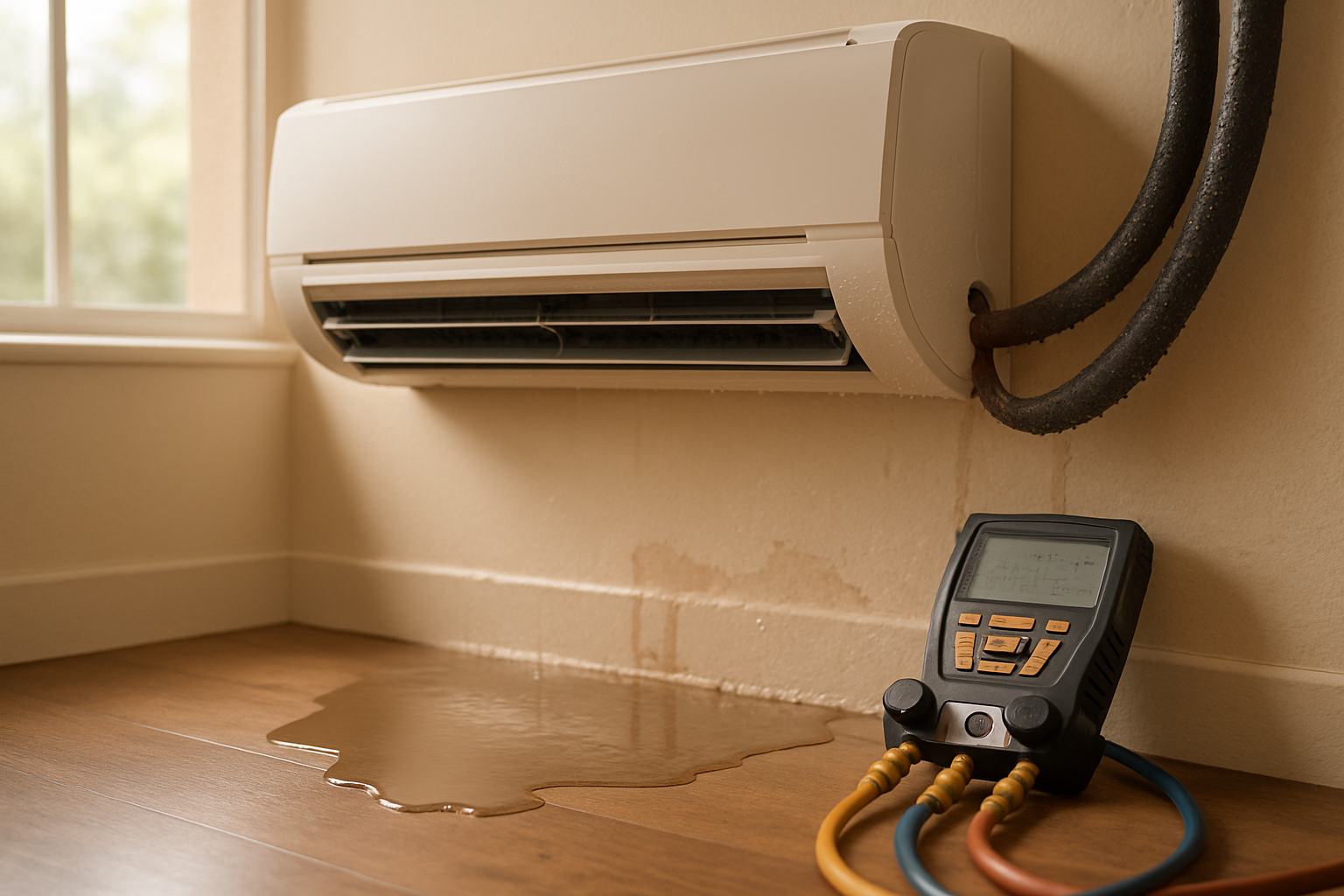
If you’ve noticed a damp spot on the ceiling under an upstairs closet, or a mystery stain spreading across the drywall near a vent — and it’s the middle of a 100°F July — there’s a good chance your AC is the culprit. Not a roof leak. Not plumbing. Your air conditioner.
It’s one of the most common causes of water damage we see in Denton County every summer, and one of the easiest to catch early if you know what to look for. Let’s talk about why it happens and what you can do about it before it turns into something expensive.
Why AC units leak in the first place
Your air conditioner doesn’t just cool the air — it pulls moisture out of it. That’s condensation, and on a brutal North Texas summer day with the system running nearly nonstop, your unit can produce several gallons of water a day. All of that water is supposed to travel down a small condensate drain line and out of the house.
The trouble starts when that drain line gets blocked, disconnected, or overwhelmed. A few common reasons:
- Algae and gunk in the drain line. Warm, wet, dark — condensate lines are basically a perfect environment for slime buildup, and it doesn’t take much to clog a line that’s often less than an inch wide.
- A full or clogged drain pan. Especially in older systems, the backup pan under the unit can crack, rust, or simply overflow once the primary line is blocked.
- A frozen evaporator coil. Low refrigerant or poor airflow can cause the coil to ice over. When it thaws, all that ice becomes water — more than the drain system is built to handle at once.
- Running 24/7 in extreme heat. When your AC almost never shuts off, there’s more condensation, more strain, and less time for anything to dry out between cycles.
Why this leads to hidden damage
Here’s the part that catches people off guard: most AC units — especially in attics or upstairs closets — leak somewhere you can’t easily see. Water follows gravity and gaps, not straight lines. It can travel along a joist, soak insulation, and show up on your ceiling several feet from where the actual leak started.
By the time you see a stain, the wet insulation and framing behind it may have been holding moisture for days. And where there’s trapped moisture in a hot, humid Texas attic, mold isn’t far behind.
Red flags worth checking today
- A musty smell near a vent, closet, or upstairs room
- Ceiling stains, especially directly under an attic AC unit
- Visible water in or around your indoor unit’s drain pan
- Your AC blowing warm air (can indicate a frozen coil)
- A PVC drain line with slow or no visible drip outside
Simple prevention that actually works
You don’t need to be an HVAC expert to cut your risk significantly:
- Flush the condensate line once a season with a cup of distilled vinegar to keep algae from building up.
- Check the drain pan periodically for standing water or rust.
- Replace your air filter regularly — a dirty filter restricts airflow and is a leading cause of frozen coils.
- Get an annual HVAC tune-up. This one’s genuinely worth the money before peak summer hits — a technician can catch a slow clog long before it becomes standing water in your ceiling.
- Install a float switch (many newer systems have one) that shuts the AC off automatically if the pan gets too full — cheap insurance against a major leak.
Most of this you can absolutely handle yourself, and honestly, you should — it’ll save you money and headaches. I’d rather you catch this early with a bottle of vinegar than call us for a ceiling repair.
When it’s more than a DIY fix
If you’ve already got a stained ceiling, soft drywall, a musty smell that won’t quit, or you’re just not sure how far the water traveled, that’s where things get harder to judge on your own. Surface damage almost never tells the whole story — the moisture underneath is what causes real problems, and it doesn’t show up to the naked eye.
That’s the part we’re built for. We come out, use a thermal camera and moisture meter to actually map where the water went — not just guess — and give you a straight answer on what needs to dry out and what doesn’t. No upselling, no scare tactics. Just what’s true about your house.
If you’re in Pilot Point or anywhere else in North Texas and you’re staring at a stain wondering if it’s your AC, give us a call. We’ll help you figure out what you’re dealing with, honestly and without the runaround.
-Ally