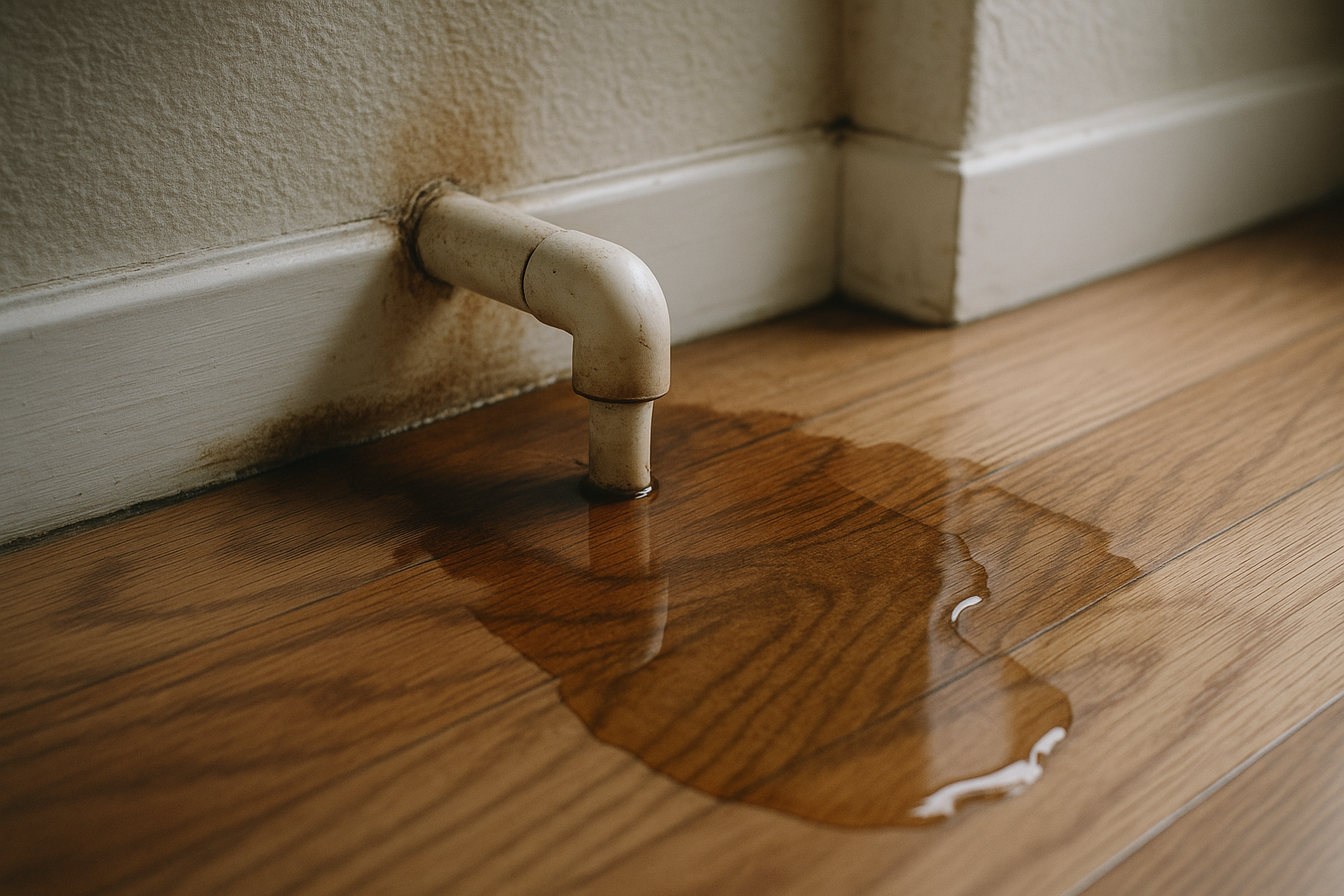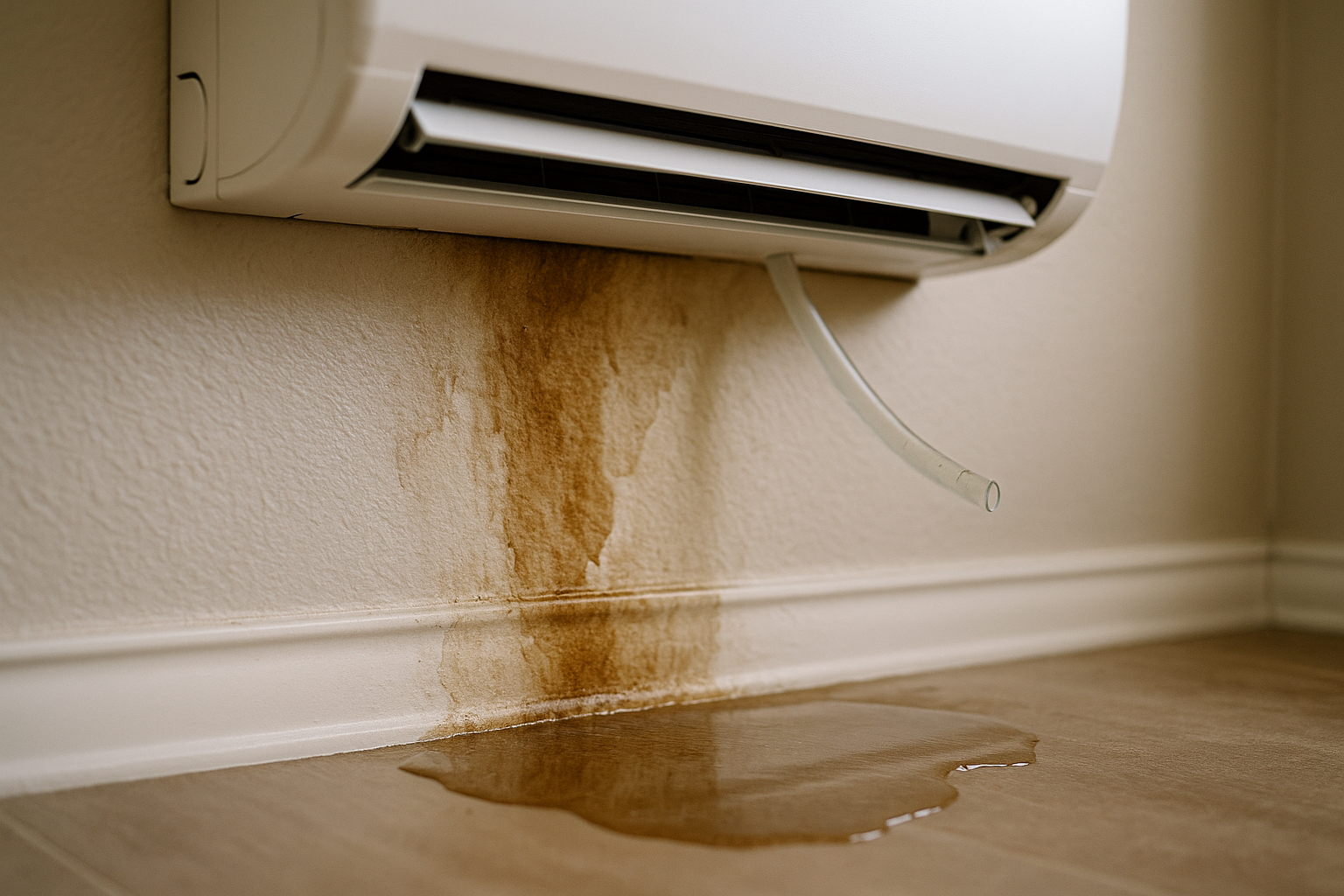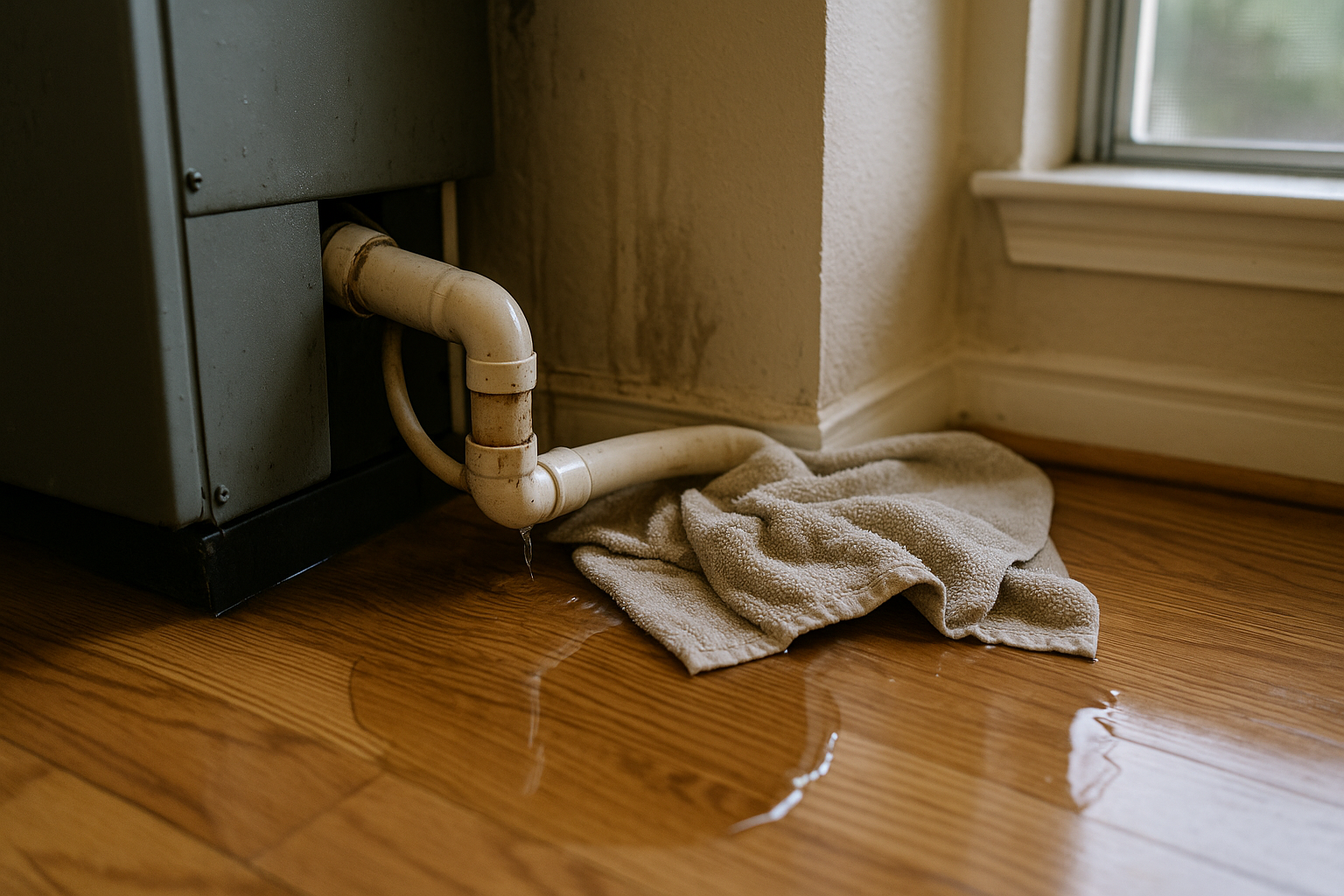
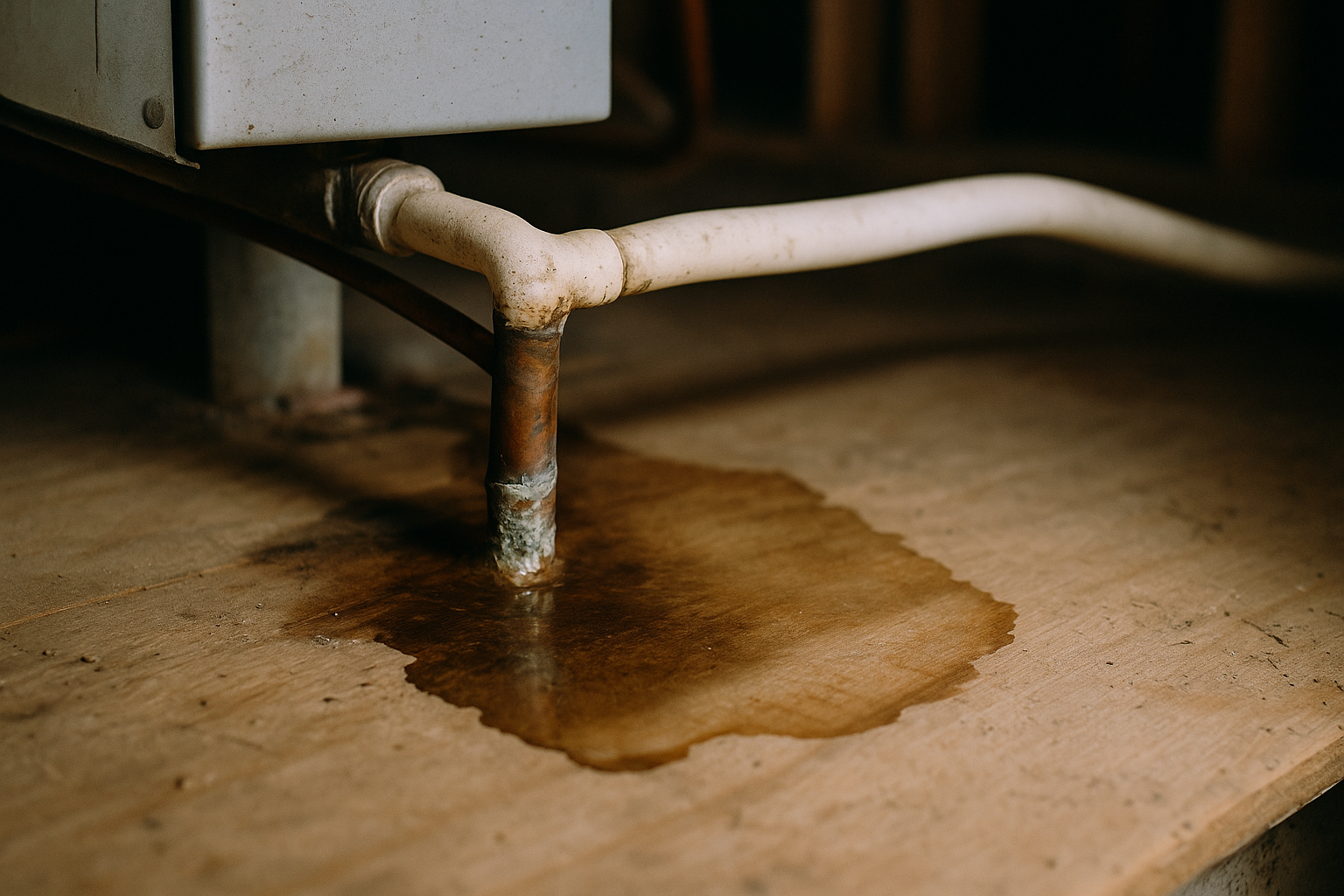
If you’ve stepped outside in Aubrey today, you already know: the heat index is sitting at 107°, there’s an active Heat Advisory, and every AC unit in town is running like it’s got somewhere to be. That’s exactly the kind of stretch when we start getting calls about water where there shouldn’t be water — a wet spot on the ceiling, a puddle by the closet where the air handler lives, a musty smell that wasn’t there last week.
Here’s the thing worth knowing before it becomes an emergency: your AC isn’t just cooling your house right now. It’s also working overtime to pull moisture out of the air, and all that condensation has to go somewhere. When it can’t get where it’s supposed to go, it goes where it’s not supposed to — into your ceiling, your walls, your floors.
Why heat waves like this cause condensation drain backups
Your AC’s condensate drain line carries away the water your system pulls out of the air as it cools. On a mild day, that’s a manageable trickle. On a day like today, with the unit running nearly nonstop to keep up, it’s a lot more water moving through that same small line — and it doesn’t take much to back it up.
A little algae, a bit of dust, a kinked line, or a clogged drain pan can all cause the same result: water backing up instead of draining out. On a normal day, you might not even notice. On a 107° heat index day, with the system running around the clock, that backup can fill a drain pan or soak a ceiling in a matter of hours.
What to check right now
This takes five minutes and it’s worth doing today, especially with the advisory in effect:
- Look at the ceiling below or near your indoor AC unit for any staining, sagging, or bubbling paint.
- Check the drain pan under your air handler (usually in the attic, a closet, or the garage) for standing water.
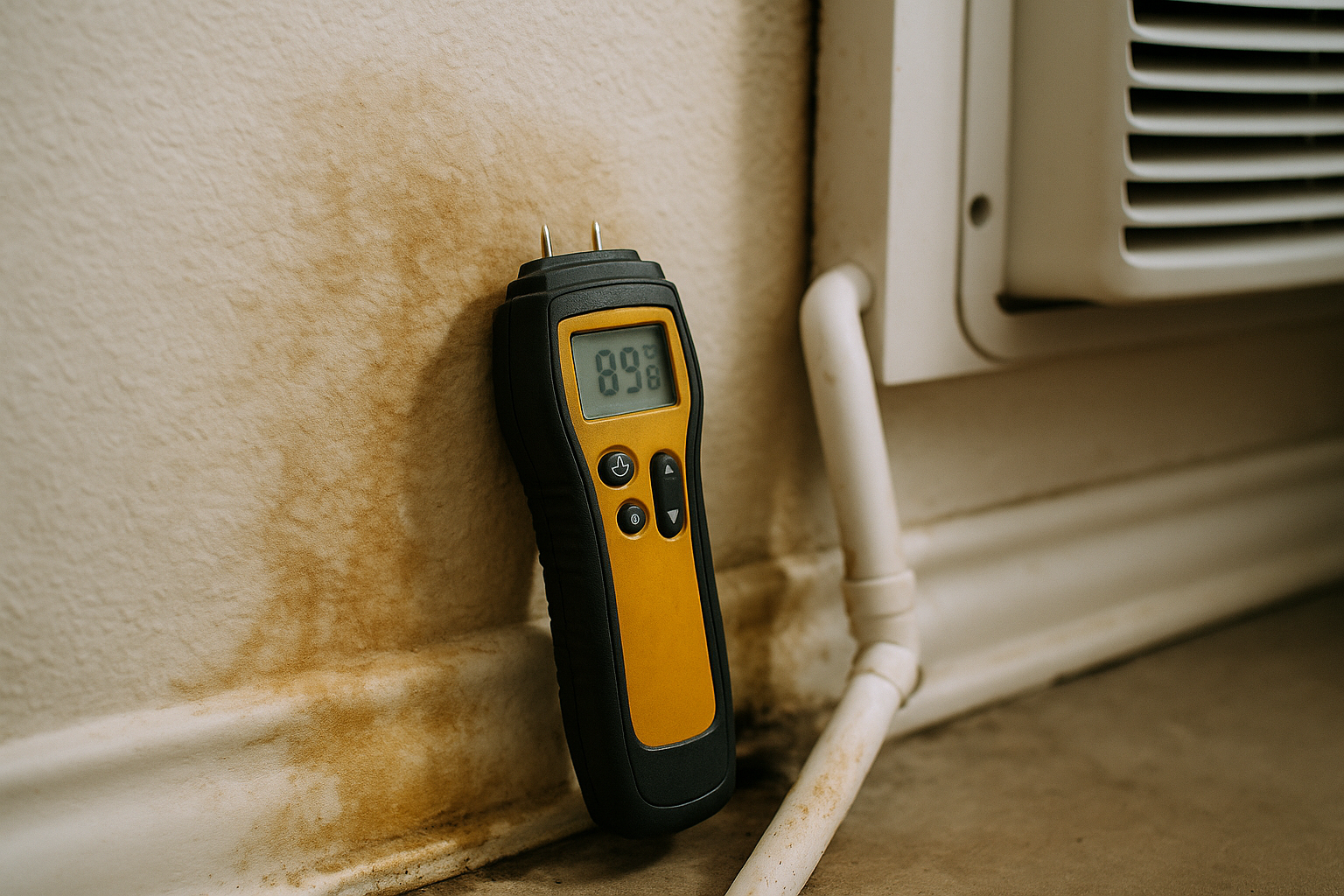
- Feel around the base of the unit and nearby walls for dampness or a musty smell.
- Look at the drain line outside — it should be dripping steadily, not dry and not backed up.
If any of that turns up wet, damp, or musty, don’t wait it out. Condensation leaks are quiet by nature — they don’t flood a room, they seep, which means the real damage is often happening inside your walls and ceiling long before it shows up where you can see it. That’s the hidden water damage that turns a $200 drain-line clog into a much bigger repair.
Why speed actually matters here
I’ll be honest with you: not every AC leak needs an emergency call. If you catch it early, drying it out and clearing the line can be a simple fix. But once moisture sits in drywall, insulation, or subfloor for more than a day or two — especially in heat and humidity like we’ve got right now — mold risk climbs fast, and “small leak” turns into “replace the ceiling.”
That’s really the whole judgment call: how long has it been wet, and how humid is it in there. Those two things decide whether you’re looking at a quick dry-out or something more involved.
Merlene Mitigation is running free inspections through July 29th
Because this kind of heat tends to expose problems all at once across North Texas, we’re offering free water damage inspections through July 29th. If you’ve found something damp, or you just want a second set of eyes before it becomes a problem, there’s no cost and no pressure to walk through it with you.
When you call, you’re talking to Josh — the person who actually shows up, assesses the moisture, and tells you straight whether it’s a simple fix or something that needs real drying equipment. No call center, no subcontracted stranger, no upsell. Low overhead means fair prices, and one accountable person means nothing gets lost between “who do I call” and “who actually fixes it.”
If you’re in Aubrey, Pilot Point, or anywhere in North Texas and something feels off with your AC or you’ve spotted water where it shouldn’t be, reach out. We’d rather look at it today and tell you it’s nothing than have you find out in three weeks that it wasn’t.
And if nothing’s wrong today but you’d rather be ready than caught off guard next time, our free guide, The First 24 Hours After Water Damage, walks through exactly what to do in the first hours after you find water — before you ever need it.
-Ally