
Tag: denton county

  • Water Damage From Summer Storms in Pilot Point, TX

    Water Damage From Summer Storms in Pilot Point, TX

    You hear it before you see it — that low rumble rolling in from the west, the sky going green-gray over Denton County. Ten minutes later, rain is coming down sideways and water’s creeping in under the back door. If you’ve lived in Pilot Point through a few summers, you know this drill. What you do in the next hour matters more than almost anything that happens after.

    Here’s exactly what to do, in order, if a summer storm just sent water into your home.

    1. Make sure everyone’s safe first

    Before anything else — check for downed power lines near standing water, and if there’s any chance water has reached an outlet, breaker panel, or anything electrical, don’t wade in. Shut off power to that area at the breaker if you can do it safely, or call an electrician if you can’t. No amount of water damage is worth a shock.

    2. Stop the source, if you can

    If the water is coming from a burst pipe, an overflowing gutter backing up into the house, or a failed appliance connection made worse by the storm, shut off the water at the source or the main shutoff valve. If it’s rainwater or flooding coming in from outside — through a window, a roof leak, or under a door — there’s often no “shutting it off.” In that case, your job shifts straight to damage control.

    3. Document before you touch anything

    Grab your phone and take photos and video of everything — the water itself, how high it got, what it’s touching, any damaged belongings. Do this before you start moving furniture or mopping up. Insurance adjusters lean heavily on this kind of documentation, and it’s a lot easier to take five extra minutes now than to try to reconstruct it later from memory.

    4. Get water and valuables out of harm’s way

    Move furniture, rugs, electronics, and anything irreplaceable off the wet floor and away from the affected area. If it’s safe to do so, you can start removing standing water with towels or a wet-vac. This isn’t about avoiding calling a professional — it’s about buying your home a little time.

    5. Call for water damage restoration — sooner than you think

    This is the step people underestimate. Drywall, insulation, and subfloor can start absorbing water within minutes, and mold can begin growing in as little as 24 to 48 hours in Texas summer humidity. The clock doesn’t wait for business hours, and neither should your call.

    When we get a call for storm or emergency water cleanup in North Texas, day one is always about stabilizing the situation: extracting standing water, applying antimicrobial treatment to slow mold growth, and setting up drying equipment to start pulling moisture out of the structure — not just what you can see, but what’s soaked into the walls and floors underneath. Then, within 24 to 48 hours, we reassess with moisture meters and thermal imaging to build a full picture of what actually needs to happen next. That rhythm exists for a reason — it stabilizes things fast, and it gives you (and your insurance company, if you’re filing a claim) time to catch up before bigger decisions get made.

    A quick word about the drying equipment

    Once drying equipment is running, it needs to stay running until the structure actually reads dry — not just until it looks dry or the noise gets old. I won’t pretend those fans aren’t disruptive; they are. But turning them off early to get a quiet evening can let moisture linger where you can’t see it, and that’s exactly how small water damage turns into a mold problem. If the noise is wearing on you, take the family out for the evening and let the equipment do its job undisturbed. That’s a much better trade than shutting it down.

    Why fast action actually matters

    Storm damage restoration in Pilot Point isn’t just about mopping up rainwater. It’s about catching the moisture that’s already migrated into places you can’t see — under baseboards, inside wall cavities, beneath flooring — before it turns into swelling, warping, or mold. A fast response is genuinely one of the biggest factors in whether a storm costs you a few days of inconvenience or a few weeks of rebuilding.

    If you’re dealing with water damage in Pilot Point right now, I’d rather you call than wait and wonder. And if today isn’t an emergency but you want to be ready before the next storm rolls through, we put together a free guide, The First 24 Hours After Water Damage, that walks through this same process in more detail.

    Merlene Mitigation is a small, local operation — Josh handles the water damage and inspections himself, so you’re getting one accountable person who knows your name and your house, not a call center. Lower overhead means fair pricing, and being local means we’re already close when the sky turns green over Denton County.

    If a summer storm has water in your home right now, give us a call. We’ll walk you through it.

    -Ally

  • Why Your AC Leaks in Summer and How to Stop It

    Why Your AC Leaks in Summer and How to Stop It

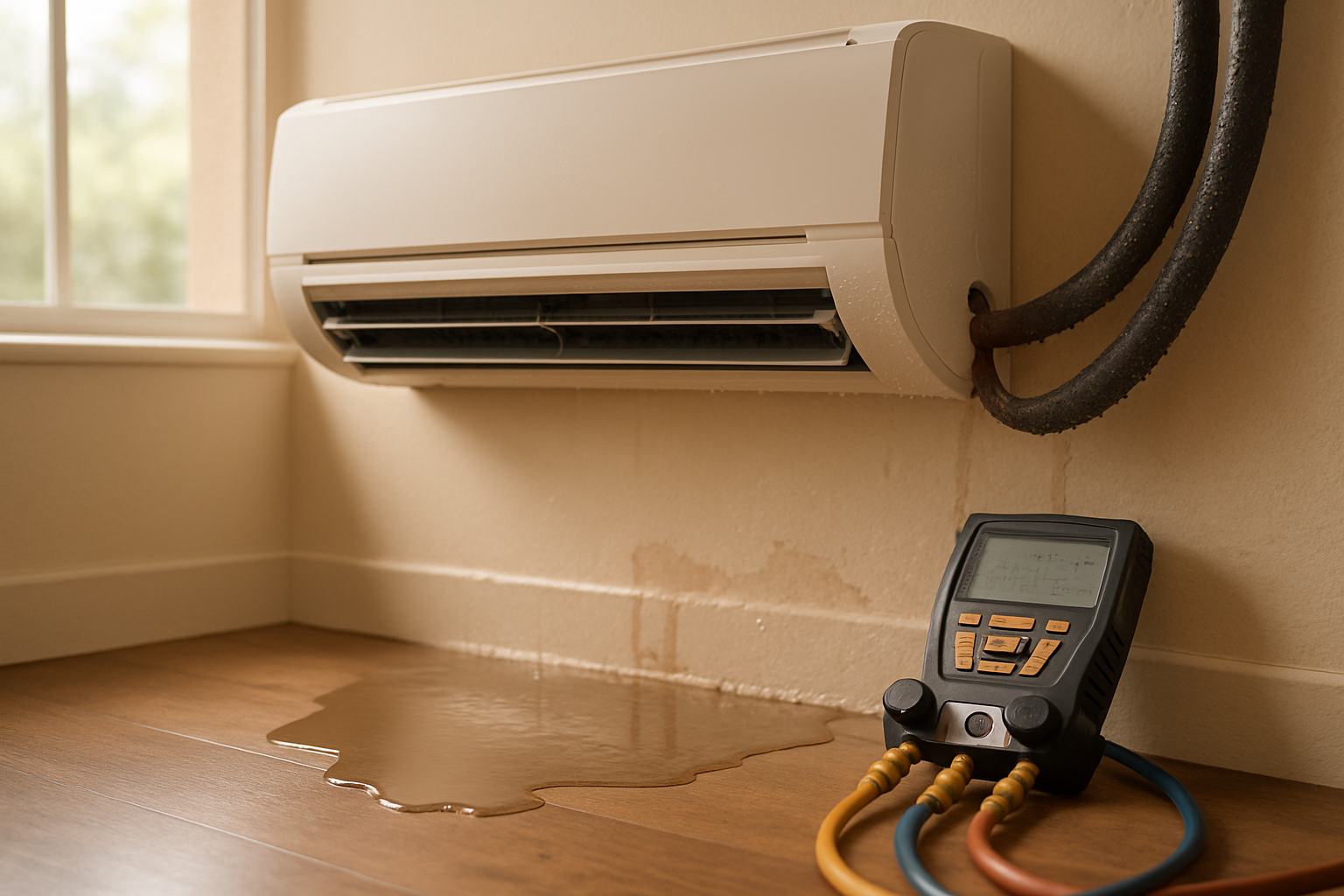
    If you’ve noticed a damp spot on the ceiling under an upstairs closet, or a mystery stain spreading across the drywall near a vent — and it’s the middle of a 100°F July — there’s a good chance your AC is the culprit. Not a roof leak. Not plumbing. Your air conditioner.

    It’s one of the most common causes of water damage we see in Denton County every summer, and one of the easiest to catch early if you know what to look for. Let’s talk about why it happens and what you can do about it before it turns into something expensive.

    Why AC units leak in the first place

    Your air conditioner doesn’t just cool the air — it pulls moisture out of it. That’s condensation, and on a brutal North Texas summer day with the system running nearly nonstop, your unit can produce several gallons of water a day. All of that water is supposed to travel down a small condensate drain line and out of the house.

    The trouble starts when that drain line gets blocked, disconnected, or overwhelmed. A few common reasons:

    • Algae and gunk in the drain line. Warm, wet, dark — condensate lines are basically a perfect environment for slime buildup, and it doesn’t take much to clog a line that’s often less than an inch wide.
    • A full or clogged drain pan. Especially in older systems, the backup pan under the unit can crack, rust, or simply overflow once the primary line is blocked.
    • A frozen evaporator coil. Low refrigerant or poor airflow can cause the coil to ice over. When it thaws, all that ice becomes water — more than the drain system is built to handle at once.
    • Running 24/7 in extreme heat. When your AC almost never shuts off, there’s more condensation, more strain, and less time for anything to dry out between cycles.

    Why this leads to hidden damage

    Here’s the part that catches people off guard: most AC units — especially in attics or upstairs closets — leak somewhere you can’t easily see. Water follows gravity and gaps, not straight lines. It can travel along a joist, soak insulation, and show up on your ceiling several feet from where the actual leak started.

    By the time you see a stain, the wet insulation and framing behind it may have been holding moisture for days. And where there’s trapped moisture in a hot, humid Texas attic, mold isn’t far behind.

    Red flags worth checking today

    • A musty smell near a vent, closet, or upstairs room
    • Ceiling stains, especially directly under an attic AC unit
    • Visible water in or around your indoor unit’s drain pan
    • Your AC blowing warm air (can indicate a frozen coil)
    • A PVC drain line with slow or no visible drip outside

    Simple prevention that actually works

    You don’t need to be an HVAC expert to cut your risk significantly:

    • Flush the condensate line once a season with a cup of distilled vinegar to keep algae from building up.
    • Check the drain pan periodically for standing water or rust.
    • Replace your air filter regularly — a dirty filter restricts airflow and is a leading cause of frozen coils.
    • Get an annual HVAC tune-up. This one’s genuinely worth the money before peak summer hits — a technician can catch a slow clog long before it becomes standing water in your ceiling.
    • Install a float switch (many newer systems have one) that shuts the AC off automatically if the pan gets too full — cheap insurance against a major leak.

    Most of this you can absolutely handle yourself, and honestly, you should — it’ll save you money and headaches. I’d rather you catch this early with a bottle of vinegar than call us for a ceiling repair.

    When it’s more than a DIY fix

    If you’ve already got a stained ceiling, soft drywall, a musty smell that won’t quit, or you’re just not sure how far the water traveled, that’s where things get harder to judge on your own. Surface damage almost never tells the whole story — the moisture underneath is what causes real problems, and it doesn’t show up to the naked eye.

    That’s the part we’re built for. We come out, use a thermal camera and moisture meter to actually map where the water went — not just guess — and give you a straight answer on what needs to dry out and what doesn’t. No upselling, no scare tactics. Just what’s true about your house.

    If you’re in Pilot Point or anywhere else in North Texas and you’re staring at a stain wondering if it’s your AC, give us a call. We’ll help you figure out what you’re dealing with, honestly and without the runaround.

    -Ally